
Tesla no longer a normal car maker: Have VW and Co. popped the champagne corks?
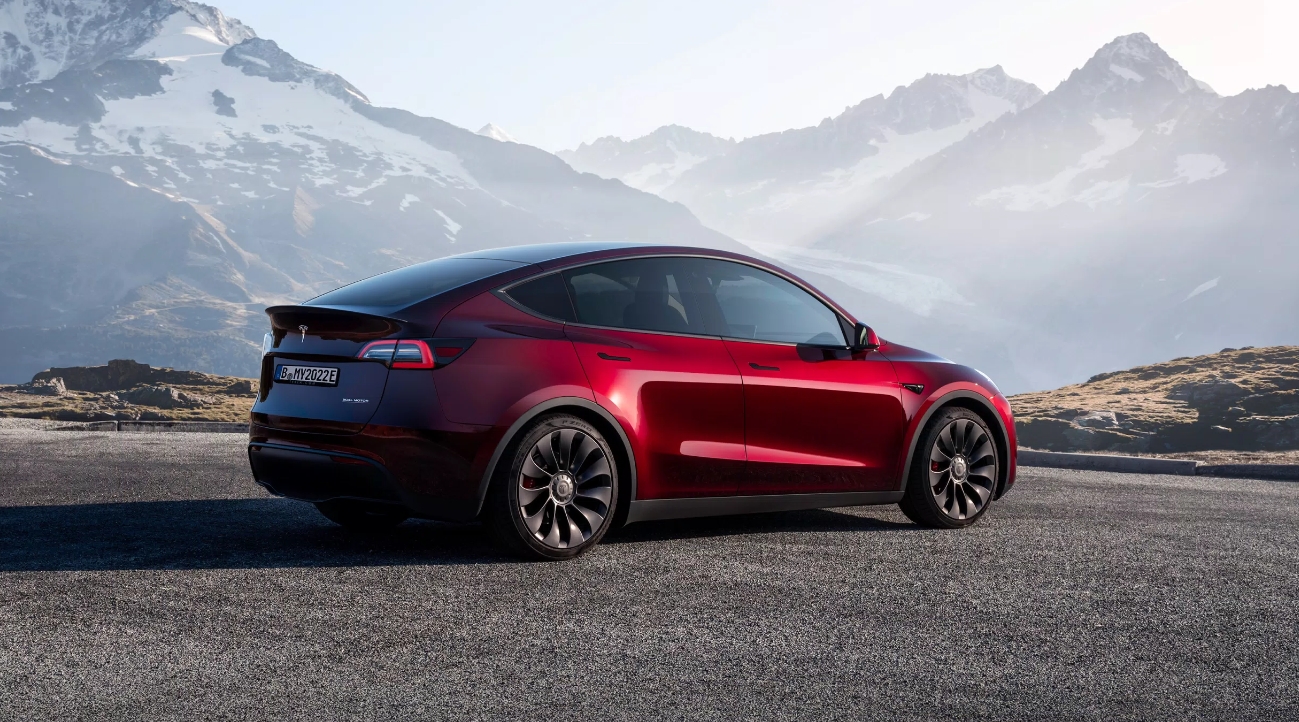
Tesla Model Y
(Mit freundlicher Genehmigung/Courtesy of Tesla Inc. [Homepage)
At the beginning of the year, the automotive world took notice: Tesla, the company that has been driving the entire automotive industry forward in recent years, no longer wants to be a normal car manufacturer.
This was announced by Elon Musk at an investor conference at the beginning of 2026.
Instead of continuing to expand its classic vehicle portfolio, Tesla will focus more on robot taxi services, mobility platforms, and humanoid robots in the future.
Did the champagne corks pop at VW and Co.? Ultimately, this marks the gradual departure of one of the leading vehicle manufacturers of the BEV segment.
We can only speculate about the reasons behind this decision. We believe that it would have been too boring for Elon Musk to transform the electric car pioneer into a “normal” car company that launches model series for different market segments over the years, spruces them up from time to time with model updates, and sometimes surprises with a new design.
Elon Musk had already proven that he could build cars with the Model Y. The vehicle is still the “gold standard” for mid-size SUVs among competitors, and it continues to be produced and sold successfully on three continents.
Given Tesla’s astonishing success, one might think that Elon Musk can walk on water.
This is clearly not the case: the Model Y should have been followed by an entry–level model, but instead the completely unsellable Cybertruck was developed. This meant that a huge opportunity to occupy the pickup segment with a BEV model was missed. Ford, Toyota, and others will be delighted.
As a result of this misguided model policy, Tesla has already had to relinquish its title as the world’s largest BEV manufacturer to BYD.
Its entry into the commercial vehicle market is also not going very well: production of the 4680 cells required for this is not progressing because Tesla has overextended itself with a new cell manufacturing process based on dry coating of the electrodes. Daimler Truck and Co. can rejoice.
In this respect, Elon Musk’s decision to strategically realign Tesla could also be interpreted as a leap forward.
In any case, the next few years will be very exciting: Will Elon Musk succeed in setting the technical standards for robotaxi services and humanoid service robots as well? After all, there are already very powerful competitors in the new business areas:
- Alphabet subsidiary Waymo already operates commercial robotaxi services in San Francisco, Los Angeles, Phoenix, Austin, and Atlanta and plans to expand to international locations such as London and Tokyo.
- In the field of humanoid robotics, start-ups such as Figure AI and Boston Dynamics are in the starting blocks.
As if that weren’t enough of a challenge, Elon Musk is also challenging his engineers with a purely camera–based environment detection system.
All other providers use at least one additional sensor technology, such as radar or lidar, to increase the reliability of environmental perception in poor visibility conditions. In this respect, we are very excited to see whether Elon Musk will once again succeed in doing something that almost all experts have previously considered impossible.
Just like 24 years ago, when he first demonstrated with the Model S that a long-range premium electric car was technically possible.
So, have the champagne corks been popping at VW and Co.? Probably not. Tesla’s success has led to so many new start-ups, especially in China, that fierce competition in the BEV segment will continue in the future – even without Tesla!