eVTOL Introduction
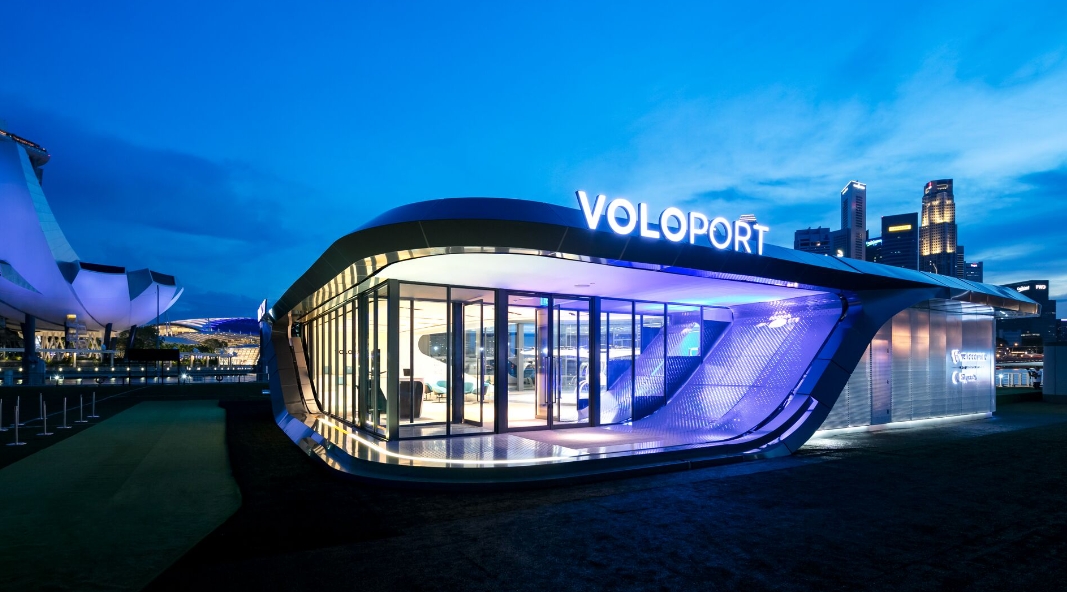
VOLOPORT multicopter dispatch hall in Singapore
(Mit freundlicher Genehmigung/Courtesy of Volocopter GmbH [Media Hub])
Management Summary
An electrorevolution is also taking place in the aircraft industry. Rapid advances in the energy density and production costs of lithium-ion cells are enabling a new category of electric aircraft that can take off and land vertically. These so-called eVTOL (electrical Vertical Takeoff and Landing) aircraft require no elaborate infrastructure, making them enablers for a new market segment in aviation called Advanced Air Mobility (AAM) by NASA [1]:
The main AAM features are
- Sustainable air transportation at low altitudes (up to approx. 3000 m) and over short distances (up to approx. 800 km)
- Applications include the transportation of people and goods as well as work in the air
- eVTOL without wings typically have a capacity of 1-2 people and are referred to as multicopters.
- eVTOL with wings are designed to carry 1-6 people and are thus typically larger than multicopters.
Both types of design have advantages and disadvantages. Multicopters have almost unlimited maneuverability and can also fly backwards or sideways at high speed. Vertical wing launchers can only fly forward at high speed, but have a much greater range.
Two classes can also be identified in terms of business models:
- Most startups focus on commercial aviation, i.e. they produce eVTOL aircraft to sell to airlines such as United Airlines or Lufthansa (B2B).
- The remaining startups focus on private private aviation, meaning they want to sell their vertical take-offs to private pilots (B2C).
Volocopter, a German AAM pioneer, is one of the few manufacturers that serves both segments.
There is a certain correlation between the type of construction and the business model: the larger wing-based eVTOL are predominantly developed for commercial aviation and the smaller multicopters for private customers.
But here too, exceptions prove the rule.
eVTOL without Wings (Multicopter)
Vertical take-off aircraft without wings are also known as multicopters and are designed like enlarged toy drones. Vertical propellers provide both lift (“aircraft does not fall down”) and propulsion (“aircraft moves forward”).
Fig. 1 – First flight Volocopter prototype in 2011
(Mit freundlicher Genehmigung/Courtesy of Volocopter GmbH [Media Hub])
Fig. 2 – Volocity from Volocopter
(Mit freundlicher Genehmigung/Courtesy of Volocopter GmbH [Media Hub])
Back in 2011, the first manned multicopter flight took place with a prototype of the German company Volocopter, making Volocopter the pioneer among multicopter start-ups. The flight model at that time was built from toy drone components, which can be clearly seen in Fig. 1.
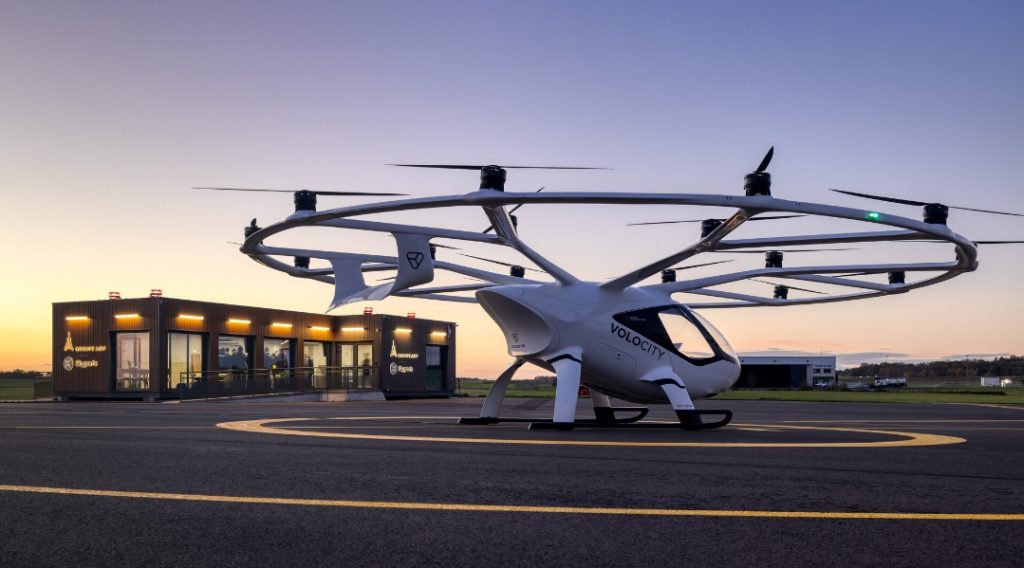
In many iteration steps, the prototype was developed into today’s 2-seat multicopter Volocity (Fig. 2).
The Volocity has already completed a very high number of manned test flights in various countries. The first commercial use was originally planned for 2024 at the Olympics in Paris, but this date could not be met due to a lack of type approvals, among other things.
Fig. 3 – Ehang test flight in Spain
Mit freundlicher Genehmigung/Courtesy of Guangzhou EHang Intelligent Technology Co. Ltd. [Homepage])
Fig. 4 – Jetson ONE from Jetson Aero
(Mit freundlicher Genehmigung/Courtesy of Jetson AB [Homepage])
Multicopter start-ups have also been founded in Asia and other countries in Europe.
In China, the company Ehang is developing a wingless vertical takeoff aircraft with performance comparable to the Velocity. Ehang has already been able to conduct a number of test flights, including one in Spain (Fig. 3). Similar to Volocopter, Ehang is addressing commercial aviation with its multicopter.
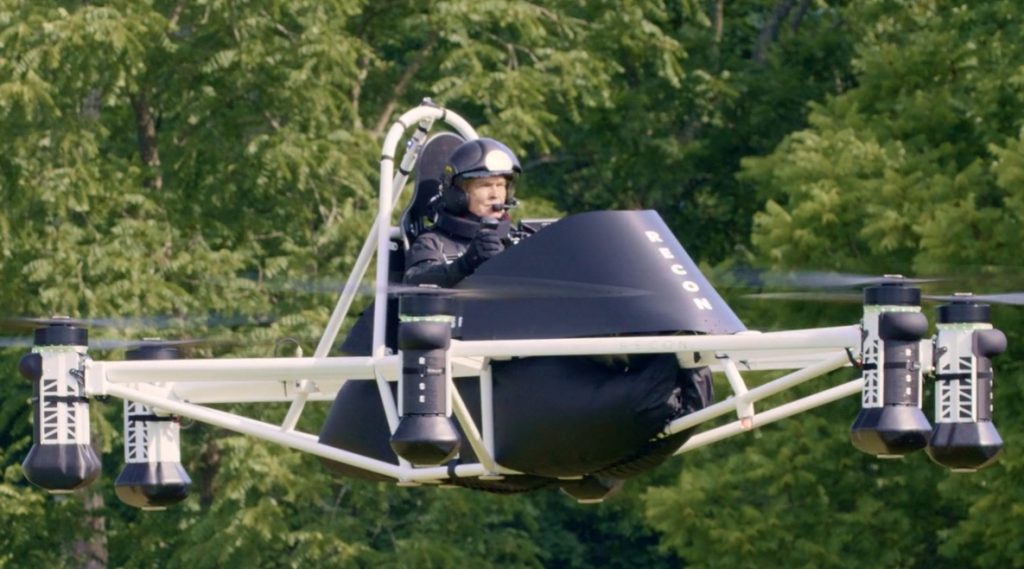
The U.S. start-up Jetson Aero is an example of a start-up that focuses on private aviation. Originally founded in Sweden, the company is one of the first to already be generating revenue in the AAM segment. Jetson has been selling its single-seat multicopter (Fig. 4) to private customers since 2021, with the first delivery taking place in 2025.
In this fascinating Video, you can see the Jetson One in flight.
Many more multicopter startups have been founded around the world, you can find a complete overview on our page eVTOL start-ups for Multicopter.
Wing-based eVTOL
Sing-baseed eVTOL get their lift during cross-country flight from the lift forces on the wings. However, like multicopters, they also require vertical propellers for takeoff and landing.
Fig. 5 – eVTOL Boeing B-22 Osprey
(Mit freundlicher Genehmigung/Courtesy of The Boeing Company [Gallery])
Fig. 6 – Wing-based eVTOL from Joby Aviation
(Mit freundlicher Genehmigung/Courtesy of Joby Aviation. (c) [Media Kit])
The pioneer among the wing-based vertical takeoffs is the B-22 Osprey (Fig. 5), which has 2 large rotors with a diameter of over 11 m, each driven by a turbine. For vertical takeoff, the propellers are in a vertical position; for forward flight, they are folded forward.
The B-22 Osprey was developed in a joint project by the U.S. companies Bell and Boeing and combines the vertical takeoff characteristics of a helicopter with a long range of a conventional aircraft. However, the B-22 is not an electric vertical takeoff aircraft, as the two turbines are powered by kerosene.
The U.S. start-up Joby adopted the principle of the tilt propellers from the B-22 and used them to develop an electric wing-based eVTOL with 6 propellers (Fig. 6). Joby has already completed a large number of test flights with its protoytpen.
Fig. 7 – Beta eVTOL with 4 vertical and 1 horizontal propeller
(Mit freundlicher Genehmigung/Courtesy of Beta Technologies Inc.. [Media Kit])
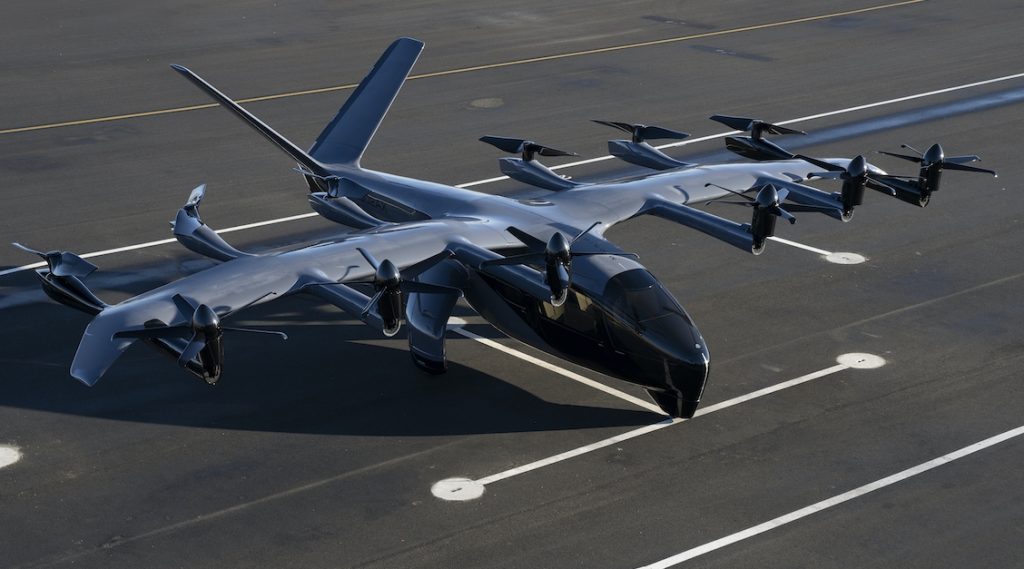
Fig. 8 – Archer eVTOL with 6 vertikal and 6 tilt propeller
(Mit freundlicher Genehmigung/Courtesy Archer Aviation Inc. [Media Kit])
Since electric motors are much lighter and cheaper than kerosene-powered turbines, many more propellers can be installed in an eVTOL.
This allows electric vertical takeoffs to be designed without tilt propellers, as shown in Fig. 7. The Beta Technologies model has 4 vertical propellers for vertical takeoff and and a thrust propeller in the tail for propulsion. During cross-country flight, the vertical propellers are driven and deactivated in a current favorable position.
A combination of tilt and vertical propellers is also possible, as shown in Fig. 8 for the eVTOL from Archer Aviation. This model has 6 vertical propellers on the trailing edge and 6 tilt propellers on the leading edge of the wing. For vertical takeoff all 12 propellers are used, for forward flight the 6 tilt propellers are moved to a horizontal position and the 6 vertical propellers are deactivated.
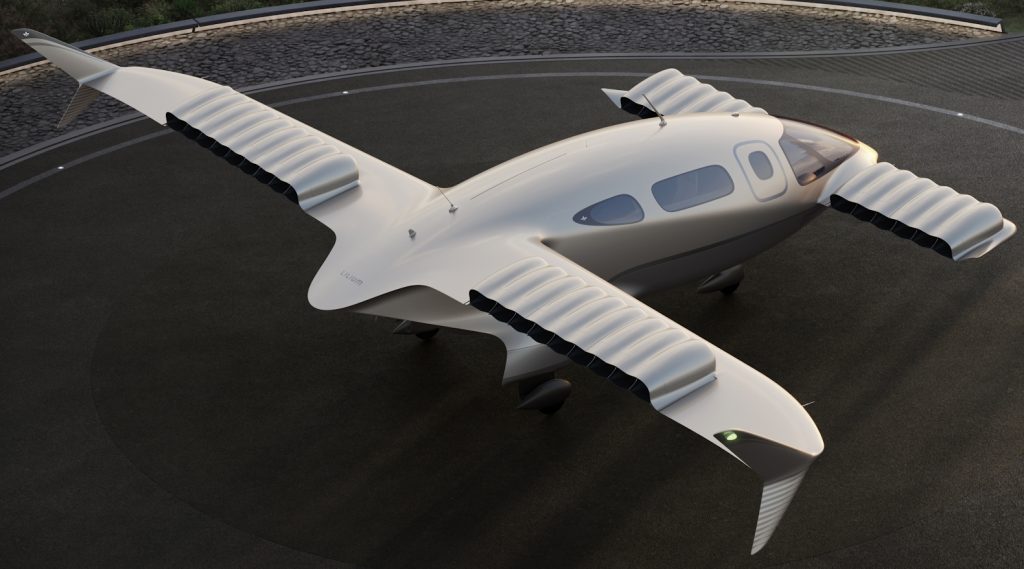
Fig. 9 – Lilium jet with 30 electric fans
(Mit freundlicher Genehmigung/Courtesy of Lilium GmbH [Media Kit])
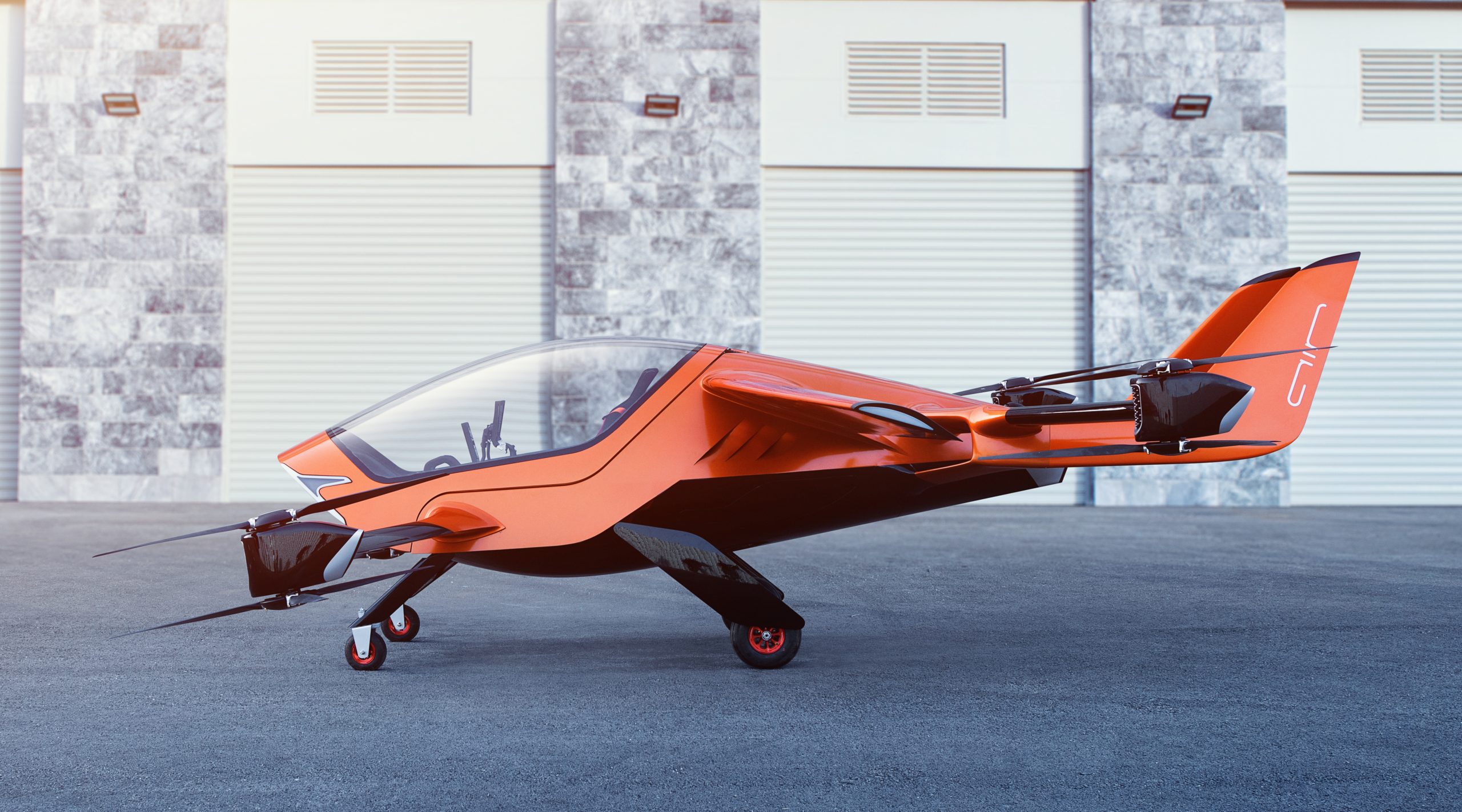
Fig. 10 – eVTOL from AIR forward inclined vertical propellers
(Mit freundlicher Genehmigung/Courtesy of AIR VEV Ltd. [Press Kit])
With 30 propellers, the Lilium Jet from the now-bankrupt German company Lilium AG had the highest number of propellers. These were enclosed; Lilium also referred to them as electric jet engines (Fig. 9). For vertical takeoff, the nozzles were to be folded into a vertical position.
The US-start-up Air is one of the companies developing an wing-based eVTOL for private customers. The model has a total of 8 propellers fixed in a vertical position with a slight incliniation in the direction of flight. The propellers are mounted on carriers in the front and at the rear of the aircraft (Fig. 10).
Many other wing-based eVTOLs have been founded around the world, see our page on start-ups for wing-based eVTOL for a complete overview.
eVTOL Business Models for Commercial Aviation
In commercial air traffic, eVTOLs will initially cover distances of up to 200 km that cannot be flown by conventional airplanes or helicopters due to lack of infrastructure, costs or noise.
Many eVTOL start-ups cite as an example the connection from the city center to the airports located on the outskirts of the city, i.e. routes that are currently served by cars or public transport in 1-2 hours. By using a vertical takeoff, the travel time can be reduced to 10-20 minutes.
Abb. 11 – Volocity über Paris
(Mit freundlicher Genehmigung/Courtesy of Volocopter GmbH [Media Hub])
Abb. 12 – Abfertigungsgebäude in Pontoise-Cormeilles bei Paris
(Mit freundlicher Genehmigung/Courtesy of Volocopter GmbH [Media Hub])
High-profile events are often used for demonstration flights:
- At Expo 2025, Skydrive conducted demonstration flights with its three-seat multicopter.
- Archer Aviation plans to launch the first commercial flights with its winged eVTOLs at the 2028 Olympic Games in Los Angeles.
The German company Volocopter originally planned to launch the first regular eVTOL-based air service in 2024 during the Olympic Games in Paris. The plan was to use existing flight corridors already approved for helicopters in order to reduce the regulatory approval effort with air traffic authorities. At Pontoise-Cormeilles airfield, a passenger terminal was built in cooperation with French airport operator Groupe ADP to test ground operations under realistic conditions (Fig. 12). Unfortunately, the planned launch date could not be met, partly because type certification had not yet been obtained.
However, the path from a flying prototype to commercial aviation is complex and time-consuming. The aircraft must undergo an extensive certification process. eVTOL manufacturers targeting commercial aviation are therefore unlikely to begin delivering their products until toward the end of the decade.
Until then, these companies need solid funding to cover the high costs of development, production, and certification. Not all startups will survive until then:
- Kitty Hawk, founded in 2010 by Google co-founder Larry Page, discontinued development in 2022. Its business model envisioned remotely operated air taxi services using a single-seat aircraft – a concept that would have been difficult to scale economically.
- At the same time, the market is beginning to consolidate. Archer Aviation agreed in August 2026 to acquire Wisk Aero from Boeing.
The high funding requirements also had far-reaching consequences for the German AAM pioneers Lilium and Volocopter:
- Lilium filed for insolvency in October 2024. An initially planned restart failed due to a lack of financing; in February 2025, the successor company also filed for insolvency, and the patents and intellectual property rights were acquired by Archer Aviation.
- After filing for insolvency in late 2024, Volocopter was acquired by Austria’s Diamond Aircraft in March 2025 and subsequently integrated into the Chinese Wanfeng Auto Holding as a sister company of Diamond. However, Volocopter’s development activities and headquarters remain in Bruchsal, Germany.
eVTOL Busines Models for private Aviation
In many countries, certification regulations for private aviation are much simpler than for commercial aviation; some eVTOL start-ups also benefit from this situation.
In the U.S., single-seat aircraft do not require certification at all if the payload is less than 113 kg (250 lb) and maximum speed is less than 102 km/h (60 mph). Aircraft in this category are classified as Ultra-Light-Vehicles (ULV) by the US Federal Aviation Administration (FAA) [2].
Fig. 13 – Multicopter Jetson ONE from Jetson Aero
(Mit freundlicher Genehmigung/Courtesy of Jetson AB [Homepage])
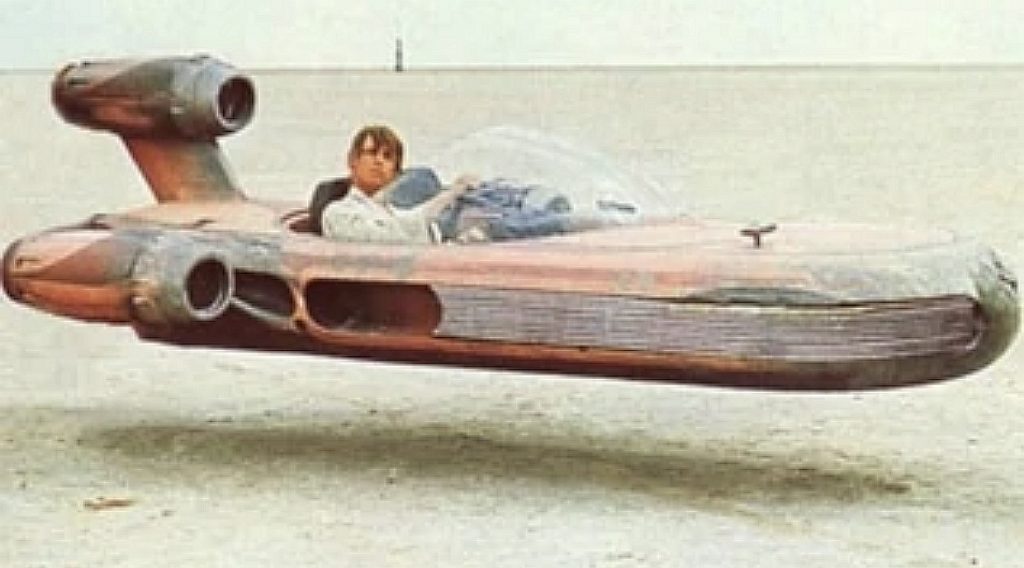
X-34 Landspeeder film prop (Star Wars, 1977)
(Mit freundlicher Genehmigung/Courtesy of Eden, Janine and Jim / Wikimedia Commons, CC BY 2.0, cropped)
The single-seat multicopter Jetson ONE (Fig. 13), developed by the U.S. company Jetson Aero, meets the ULV criteria and has been sold to private customers since 2021; the first delivery took place as early as 2025. Among startups focused on private air travel, Jetson is thus a global leader.
The video of the Jetson ONE flying over a dune landscape really fascinated us in the editorial team. It is reminiscent of Luke Skywalker gliding over the desert in the X34 Landspeeder (Fig. 14).
Fig. 15 – Multicopter from Ryse Aero
(Mit freundlicher Genehmigung/Courtesy of Ryse Aero Technologies, LCC [Homepage])
Fig. 16 – Multicopter from LIFT Aircraft
(Mit freundlicher Genehmigung/Courtesy of LIFT Aircraft Inc. [Homepage])
Two U.S. startups, Ryse Aero and LIFT Aircraft, are also developing multicopters to the FAA Ultra-Light-Vehicles specification:
- Ryse Aero was founded in Ohio, a rural area of the U.S. with very large farms. Accordingly, Ryse markets its vertical takeoff (Fig. 15) as a working tool for farmers. The multicopter is designed to help round up cattle, inspect fences or check the growth of crops.
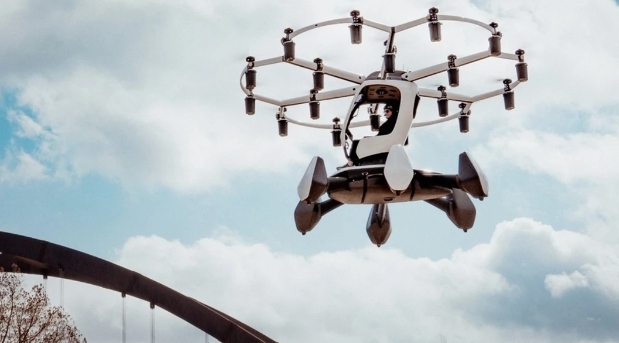
- Similar to Jetson, LIFT Aircraft is focusing on recreational flying, but wants to rent out its multicopter (Fig. 16) rather than sell it. Flight reservations in various areas of the USA can already be made on the homepage.
Sources:
[2]https://www.faa.gov/documentLibrary/media/Advisory_Circular/AC_103-7.pdf