
Index A-Z - Air
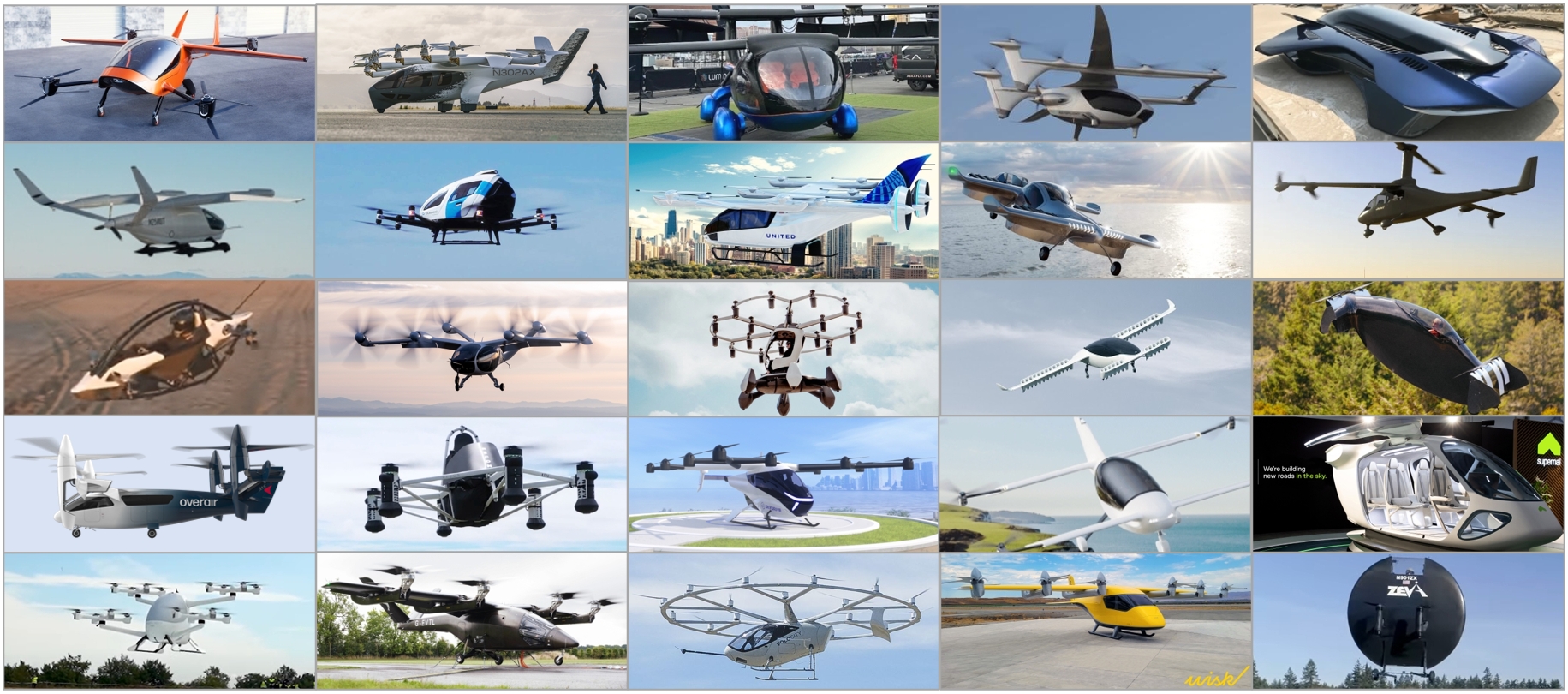
Air Airbus Alef Aeronatics Alpine Vertical Archer Aviation ARIDGE Aska Fly Autoflight Bellwether Industries Beta Technologies Crisalion Mobility Doroni Aerospace Ehang Electra ERC System Eve Air Mobility FAST Horizon Aircraft Jaunt Jetson Aero Joby Aviation Kitty Hawk LIFT Aircraft Lilium Opener Overair Pantuo Aviation Pivotal Ryse Aero Technologies SkyDrive Skyfly Technologies Supernal Aero Umiles Vaeridion Vertical Aerospace Volocopter Wisk Aero Xpeng AeroHT ZEVA Aero
Start-up for wing-based eVTOLs, founded in Israel in 2017. AIR is developing the AIR ONE, a two-seat vertical take-off and landing aircraft primarily aimed at private customers. Unlike most eVTOL start-ups, AIR is therefore not primarily targeting commercial aviation.
The USA is AIR’s most important target market. In 2026, AIR established its new US headquarters as well as a production and flight-testing center at SunTrax in Florida, near Orlando. Flight testing in Florida has been underway since 2025, and US production of the AIR ONE and its cargo version is scheduled to begin there by the end of 2026.
The AIR ONE is intended to enter the US market as a Light Sport Aircraft (LSA) under the new FAA MOSAIC rules. AIR is therefore pursuing a considerably simpler certification pathway than manufacturers of commercial eVTOL air taxis. In July 2026, the FAA accepted the required ASTM standards for light-sport powered-lift aircraft.
Interest appears to be strong: AIR reports more than 2,500 pre-orders for the AIR ONE. In addition to the piloted aircraft, the company is producing an uncrewed cargo version, with the first units already delivered to customers.
This company video shows the AIR ONE in flight.

AIR ONE Full-Scale Prototype
(Mit freundlicher Genehmigung/Courtesy of AIR VEV Ltd. [Press Kit])

AIR ONE – Inclined vertical propellers
(Mit freundlicher Genehmigung/Courtesy of AIR VEV Ltd. [Press Kit])
The AIR ONE is powered by 8 electric vertical propellers (Propeller Configuration PC4). Two counter-rotating propellers are arranged coaxially, resulting in a total of 4 propeller pairs positioned in front of and behind the wing (2nd figure). The propellers are powered by 8 independent 70-kW electric motors supplied by the Japanese manufacturer Nidec.
During cruise flight, the wing generates about 60% of the lift, allowing propeller power to be reduced. Movable propulsion units or a tilting mechanism are not required for transition. The aircraft is controlled using a single control stick. The flight control system automatically translates the pilot’s inputs into the required motor commands.
Safety features include a ballistic recovery system (BRS).
The current version features 4 independent Li-ion battery packs with a total capacity of 74 kWh. AIR specifies a flight time of up to 1 hour, a cruise speed of 85 kn (157 km/h), a fast cruise speed of 115 kn (213 km/h), and a maximum payload of 250 kg. The suppliers of the battery cells and battery packs are not known to the editors.
The first uncrewed flight of a full-scale prototype took place in 2022. Since then, several prototypes have completed thousands of test flights. In July 2026, AIR unveiled a production-intent version featuring a primary structure developed by EDAG, new Nidec motors, and a new battery system. Flight testing of this version began in 2026.
For the US market, AIR is pursuing certification as a Light Sport Aircraft under FAA MOSAIC. In July 2026, the FAA accepted the required ASTM standards for light-sport powered-lift aircraft.
Sources
[1] https://www.airev.aero/
[2] https://www.nidec.com/en/product/news/2026/news0728-01/
[3] EDAG – AIR unveils production-intent AIR ONE
[4] FAA – MOSAIC / Light-Sport Aircraft
[cs 18.09.2026]
European aircraft manufacturer Airbus has developed the CityAirbus NextGen, a technology demonstrator for an all-electric wing-based eVTOL. The prototype weighs around 2 t, has a wingspan of approximately 12 m, and was unveiled to the public for the first time in March 2024 [1].
Airbus uses a lift-and-cruise configuration with fixed wings, a V-tail, and a total of 8 electrically powered, non-tilting propellers. Airbus specifically highlights the mechanical simplicity of the concept, which does not require tilting propellers [1]. The technical arrangement of the propellers is described in more detail in the following section.
The CityAirbus NextGen began initial flight testing in late 2024. In early 2025, however, Airbus Helicopters announced that it would not launch a commercial production program based on the CityAirbus NextGen for the time being. Reasons cited included the insufficient maturity of battery technology as well as other technological and economic factors.
The CityAirbus NextGen should therefore currently be regarded primarily as a technology demonstrator. Airbus continues to pursue the project within its Advanced Air Mobility activities and uses the insights gained to further develop electric aviation technologies [1].
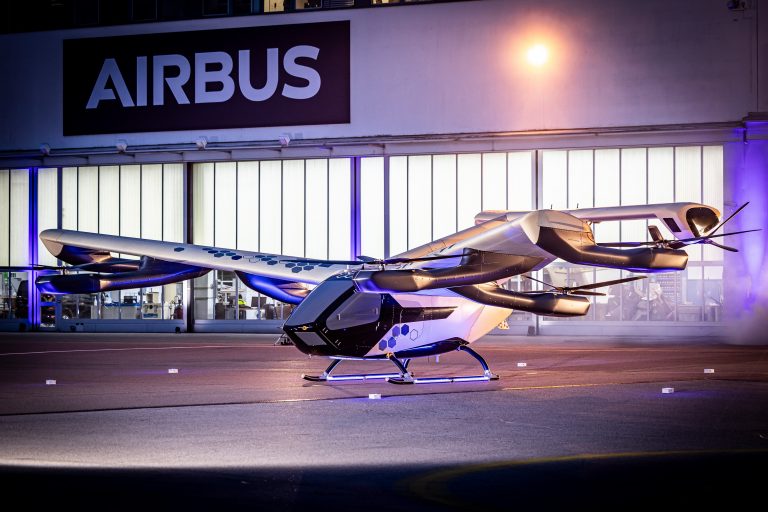
NextGen City Airbus – Side view
(Mit freundlicher Genehmigung/Courtesy of Airbus SAS [Press Relesae])
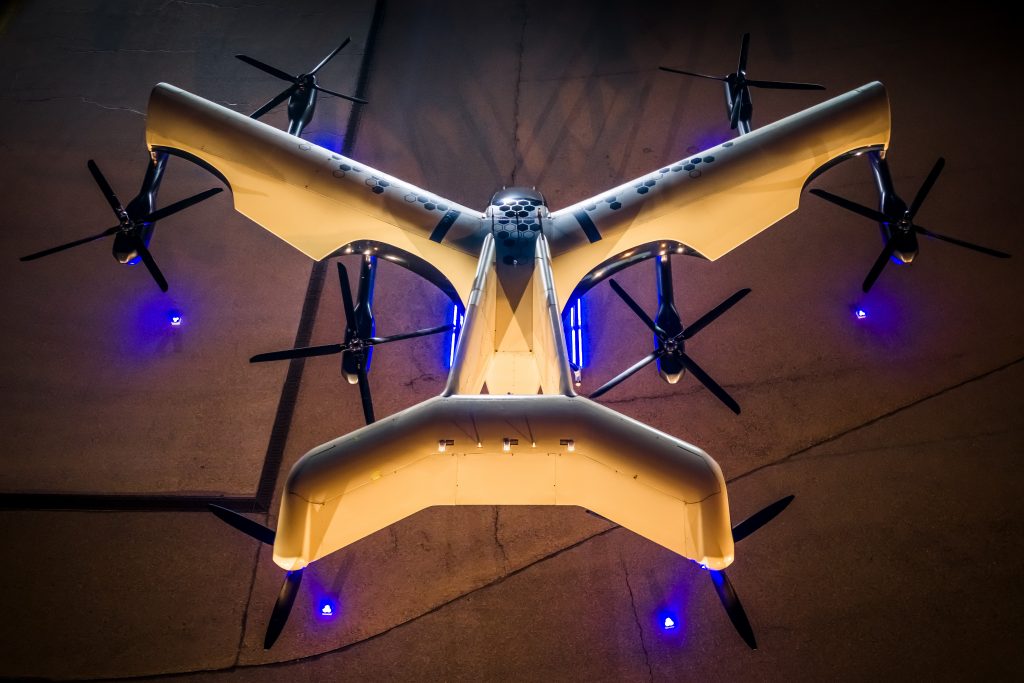
NextGen City Airbus – Top view
(Mit freundlicher Genehmigung/Courtesy of Airbus SAS [Press Relesae])
The CityAirbus NextGen is designed for a range of 80 km and a cruise speed of 120 km/h. It has a capacity of 4 people including the pilot [1].
Airbus identifies potential applications including passenger transport, connections between cities and communities, ecotourism, and medical services. To explore these applications, Airbus is working with various flight operators and other partners in Europe, Asia, Latin America, and the Middle East [1].
The CityAirbus NextGen uses an all-electric propulsion system powered by Li-ion batteries. However, Airbus has not publicly disclosed the cell manufacturer or detailed information on cell chemistry, cell format, or energy density. In early 2025, Airbus cited battery performance as one of the factors requiring further development before launching a commercial eVTOL program.
Sources
[1] https://www.airbus.com/en/innovation/energy-transition/hybrid-and-electric-flight/cityairbus-nextgen (Homepage, accessed 16.09.2026)
[cs 31.07.2024, 18.09.2026]
Alef Aeronautics [↑] [↓] [⇑] [⇓]
US start-up for multicopters, founded in Silicon Valley in 2015 and now headquartered in San Mateo, California. Early investors include well-known venture capitalist Tim Draper.
Alef is developing the Model A, an unusual two-seat flying car for private customers that is designed both to drive on public roads and to take off and land vertically. This gives Alef a unique position among multicopter start-ups. ASKA is also developing a flying car, but uses wing-based eVTOL technology.
In 2023, the Model A received an FAA Special Airworthiness Certificate, which does not constitute regular certification for customer operations. Flight-capable prototypes have been undergoing testing since then. In late 2025, Alef began manufacturing the first vehicles in California; initially, only a small number of units are being built by hand and provided to selected customers for controlled real-world testing.
The expected price remains around $300,000. Alef accepts reservations against a deposit and now reports several thousand reservations. However, a reservation guarantees neither a fixed delivery date nor the final purchase price.

Alef Flying Car at the Airfield
(Mit freundlicher Genehmigung/Courtesy of Alef Aeronautics Inc. [Press Kit])

Alef Flying Car on a Test Flight
(Mit freundlicher Genehmigung/Courtesy of Alef Aeronautics Inc. [Press Kit])
The Model A features 8 electrically powered vertical propellers that are fully enclosed within the vehicle’s lattice-like body structure. The open lattice structure allows vertical airflow while protecting the propellers (Fig. 1). The vehicle therefore has no externally mounted propellers.
The targeted range is 177 km (110 mi) in the air and 322 km (200 mi) on the road. For road operation, the Model A is additionally equipped with electric in-wheel motors; its road speed is limited to approximately 40 km/h.
The transition to forward flight is unusual. After vertical take-off, the vehicle body rotates approximately 90 degrees to the side. The two sides of the body then function as the wings of a biplane. The cabin is mounted so that it can rotate and maintain its horizontal orientation. Separate horizontal propellers for forward propulsion are therefore not required.
The design has now also been demonstrated in practice. In 2025, Alef released the first footage of an actual test flight in which a car-like prototype takes off vertically from a road, flies over another vehicle, and lands again (Fig. 2).
The flight video can be viewed on Alef’s website.
Li-ion batteries are used for energy storage. The suppliers of the battery cells and battery packs are not known to the editors.
Sources
[1] https://alef.aero/ (Homepage, accessed 16.09.2026)
[cs 06.07.2023, 18.09.2026]
Alpine Vertical [↑] [↓] [⇑] [⇓]
US start-up developing winged eVTOLs, originally founded by Stephen Tibbitts under the name ZEVA Aero. In May 2024, ZEVA Aero was renamed Alpine Vertical and fundamentally changed its technical focus.
ZEVA had previously developed the ZEVA Zero/Z2, an unusual disc-shaped, single-seat multicopter. The project is no longer being pursued; further information can be found here.
The current project is the Argon, a two-seat winged VTOL with hybrid propulsion. The aircraft is based on an existing high-wing airplane and combines electric vertical-lift propellers for takeoff and landing with an internal combustion engine for cruise flight. By using a proven aircraft design, the company aims to reduce development effort and certification risks.
The targeted range is more than 480 km (300 mi). The Argon is also designed to take off and land conventionally from a runway and is aimed at private pilots, flight schools, and emergency medical services, among others. Initial certification is planned in the US Experimental Amateur-Built category.
The Argon remains in development. In 2025, Alpine Vertical announced a $20 million funding round to accelerate the development and commercialization of the hybrid VTOL.
Sources
[1] https://alpine-vertical.com/ (homepage, accessed September 16, 2026)
[cs 07.09.2024, 16.09.2026]
Archer Aviation [↑] [↓] [⇑] [⇓]
US company developing winged eVTOLs, founded in California in 2018 by Adam Goldstein and Brett Adcock. Its target market is commercial aviation, particularly air taxi services on short intra- and intercity routes [1].
The two-seat Maker technology demonstrator, which first flew in 2021 and completed a full transition maneuver in 2022, was followed by the production model Midnight. The aircraft accommodates 4 passengers plus a pilot and is primarily designed for rapid back-to-back short-distance flights of approximately 20–50 miles (32–80 km).
Midnight is now undergoing advanced crewed flight testing. In 2025, the aircraft completed its first crewed flight; in 2026, this was followed by the first crewed city-to-city flights in California. Archer is also preparing for initial US operations under the eVTOL Integration Pilot Program (eIPP) and for air taxi operations at the LA28 Olympic Games.
The FAA type certification process is also well advanced. In April 2026, Archer became the first eVTOL manufacturer to complete Phase 3 of the FAA’s four-phase certification process and is working on the compliance demonstrations and testing required for the final Phase 4. In parallel, Archer is pursuing an accelerated certification pathway in the United Arab Emirates.
A strategic partner and early major customer is United Airlines. In addition, Archer is expanding its business into other areas, including autonomous and hybrid-electric VTOL aircraft for civilian and military applications.

Archer Aviation model Midnight
(Mit freundlicher Genehmigung/Courtesy Archer Aviation Inc. [Media Kit])

Archer Aviation model Midnight – Interieur
(Mit freundlicher Genehmigung/Courtesy Archer Aviation Inc. [Media Kit])
Midnight features 12 electric propellers: 6 propellers on the leading edge of the wing tilt from the vertical position into the direction of flight during the transition, while 6 additional propellers are used exclusively for vertical lift (propeller configuration PC3). During cruise flight, the rear propellers are switched off, with lift then generated primarily by the wing.
The propulsion system is designed for redundancy and fault tolerance. Midnight has 12 independent electric motors and propellers. The flight control system is also redundant, with multiple independent computers, sensors, and power supplies designed to avoid a single point of failure.
The Li-ion battery cells continue to be supplied by Molicel (E-One Moli Energy), a company of Taiwan’s TCC Group. Molicel specializes in high-performance cylindrical cells with high discharge rates and fast-charging capability and supplies other eVTOL manufacturers in addition to Archer, including Vertical Aerospace.
Midnight is designed for a range of up to 161 km (100 mi) and a top speed of approximately 241 km/h (150 mph). However, its typical mission profile consists of short flights of around 32 km (20 mi), with the battery intended to be recharged in about 10 minutes between flights for the next short-distance mission.
Production is being established jointly with Stellantis. For this purpose, Archer opened the approximately 37,000 m² ARC manufacturing facility in Covington, Georgia. Production of the first Midnight aircraft began in 2025; in the long term, the facility is planned to be expanded to a capacity of up to 650 aircraft per year. Stellantis contributes capital, personnel, and experience from high-volume automotive manufacturing.
Archer Aviation is listed on the New York Stock Exchange (NYSE: ACHR, WKN A3C3BQ, ISIN US03945R1023).
Sources
[1] https://archer.com/ (homepage, accessed September 16, 2026)
[cs 13.01.2023, 18.09.2023, 16.09.2026]
ARIDGE (formerly XPeng AeroHT) [↑] [↓] [⇑] [⇓]
ARIDGE is a Chinese company developing aircraft and so-called flying cars, headquartered in Guangzhou. Until October 2025, the company operated under the name XPeng AeroHT and is affiliated with Chinese electric vehicle manufacturer XPeng. The company’s aircraft development activities date back to 2013 [1].
The company’s current focus is the Land Aircraft Carrier, a modular vehicle concept consisting of a six-wheel electric carrier vehicle and a two-seat multicopter transported inside it. Unlike the flying cars developed by Alef Aeronautics and ASKA, it is not a single vehicle capable of both driving and flying. The road and flight modules are two separate vehicles [1].
With the Land Aircraft Carrier, ARIDGE targets both private customers and applications in areas such as tourism and public services. According to the company, around 7,000 pre-orders had been received by mid-2026. The announced sales price is expected to be below RMB 2 million [2].
The factory built for the Land Aircraft Carrier in Guangzhou is designed for a capacity of up to 10,000 flight modules per year. The first flight module rolled off the production line in November 2025, followed in March 2026 by the pre-series production of several aircraft and subsequent test flights [3].
The Chinese aviation certification process is proceeding in parallel. In March 2024, the CAAC accepted the application for the X3-F flight module’s Type Certificate (TC), followed in May 2025 by the application for a Production Certificate (PC). The certification processes have not yet been completed. ARIDGE continues to target the start of series deliveries in 2026 [4].
In the longer term, the company is pursuing a broader product strategy. In addition to the modular Land Aircraft Carrier, ARIDGE is developing aircraft concepts that are intended to integrate road and flight functions more closely.
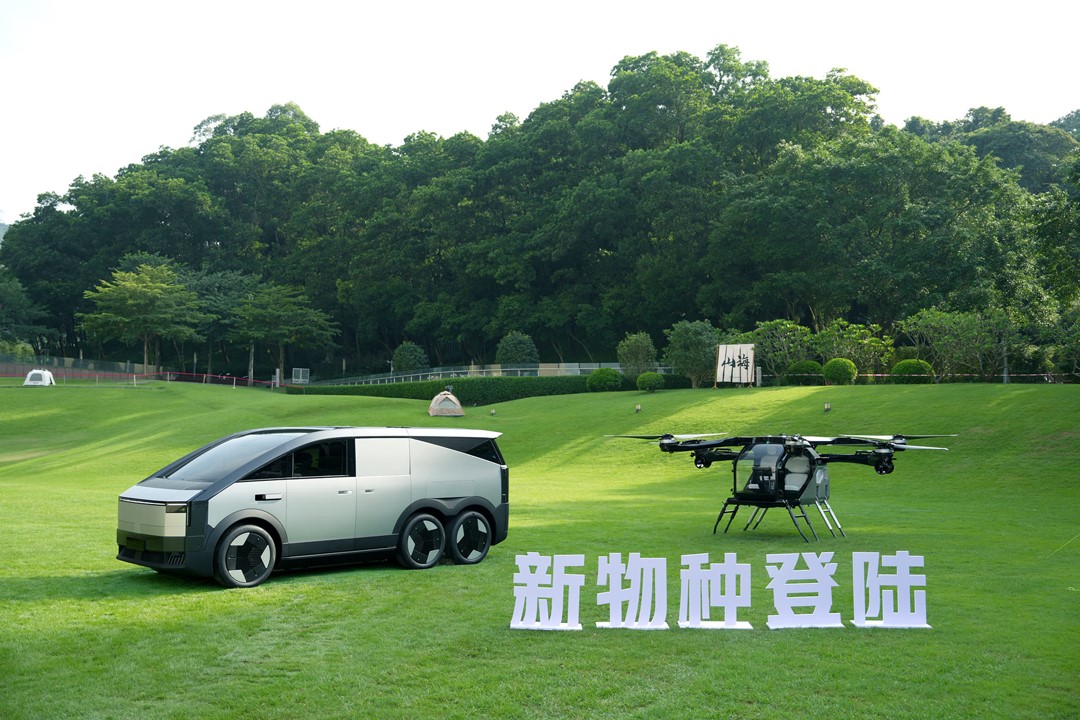
Multicopter and carrier vehicle from Xpeng Aerhot
(Mit freundlicher Genehmigung/Courtesy of XPENG AEROHT [News])
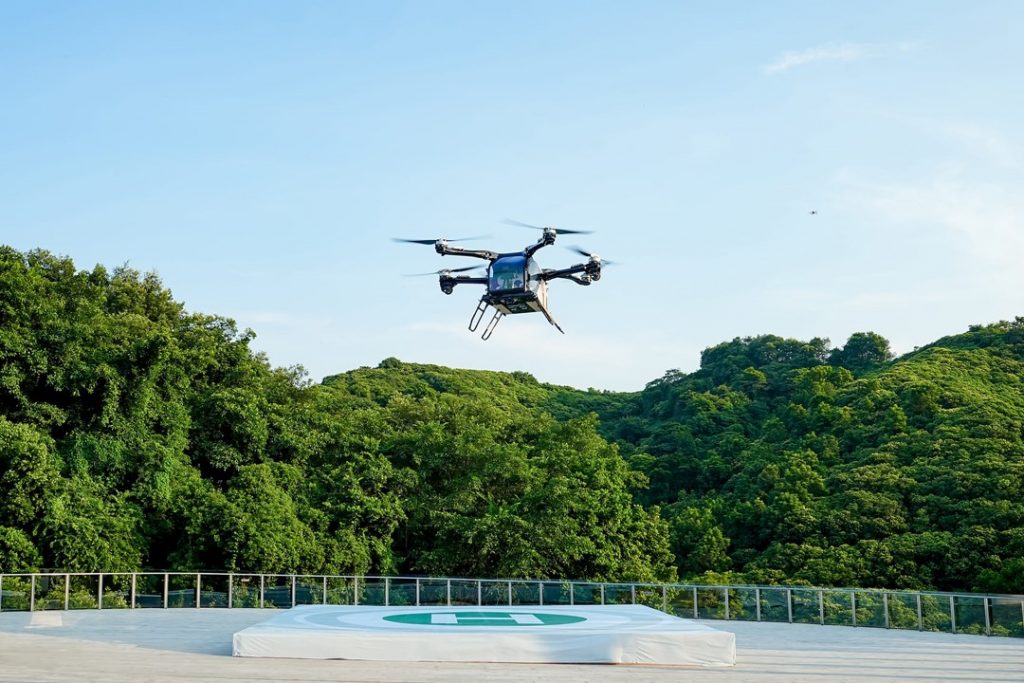
Xpeng Aerhot Multicopter on a Test Flight
(Mit freundlicher Genehmigung/Courtesy of XPENG AEROHT [News])
The Land Aircraft Carrier consists of an approximately 5.5 m long, six-wheel electric carrier vehicle and a two-seat multicopter carried in the rear. The carrier vehicle also serves as a transport, storage, and charging system for the flight module. The flight module can be automatically deployed from and retrieved into the vehicle [1].
The flight module features 6 arms with 6 propellers and is designed for 2 people. The propellers and arms can be folded for transport, allowing the entire aircraft to fit inside the rear of the carrier vehicle [1].
The flight controls were designed for ease of operation. A single-hand control stick combines the main control functions. The aircraft also features automated flight functions intended to make operation easier for users with comparatively little flight experience [1].
The safety concept is based on redundant systems, including propulsion, power supply, flight control, navigation, and communication. According to the manufacturer, the aircraft is designed to continue controlled flight and land even if two diagonally opposite rotors fail [1].
The electric carrier vehicle features an 800-V architecture and can transport the flight module and charge its battery. This is intended to allow the aircraft to operate independently of dedicated charging infrastructure for aircraft [1].
The manufacturer of the battery cells used in the flight module is not known to the editors.
Sources
[1] XPeng/ARIDGE – Land Aircraft Carrier (accessed 17.09.2026)
[2] CnEVPost – ARIDGE/certification status (accessed 17.09.2026)
[3] Guangzhou Development District – pre-series production (accessed 17.09.2026)
[4] XPeng – TC/PC certification (accessed 17.09.2026)
[cs 13.09.2024, 19.09.2026]
US start-up for wing-based eVTOLs, founded in California in 2018 by Guy and Maki Kaplinsky [1]. ASKA is developing the ASKA A5, a four-seat flying car designed to both drive on public roads and take off and land vertically.
ASKA is therefore pursuing an unusual drive-and-fly concept: With its wings folded, the A5 has approximately the dimensions of a large SUV and can be driven on public roads; for flight, the wings are unfolded (Fig. 1). This gives ASKA a unique position among wing-based eVTOLs. Alef Aeronautics is also developing a flying car, but uses multicopter technology.
The A5 full-scale prototype received an FAA Special Airworthiness Certificate for research and development flight testing in 2023, which was renewed in 2024. The uncrewed prototype has since completed several hundred hover and VTOL tests as well as more than 500 miles of road testing. The full FAA type certification process is continuing; the next major step is establishing the G-1 Certification Basis.
The originally planned certification and production schedule was therefore not achieved. ASKA now positions the A5 not only for private customers but also for logistics, rescue/MEDEVAC operations, and tourism. In 2025, the company acquired its own airfield, Eagle Field in California, for development and testing.
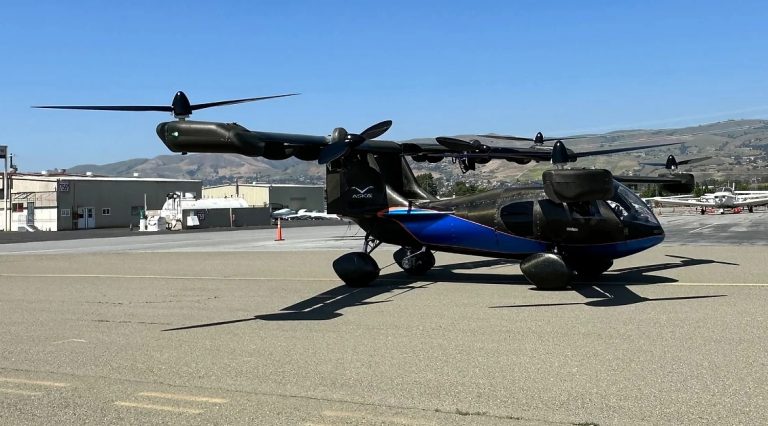
Flying car ASKA(TM) A5 on air field
(Mit freundlicher Genehmigung/Courtesy of ASKA/NTF Inc. Ltd. [Homepage])

Flying car ASKA(TM) A5 in public traffic
(Mit freundlicher Genehmigung/Courtesy of ASKA/NTF Inc. Ltd. [Homepage])
With its wings folded, the A5 has approximately the footprint of a large American SUV. On the road, it is electrically powered by 4 in-wheel motors (Fig. 2).
For flight, the two wings are unfolded. The A5 has a total of 6 electric propellers: 4 propellers on the wings can be tilted for the transition between vertical and forward flight, while 2 additional propellers at the rear provide vertical lift (propeller configuration PK3).
In addition to vertical take-off and landing, a conventional runway take-off is also possible. When a runway is available, this can reduce energy consumption and increase range.
The A5 has a capacity of 4 people (3 passengers plus 1 pilot). ASKA specifies a maximum flight range of 400 km (250 mi) and a top speed of 240 km/h (150 mph). For road operation, a speed of up to 113 km/h (70 mph) is stated.
The A5 uses a hybrid-electric powertrain. The propellers are electrically driven, while a gasoline-powered range extender generates additional electrical energy during flight. ASKA intends this system to provide a longer range than a purely battery-electric powertrain.
Energy is stored in Li-ion batteries. The manufacturer of the battery cells and packs is not known to the editors.
Sources
[1] https://www.askafly.com/ (Homepage, accessed September 16, 2026)
[cs 11.01.2023, 19.09.2023, 16.09.2026]
Chinese company for wing-based eVTOL, founded by Tian Yu in 2017 [1]. AutoFlight initially focused on the development of cargo drones and now also develops eVTOL aircraft for commercial passenger transport.
The passenger model V2000EM Prosperity is a 6-seat eVTOL for 5 passengers plus pilot. It uses separate propellers for vertical lift and forward flight (propeller configuration PK2). The technical concept therefore requires neither tilting propellers nor a mechanical transition of the propulsion system.
AutoFlight specifies an operational range of 200 km, a maximum take-off weight of 2,400 kg and a maximum flight altitude of 3,000 m for the V2000EM Prosperity.
In February 2023, an earlier Prosperity prototype flew 250.3 km on a single battery charge, setting an eVTOL record at the time. This video shows the record flight.
In 2024, Prosperity also completed a 50-km intercity demonstration flight from Shenzhen to Zhuhai. The type certification process with the Chinese aviation authority CAAC has been underway since April 2024; AutoFlight is targeting completion of certification in 2026.
AutoFlight is further ahead with the cargo version, the V2000CG CarryAll: in 2024, it received its Type Certificate (TC) from the CAAC, followed by a Production Certificate (PC). AutoFlight is thus pursuing a development strategy that progresses from cargo to passenger transport.

Prosperity I GEN 4 – Exterieur
(Mit freundlicher Genehmigung/Courtesy of Autoflight Limited [Homepage])

Prosperity I GEN 4 – Interieur
(Mit freundlicher Genehmigung/Courtesy of Autoflight Limited [Homepage])
Prosperity features a fully electric propulsion system. AutoFlight develops key components such as electric motors, motor controllers, avionics, and composite structures in-house. The energy storage system consists of independent battery packs with multi-level protection.
Since 2024, AutoFlight has maintained a strategic battery partnership with CATL. The two companies are jointly developing eVTOL batteries with higher energy density and power as well as improved safety and service life. CATL is also a strategic investor in AutoFlight.
AutoFlight is now pursuing international commercialization. In addition to China, projects are being developed in Southeast Asia, Central Asia, Hong Kong, and the Middle East. In August 2026, for example, AutoFlight signed an agreement with Whitesky Aviation for a planned order of 60 Prosperity aircraft for Indonesia.
AutoFlight also continues to have a presence in Europe. AutoFlight Europe GmbH was initially based in Augsburg; in August 2026, its registered business address was moved to Mönchengladbach.
Sources
[1] https://www.autoflight.com/ (Homepage, accessed 16.09.2026)
[cs 27.09.2022, 19.09.2026]
Bellwether Industries [↑] [↓] [⇑] [⇓]
British start-up for multicopters, founded in London in 2019 [1]. The founders have been working on concepts for compact aircraft for urban environments since 2013/2014.
Bellwether calls its unusual aircraft Volar. Characteristic features include the wingless, compact airframe and fully enclosed electric propellers. This means that there are no exposed rotors outside the aircraft – a significant advantage for operation in densely built-up areas.
Following the Gazelle and Antelope development stages, Bellwether is currently testing Oryx, the 3rd generation of the Volar concept. Oryx is a 3-seat test platform measuring approximately 6.3 × 3.7 × 1.9 m. Flight testing is taking place in locations including Dubai and is being used to further develop flight control, stability, range, and payload.
This video shows a flying prototype of the unusual Volar concept.
Bellwether is now working on the next, production-oriented generation. According to current plans, the first aircraft are expected to be sold to fleet operators from 2028 for premium point-to-point connections and emergency response operations. In the longer term, sales to private customers are still planned.
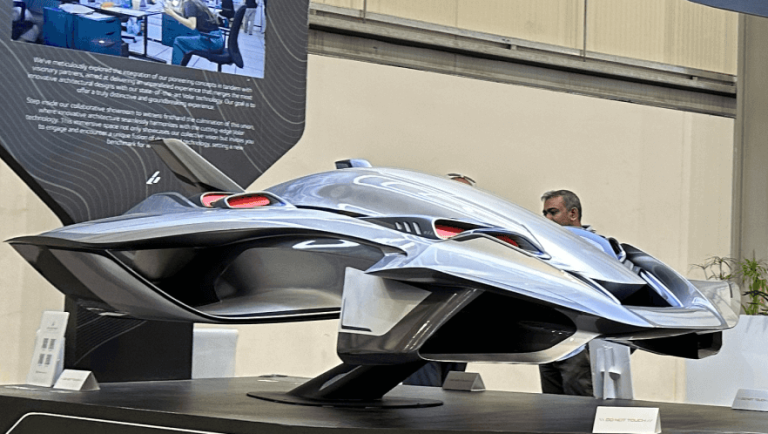
Bellwether trade show exhibit
(Mit freundlicher Genehmigung/Courtesy of Bellwether Industries Limited [Homepage])

Bellwether Multicopter Oryx (Animation)
(Mit freundlicher Genehmigung/Courtesy of Bellwether Industries Limited [Homepage])
Bellwether uses a fully electric propulsion system with propellers completely enclosed within the airframe. For the development of its electric propulsion systems, the company is working with German specialist Schübeler Technologies.
Development is progressing through several generations of prototypes. Oryx is being used in particular to test flight control, payload, stability, and range. The data collected are intended to support the development of a production-oriented Volar.
For certification, Bellwether is pursuing a step-by-step approach. The Euton, developed for motorsport and demonstration applications, is intended to provide extensive operational experience; according to the company, experimental operations are possible at 40 locations in 26 countries. In parallel, Bellwether is working on the development of a production-ready Volar.
Li-ion batteries are used for energy storage. The manufacturer of the battery cells and packs is not known to the editors.
Sources
[1] https://www.bellwether-industries.com/ (Homepage, accessed 16.09.2026)
[cs 19.12.2022, 19.09.2026]
BETA Technologies [↑] [↓] [⇑] [⇓]
US company for electric aircraft, founded by Kyle Clark in Vermont in 2017; target markets include cargo and logistics, medical transport, and passenger transport [1].
A distinctive feature is BETA’s dual eVTOL/cTOL strategy: BETA is developing the ALIA platform in parallel as the ALIA VTOL (A250) for vertical take-off and landing and as the ALIA CTOL (CX300) for conventional runway take-off. Both variants share key components and technologies, including the battery, electric propulsion system, flight controls, and avionics.
The ALIA VTOL is a wing-based eVTOL with 4 fixed propellers for vertical lift and one pusher propeller for forward flight (propeller configuration PC2). The ALIA CTOL eliminates the 4 lift propellers and uses the same basic platform as a more aerodynamically efficient electric aircraft for operation from existing airports.
Both versions accommodate 5 passengers plus pilot or, alternatively, around 5.7 m³ (200 ft³) of cargo. BETA specifies a top speed of 153 kn (283 km/h) for both variants. The CTOL has already achieved a maximum demonstrated range of 336 nm (622 km).
BETA is initially focusing on the faster market entry of the ALIA CTOL. FAA type certification is targeted for late 2026/early 2027. For the technically more complex ALIA VTOL, type certification is planned for late 2027/early 2028. Both variants are already undergoing extensive flight testing.
BETA has an unusually broad customer base: Air New Zealand and United Therapeutics are among the major CTOL customers; VTOL orders include aircraft for logistics from UPS and Bristow, for medical operations from Metro Aviation and New Zealand Air Ambulance, and for passenger flights from FlyNYON. Together with United Therapeutics, the CTOL was already used in the FAA eIPP in 2026 to transport manufactured organs.
BETA also relies on technology partnerships: together with GE Aerospace, the company is developing a hybrid-electric turbogenerator for future aircraft. BETA also works with the US military and is developing the MV250, an autonomous hybrid-electric variant of the ALIA platform.
This company video shows BETA’s development history and the ALIA aircraft in flight.

Alia at test flight over lake camplain, Vermont, USA
(Mit freundlicher Genehmigung/Courtesy of Beta Technologies Inc.. [Media Kit])

AC fast charging station from Beta Technologies
(Mit freundlicher Genehmigung/Courtesy of Beta Technologies Inc.. [Media Kit])
One of BETA’s core competencies is battery technology. The battery cells are sourced from large-scale production, while BETA develops and manufactures the battery modules and packs in-house. The current cell manufacturer, cell format, and cell chemistry have not been disclosed [1].
In its full configuration, the ALIA platform’s battery system consists of 5 identical packs with 45 kWh each, providing a total capacity of 225 kWh. Depending on range and payload requirements, the architecture can be configured with 4 or 5 packs. Each pack consists of 11 subpacks, weighs 255 kg, and operates at up to 832 V. Energy density at pack level is 176 Wh/kg, with peak power exceeding 400 kW.
The modular architecture also provides redundancy: the electric motors can be supplied by multiple battery packs. Each pack has its own battery management system (BMS), electrical fuses, and contactors. Additional safety features include redundant fire detection, containment of individual subpacks to prevent the propagation of thermal runaway, and emergency venting to the outside.
A distinctive feature is the close integration of the battery system with the ground infrastructure. The separate TMS Cube can thermally precondition and cool the aircraft batteries on the ground via a liquid cooling circuit. The thermal management system supports fast charging in particular and keeps the battery within its specified temperature range before flight.
BETA also develops its own charging technology. The stationary Charge Cube is supplied with 480 V AC three-phase power from the grid. An integrated AC/DC converter provides the aircraft with up to 320 kW DC at a maximum of 1,000 V. In combination with thermal conditioning, BETA specifies an optimized charging time of approximately 35 minutes for ALIA.
The charging infrastructure is designed to be manufacturer-independent and can also be used by other electric aircraft as well as electric road vehicles. In addition to the stationary Charge Cube, BETA offers the mobile Mini Cube and the separate TMS Cube. By mid-2026, BETA’s charging network already comprised 138 locations.
Sources
[1] https://beta.team/ (Homepage, accessed 16.09.2026)
[cs 29.09.2022, 19.09.2026]
Crisalion Mobility [↑] [↓] [⇑] [⇓]
Spanish eVTOL start-up based in Madrid, which initially operated under the name UMILES Next and developed the patented FlyFree technology for particularly stable vertical take-off and landing aircraft [1].
However, development did not progress to type certification. Crisalion Mobility filed for insolvency in November 2025, and liquidation proceedings were initiated at the same time. The Integrity project is therefore likely to have been discontinued.
The technology was initially tested with the single-seat Concept, a multicopter technology demonstrator that completed numerous test flights from 2019 onwards. FlyFree technology uses individually controllable propulsion units to provide active stabilization and high maneuverability.
The subsequent Integrity production project was based on this technology. The considerably larger multicopter was designed for 5 passengers plus pilot and intended for passenger transport, cargo, and emergency response operations. The planned specifications included a range of 130 km, a cruise speed of 180 km/h, and a payload of 500 kg.
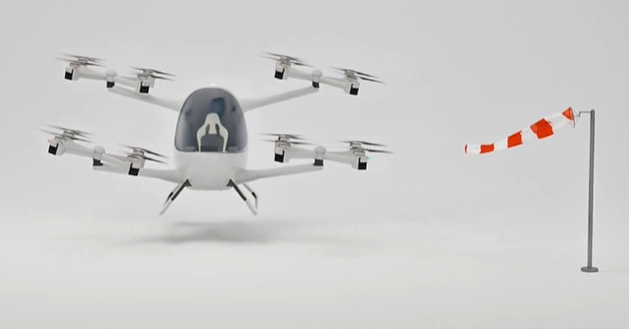
UMILES roll stabilization technology
(Mit freundlicher Genehmigung/Courtesy of UMILES Technologies S.L. [Homepage])
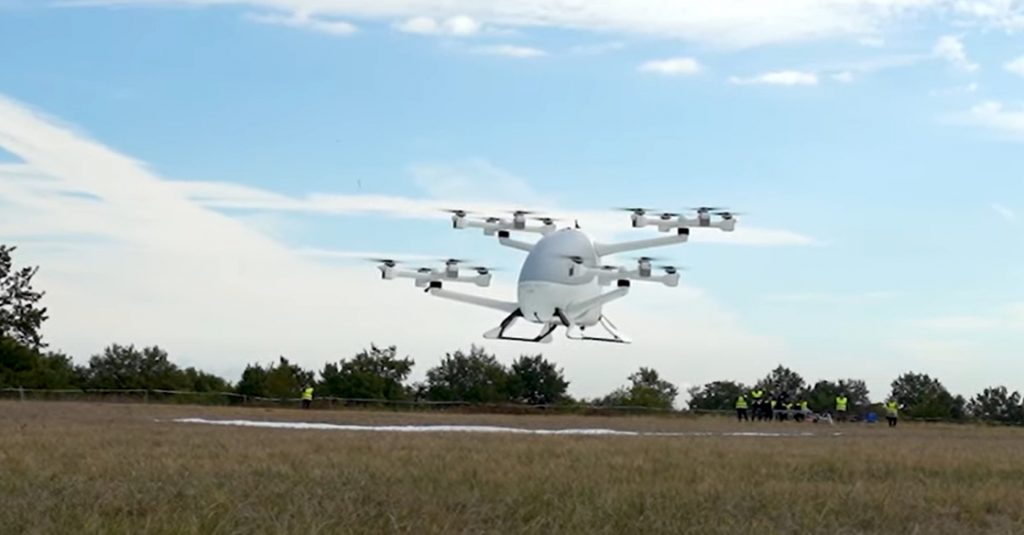
Unmanned test flight 2022 in Toulouse, Frankreich
(Mit freundlicher Genehmigung/Courtesy of UMILES Technologies S.L. [Homepage])
Crisalion’s key technical feature was its patented FlyFree technology. Four propellers are grouped together in each movable propulsion unit; the aircraft therefore has a total of 16 propellers in 4 tilting units. These units can be tilted independently, enabling active stabilization and control of the aircraft.
The principle was initially tested with the single-seat Concept technology demonstrator. In crosswinds, the propulsion units can be tilted against the direction of the wind while the cabin remains largely horizontal. This video shows the technical concept.
The subsequently developed Integrity transferred the FlyFree concept to a significantly larger, six-seat aircraft. The multicopter was designed for 5 passengers plus pilot. The specified performance figures included a range of 130 km, a cruise speed of 180 km/h, and a maximum payload of 500 kg [1].
Development was still at an early stage. Most recently, construction of a remotely controlled full-scale prototype was planned for 2026/27, followed by flight testing in 2028 and the construction of conforming certification prototypes in 2029/30. Type certification and market entry were planned for 2032. These plans became obsolete following the liquidation initiated at the end of 2025.
Li-ion batteries were planned for energy storage. Crisalion did not publicly disclose a manufacturer of the battery cells or packs.
Sources
[1] https://crisalion.com/ (Homepage, accessed 16.09.2026)
[cs 20.01.2023, 19.09.2026]
Doroni Aerospace [↑] [↓] [⇑] [⇓]
US start-up for wing-based eVTOLs, founded by Doron Merdinger in Florida in 2016; its primary target market is private customers [1].
Doroni is developing the H1-X, a two-seat VTOL aircraft for private use. The aircraft features a tandem-wing configuration and a total of 10 enclosed propellers: 8 vertical propellers provide lift for take-off, landing, and hovering, while 2 horizontal propellers provide forward thrust. The compact design is intended to allow the H1-X to fit into a standard US two-car garage.
The aircraft is intended to be certified as a Light Sport Aircraft (LSA) under the new FAA MOSAIC rules. Doroni is therefore pursuing a significantly simpler certification path than manufacturers of commercial air taxis. A Sport Pilot Certificate, requiring an estimated 25 hours of training, is expected to be sufficient to fly the aircraft.
The technology has already been tested with earlier prototypes. Doroni holds an FAA Special Airworthiness Certificate for flight testing and, according to the company, has completed more than 70 test flights, including crewed flights. The H1-X itself, unveiled in 2026, is still under development; new flight-capable prototypes are scheduled to undergo testing in 2027.
Doroni is targeting FAA certification in 2027 and the first customer deliveries in 2028. Pre-orders are already being accepted; the planned price for series-production aircraft is approximately $400,000.
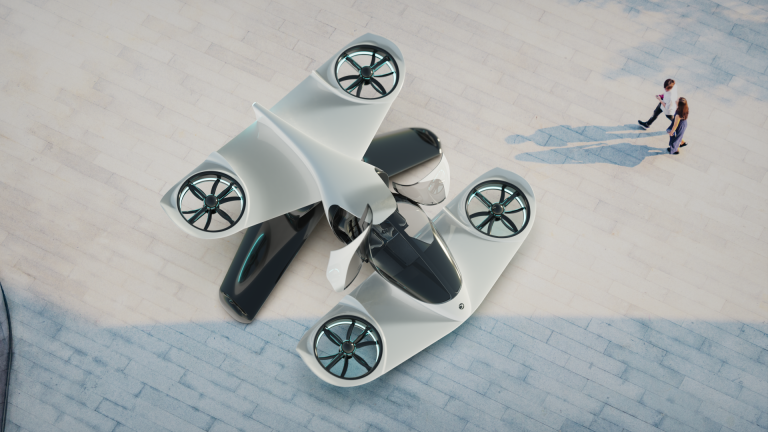
Doroni Flying Car (Animation)
(Mit freundlicher Genehmigung/Courtesy of Doroni Aerospace, Inc [Press Kit])

Doroni Flying Car in a Mountain Landscape (Animation)
(Mit freundlicher Genehmigung/Courtesy Doroni Aerospace, Inc [Press Kit])
The H1-X features 10 independently driven, fully enclosed propellers: 8 vertical propellers for take-off, landing, and hovering, and 2 horizontal propellers for forward flight. The distributed electric propulsion architecture is designed with redundancy; according to Doroni, the aircraft should be able to continue controlled flight or land safely even in the event of failure of up to 2 electric motors [1].
Safety features also include a ballistic whole-aircraft parachute system and the digital assistance system SOUL AI™. The system is designed to assist the pilot with flight control and navigation and, using 360° environmental sensing, also contribute to collision avoidance.
Doroni specifies a range of 161 km (100 mi), a cruise speed of 153 km/h (95 mph), and a top speed of 193 km/h (120 mph) for the H1-X. The aircraft weighs approximately 839 kg (1,850 lb) and accommodates 2 people.
The H1-X is intended to be compatible with existing EV charging infrastructure. For home charging, Doroni specifies charging power of up to 20 kW, or 40 kW or more with additional charging hardware. At fast-charging stations, the battery is expected to be charged to 80% in approximately 25 minutes.
The manufacturer of the battery cells and packs is not known to the editors. Doroni also does not specify the capacity, cell chemistry, or cell format of the current H1-X battery system.
The planned sales price is approximately $400,000. Doroni is already accepting pre-orders with a refundable $1,000 deposit and reports more than 600 pre-orders. First customer deliveries are targeted for 2028.
Sources
[1] https://www.doroni.io/ (Homepage, accessed 16.09.2026)
[cs 21.06.2023, 19.09.2026]
Chinese company for autonomous multicopters, founded in Guangzhou in 2014; target markets include commercial air transport as well as logistics and emergency response operations [1].
The flagship model is the two-seat EH216-S, which flies autonomously along predefined routes without a pilot on board. EHang combines its aircraft with a central Command-and-Control System that can be used to monitor and coordinate flights and manage entire fleets.
EHang has a significant lead in certification: the EH216-S received its CAAC Type Certificate in 2023, followed by the Production Certificate in 2024, and in 2025 the first operators in Guangzhou and Hefei received Operator Certificates for commercial passenger flights. This makes the EH216-S the first certified and commercially operated autonomous passenger eVTOL.
The EH216-S features 16 coaxially arranged propellers on 8 arms and has a range of 30 km and a maximum speed of 130 km/h. Maximum take-off weight is 620 kg. Its compact multicopter design makes the aircraft particularly suitable for short urban connections and sightseeing flights.
EHang is also expanding internationally. The EH216-S has already been tested in more than 20 countries and has completed a total of more than 90,000 flights. In 2026, these included first passenger flights in Mexico as well as demonstration flights in Switzerland, Kazakhstan, and Hong Kong.
In addition to the EH216-S, EHang is developing the VT35, an autonomous wing-based eVTOL for longer distances. The two-seat lift-and-cruise eVTOL features 8 vertical propellers and one pusher propeller. EHang specifies a range of at least 200 km, a flight time of 60 minutes, and an economical cruise speed of at least 216 km/h.
With the VT35, EHang is pursuing a dual strategy: while the compact EH216-S multicopter is primarily designed for short urban routes, the VT35 targets longer intercity, over-water, and mountainous routes. Both aircraft are intended to use the same take-off and landing infrastructure. The VT35 is already undergoing the CAAC certification process.

Ehang test flight in Spain, 11.10.2022
(Mit freundlicher Genehmigung/Courtesy of Guangzhou EHang Intelligent Technology Co. Ltd. [Homepage])

Ehang flight control center (animation)
(Mit freundlicher Genehmigung/Courtesy of Guangzhou EHang Intelligent Technology Co. Ltd. [Homepage])
The EH216-S is the first autonomous passenger eVTOL to have completed the key certification stages required for commercial operation. The Civil Aviation Administration of China (CAAC) issued the Type Certificate in 2023, followed by the Production Certificate in 2024, and in March 2025 the first operators in Guangzhou and Hefei received the required Air Operator Certificates. This permits commercial passenger flights with the EH216-S in these cities [1].
EHang is pursuing several development paths in battery technology. An important partnership is with Gotion High-Tech. Building on a collaboration launched in 2023, the two companies are developing a new battery system for the EH216 series. The system is intended to use newly developed cylindrical 46-series cells from Gotion with high energy and power density. The partnership is also expected to be extended to other EHang aircraft models in the future.
In parallel, EHang is developing a solid-state battery together with Shenzhen Inx Energy Technology. According to the manufacturer, the lithium-metal solid-state cell used has an energy density of 480 Wh/kg. In 2024, an EH216-S equipped with this battery achieved a flight time of 48 min 10 s in a test flight; compared with the previous battery system, flight time is expected to increase by 60–90%. Whether or when this technology will be used in production aircraft is currently not clearly documented.
EHang is listed on the Nasdaq (NASDAQ: EH; ISIN US26853E1029, WKN A2PWWB).
Sources
[1] https://www.ehang.com/ (Homepage, accessed 16.09.2026)
[cs 19.10.2022, 19.09.2026]
US company for aircraft with hybrid-electric propulsion and extremely short take-off and landing distances, founded by John Langford in 2020. The so-called Ultra Short concept is deliberately positioned as an alternative to eVTOL: rather than using energy-intensive vertical take-off, Electra relies on extremely short take-off and landing distances [1].
The technical basis is the so-called blown-lift principle. Multiple propellers accelerate airflow over the wings and flaps, generating high lift even at very low speeds. The two-seat EL2 Goldfinch technology demonstrator has been flying since 2023 and is being used to test this concept.
The production model, the EL9 Ultra Short, is designed for 9 passengers plus pilot. It is expected to require a take-off or landing distance of only about 46 m (150 ft), allowing it to operate from small airfields as well as suitable sites away from conventional airports. With full payload, Electra specifies a range of 611 km (330 nmi) and a cruise speed of approximately 324 km/h (175 kn).
Commercial interest is already substantial: Electra reports more than 2,200 pre-orders and letters of intent from over 60 customers. Customers and development partners include Bristow as well as the US Air Force, US Army, US Navy, and NASA.
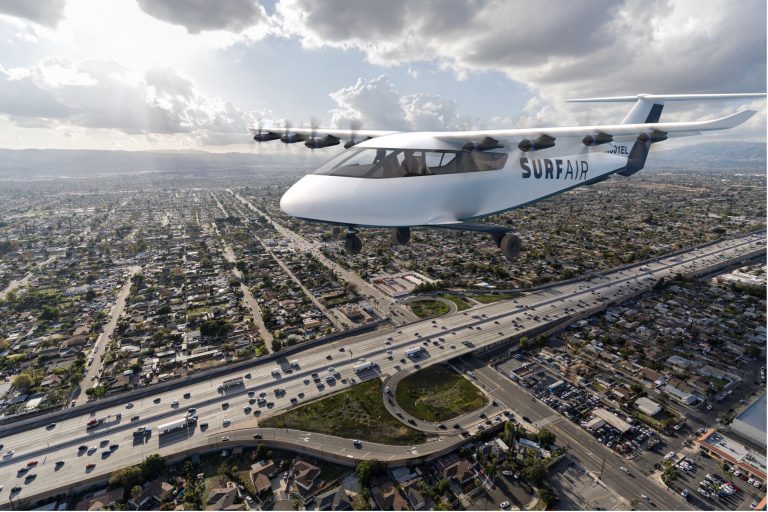
Skizze Electra-Flugzeug
(Mit freundlicher Genehmigung/Courtesy of Electra.Aero [Press Release])
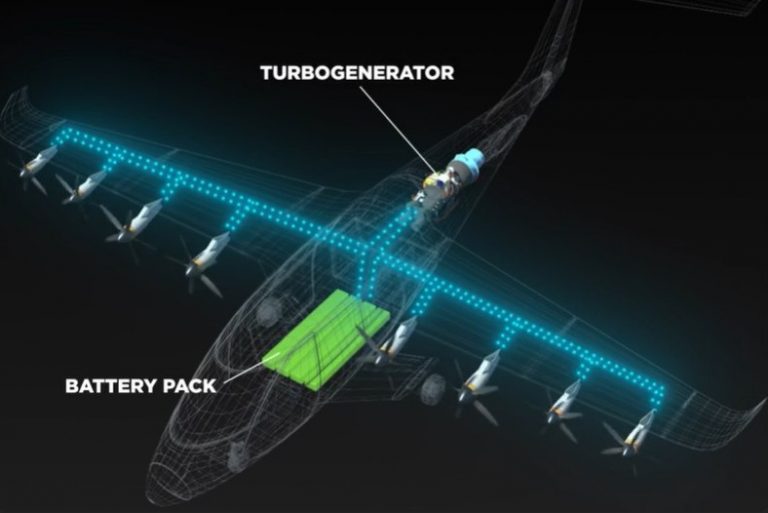
Animation hybrider Powertrain von Electra
(Mit freundlicher Genehmigung/Courtesy of Guangzhou Electra.Aero [Homepage])
The EL9 Ultra Short features a series-hybrid propulsion system consisting of a turbogenerator, 4 independent battery packs, and 8 electric propulsion units. The turbine has no mechanical connection to the propellers and instead drives only a generator to produce electricity. It is therefore a range-extender concept, similar to the technology used in passenger cars by companies such as Li Auto [1].
For take-off and landing, the high electrical power demand is supplied by the batteries and turbogenerator. During cruise, power demand decreases significantly and the turbogenerator provides a larger share of the energy supply. The batteries can be recharged during flight. This allows the turbogenerator to be smaller than a conventional aircraft propulsion system.
For the production aircraft, Electra has selected the TG600 turbogenerator from Safran Helicopter Engines. In 2026, the companies signed a development and production agreement covering the entire program lifecycle; the initial order comprises 250 turbogenerators. The 8 electric propulsion units will be supplied by Evolito.
The batteries therefore primarily serve as a power buffer for take-off and landing rather than as the sole energy source for the entire flight. External charging infrastructure is therefore not essential for normal flight operations; however, the batteries can also be charged on the ground. The manufacturer of the battery cells and packs is not known to the editors.
The certification process is also underway. Electra applied for FAA type certification under Part 23 in late 2025; in July 2026, the FAA established the certification basis with the completion of the G-1 Issue Paper. The first flight of the EL9 is planned for late 2027 or early 2028, with commercial entry into service targeted for 2030.
For series production, Electra is planning a new manufacturing facility in Springfield, Ohio. In the first expansion stage, the facility is expected to produce up to 400 EL9 aircraft per year, with a later production capacity of up to 800 aircraft per year.
Sources
[1] https://www.electra.aero/ (Homepage, accessed 16.09.2026)
[cs 17.10.2024, 19.09.2026]
German start-up for wing-based eVTOLs, founded in 2020 and initially operating in stealth mode. CEO and co-founder is David Löbl. ERC is developing eVTOL aircraft for time-critical transport missions, with a particular focus on patient transport and air rescue [1].
ERC began testing its technology at an early stage using full-scale/full-mass prototypes. The first demonstrator, Echo, took off in 2023 at a weight of approximately 2.7 t. Its successor, Romeo, has a wingspan of 16 m and a weight of 2,735 kg and has been undergoing unmanned flight testing since November 2025. This makes Romeo one of the largest and heaviest eVTOL prototypes flown in Europe to date.
Romeo features a lift-and-cruise configuration with separate propellers for vertical and forward flight. This concept corresponds to Propeller Configuration PC2. Eliminating tilting propellers reduces the mechanical complexity of the propulsion system.
The planned crewed production aircraft, the Charlie C700, builds on the experience gained with Echo and Romeo. The hybrid-electric eVTOL is designed particularly for patient transport between hospitals and is being developed together with air rescue and medical experts. Strategic partners include DRF Luftrettung. The cabin features large loading doors for transporting patients on stretchers but can also be configured for passenger and logistics missions.
For the Charlie C700, ERC specifies a payload of more than 500 kg, a range of 800 km, and a cruise speed of 250 km/h. Up to 200 km is expected to be possible in all-electric operation. Certification is planned under EASA SC-VTOL, with market entry targeted for 2031.
In parallel, ERC unveiled the Victor U250, an unmanned hybrid-electric cargo VTOL, in 2026. Victor is designed to carry payloads of up to 250 kg over more than 300 km and is expected to become available from 2028. ERC is therefore pursuing a platform strategy covering crewed medical transport as well as unmanned civil and military logistics.
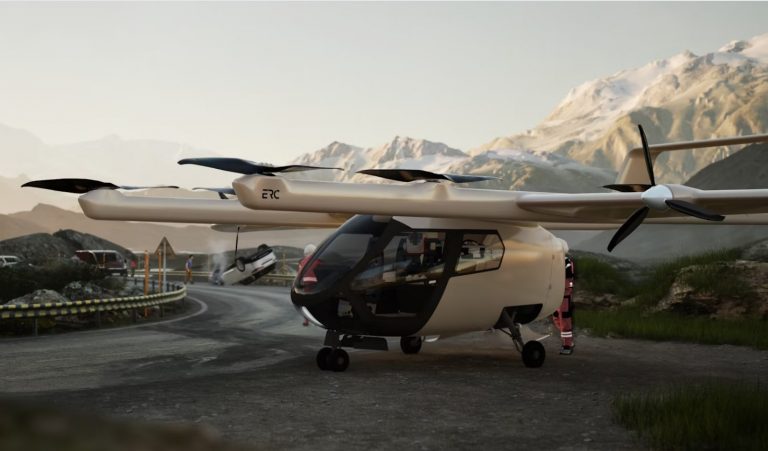
ERC eVTOL during rescue operations – Exterieur (Animation)
(Mit freundlicher Genehmigung/Courtesy of eRC System GmbH [Homepage])
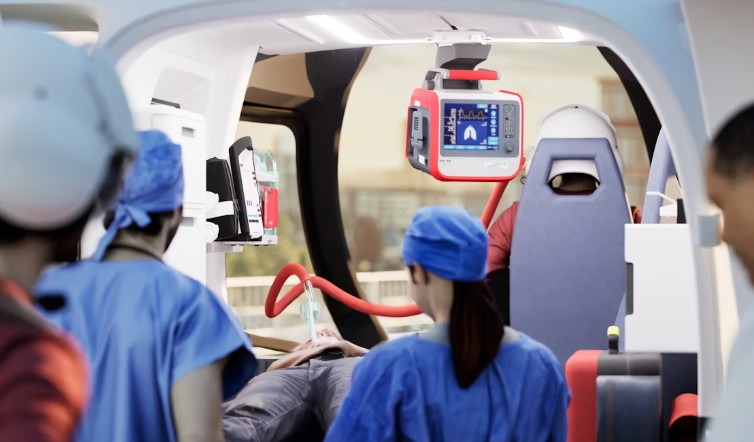
ERC eVTOL – Interieur
(Mit freundlicher Genehmigung/Courtesy of eRC System GmbH [Homepage])
A major change compared with the original concept is the hybrid-electric propulsion system of the Charlie C700. Up to 200 km is expected to be possible in all-electric operation, while the hybrid-electric propulsion system increases the total range to up to 800 km. This is intended to make the aircraft particularly suitable for longer interhospital transport missions [1].
ERC expects the electrified powertrain and the simpler mechanics compared with a helicopter to result in around 60% lower operating costs. The Charlie C700 is intended to be certified under the European EASA SC-VTOL framework, with market entry planned for 2031.
ERC has so far published only limited details about the specific design of the battery system. It is known that a high-voltage battery system forms part of the hybrid-electric powertrain. The manufacturer of the battery cells and packs is not known to the editors.
Sources
[1] https://www.erc-system.com/ (Homepage, accessed 16.09.2026)
[cs 04.10.2024, 19.09.2026]
EVE Air Mobility [↑] [↓] [⇑] [⇓]
Brazilian-US company for wing-based eVTOLs, spun off from Brazilian aircraft manufacturer Embraer in 2020 and listed on the New York Stock Exchange since 2022. Its target market is commercial air transport [1].
An important home market for EVE is São Paulo. The Brazilian metropolis has more than 400 helicopters and over 260 helipads, giving it one of the world’s most developed infrastructures for urban air mobility and the world’s largest urban helicopter fleet. This provides an extensive existing infrastructure and customer demand that future eVTOL operations can build on.
EVE is developing an eVTOL for 4 passengers plus pilot. The aircraft features 8 fixed vertical propellers for take-off and landing and a separate pusher propeller for forward flight (Propeller Configuration PC2). For redundancy, the pusher propeller is powered by 2 electric motors.
The full-scale prototype completed its first flight in December 2025 at Embraer’s test facility in Gavião Peixoto, Brazil. By April 2026, it had already completed 50 test flights. In August 2026, the aircraft reached another important development milestone with its first transition flight, beginning the transition from vertical flight to wing-borne forward flight.
EVE relies heavily on established suppliers from the aerospace industry. Nidec Aerospace supplies the electric lift propulsion systems, BETA Technologies the two electric motors for the pusher propeller, BAE Systems the battery system, Garmin the avionics, and Thales the air-data sensors. The rotors and propellers are supplied by DUC Hélices.
Initial type certification is being conducted by the Brazilian aviation authority ANAC. In parallel, EVE applied to EASA in 2026 for validation of the type certification in Europe. Six conforming prototypes are planned for the certification campaign.

eVTOL from EVE Air Mobility – Exterieur (Animation)
(Mit freundlicher Genehmigung/Courtesy of Eve Holding, Inc. [Homepage])

eVTOL from EVE Air Mobility – Interieur (Animation)
(Mit freundlicher Genehmigung/Courtesy of Eve Holding, Inc. [Homepage])
EVE has an extensive order pipeline. According to the company, it comprises around 2,700 eVTOLs from 28 customers. Most of these are non-binding letters of intent or pre-orders; 100 aircraft are covered by binding agreements.
One of EVE’s major customers is United Airlines. The US airline has signed an agreement to purchase 200 eVTOLs, with options for an additional 200 aircraft. EVE also works with numerous airlines, helicopter operators, and leasing companies.
The battery system is being developed and supplied by BAE Systems. EVE uses multiple independent battery packs to provide the redundancy and safety required for commercial aviation. The battery cell supplier is currently not known to the editors.
Series production is planned to be established in Taubaté in the Brazilian state of São Paulo. According to current plans, first deliveries are scheduled for 2029.
EVE Air Mobility is listed on the New York Stock Exchange (NYSE) under the ticker symbol EVEX. Embraer remains the company’s majority shareholder.
Sources
[1] https://www.eveairmobility.com/
[cs 17.09.2026]
German start-up from Berlin that develops flight simulators for eVTOL pilot training. The company was founded by the former Lufthansa pilot, flight instructor and entrepreneur Walter Drasl, who has sadly since passed away.
As almost all eVTOL start-ups only equip their vertical take-off aircraft with only one pilot’s seat (exception: Beta Technologies), classic pilot training with an accompanying flight instructor is not possible.
The training of eVTOL pilots will therefore primarily have to take place using flight simulators.
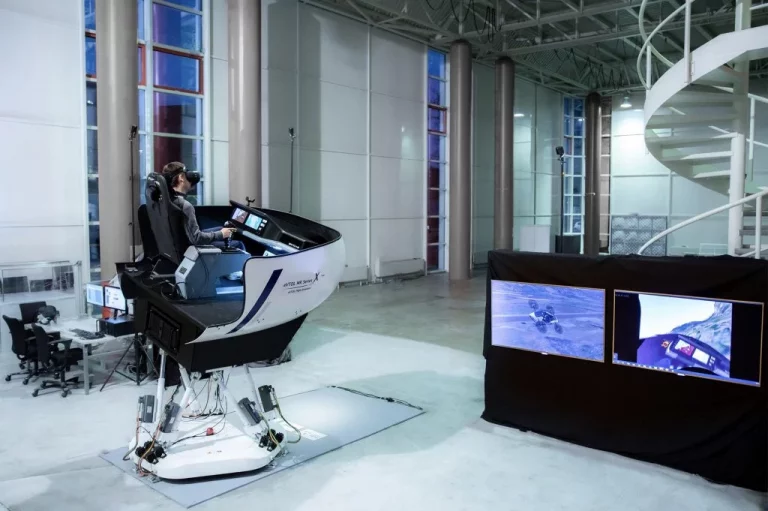
Mixed reality eVTOL flight simulator from FAST
(Mit freundlicher Genehmigung/Courtesy of Future Aviation Simulation Technologies GmbH [Homepage])
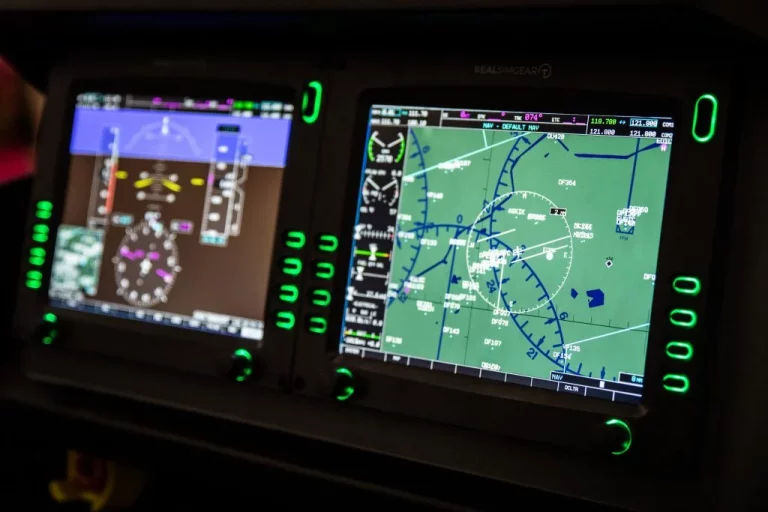
Virtual instrument display in the FAST eVTOL flight simulator
(Mit freundlicher Genehmigung/Courtesy of Future Aviation Simulation Technologies GmbH [Homepage])
FAST uses a mixed reality approach for its flight simulator (see illustrations):
- The motion platform, which is used to simulate the forces involved in flying, and the side stick for controlling the eVTOL are realized using hardware components.
- The eVTOL cockpit and the display systems are displayed virtually in VR goggles.
This concept makes it possible to realize flight simulators for a variety of eVTOL types (multicopter, wing-based eVTOL, etc.) with a uniform standard hardware, thus reducing complexity and costs.
Sources
[1] https://fast-group.aero/ (Homepage, Access 18.06.2025)
[cs 18.06.2025]
Canadian-US aerospace company for wing-based VTOL aircraft that has been part of the US-based AIRO Group since 2022. Today, Jaunt primarily develops autonomous and remotely piloted VTOL aircraft for logistics, intelligence, surveillance and reconnaissance (ISR), military applications, and regional air mobility [1].
A key technical feature is the patented Slowed Rotor Compound (SRC) technology. The aircraft combines a large rotor for vertical take-off with wings and separate propellers for forward flight. The concept therefore combines characteristics of a helicopter with those of a conventional airplane.
During cruise, the large rotor is not completely stopped; instead, its rotational speed is significantly reduced. The wings then provide most of the lift, while separate propellers generate forward thrust. The lower rotor speed reduces drag, vibration, and noise, enabling more efficient forward flight than with a conventional helicopter.
The SRC concept also offers a particular safety advantage: in the event of a complete loss of propulsion, the aircraft can either autorotate using its rotor or glide like a conventional airplane using its wings.
Jaunt originally developed the all-electric Journey as an air taxi for 4 passengers plus pilot. It was designed for a range of approximately 130–190 km and a speed of up to 280 km/h. Jaunt has since significantly changed its development strategy and now focuses on autonomous, unmanned, and hybrid-electric VTOL aircraft.
Current models include the JC250 for cargo transport and the JX250 for long-range and reconnaissance missions. The JC250 is designed to achieve a range of more than 320 km with a payload of 115–150 kg. For the JX250, Jaunt specifies a range of more than 1,600 km and an endurance of 14–18 hours with a payload of approximately 23 kg. Both models are designed for a speed of around 180 km/h.
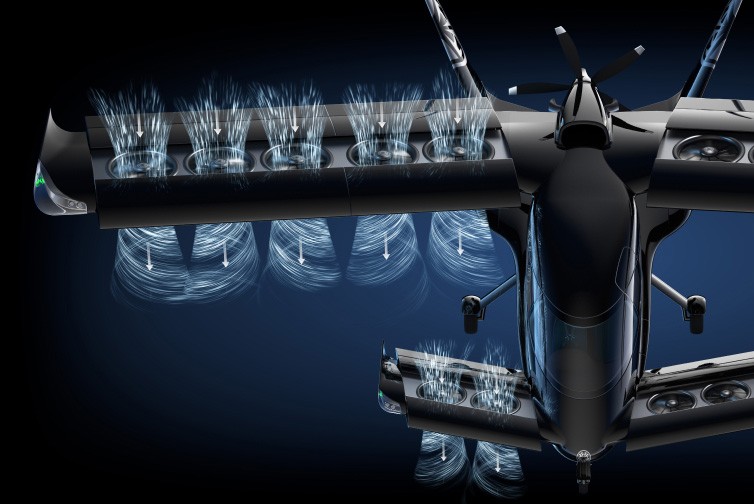
Sketch of Horizon eVTOL in vertical flight
(Mit freundlicher Genehmigung/Courtesy of New Horizon Aircraft Ltd. [Homepage])
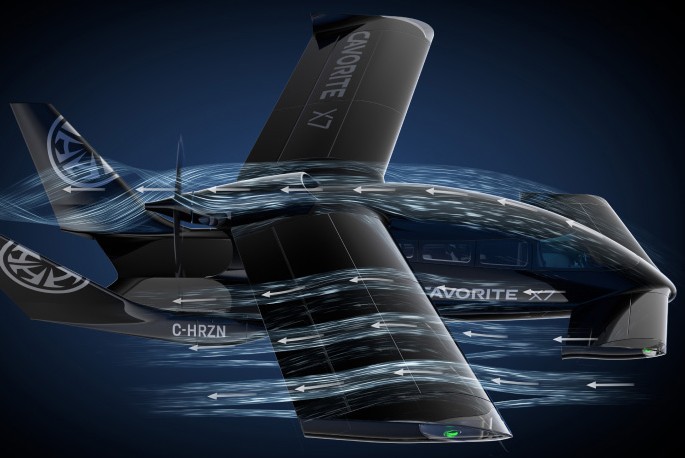
Sketch of Horizon eVTOL in horizontal flight
(Mit freundlicher Genehmigung/Courtesy of New Horizon Aircraft Ltd. [Homepage])
Another key feature of the Cavorite X7 is its hybrid propulsion system. The vertical lift fans are electrically driven, while a conventional combustion engine provides propulsion during cruise. Horizon thus combines the advantages of electric propulsion for vertical take-off with the longer range of a conventional aircraft.
The Cavorite X7 is designed for 7 occupants (6 passengers plus pilot). Horizon specifies a maximum range of 800 km and a maximum cruise speed of 450 km/h. Payload is up to 680 kg in vertical take-off operation. Since the Cavorite X7 can also take off and land conventionally, the available payload increases to 815 kg in CTOL operation [1].
The combination of VTOL and CTOL operation therefore enables different mission profiles: the aircraft can take off and land vertically without a runway, but when a runway is available, it can avoid the energy-intensive vertical flight phase and carry a higher payload.
Horizon is working with several established aerospace companies on the Cavorite X7. Beta Technologies was selected in 2026 as the supplier of the flight control system; Marshall Aerospace and MHIRJ are supporting the further development of the aircraft.
The aircraft uses Li-ion batteries for energy storage. Due to the hybrid concept, ground-based charging infrastructure is not required. The manufacturer of the battery cells is not known to the editors.
Sources
[1] https://www.horizonaircraft.com/ (Homepage, accessed 19.10.2026)
[cs 14.11.2024, 19.9.2026]
Canadian-US aerospace company for wing-based VTOL aircraft that has been part of the US-based AIRO Group since 2022. Today, Jaunt primarily develops autonomous and remotely piloted VTOL aircraft for logistics, intelligence, surveillance and reconnaissance (ISR), military applications, and regional air mobility [1].
A key technical feature is the patented Slowed Rotor Compound (SRC) technology. The aircraft combines a large rotor for vertical take-off with wings and separate propellers for forward flight. The concept therefore combines characteristics of a helicopter with those of a conventional airplane.
During cruise, the large rotor is not completely stopped; instead, its rotational speed is significantly reduced. The wings then provide most of the lift, while separate propellers generate forward thrust. The lower rotor speed reduces drag, vibration, and noise, enabling more efficient forward flight than with a conventional helicopter.
The SRC concept also offers a particular safety advantage: in the event of a complete loss of propulsion, the aircraft can either autorotate using its rotor or glide like a conventional airplane using its wings.
Jaunt originally developed the all-electric Journey as an air taxi for 4 passengers plus pilot. It was designed for a range of approximately 130–190 km and a speed of up to 280 km/h. Jaunt has since significantly changed its development strategy and now focuses on autonomous, unmanned, and hybrid-electric VTOL aircraft.
Current models include the JC250 for cargo transport and the JX250 for long-range and reconnaissance missions. The JC250 is designed to achieve a range of more than 320 km with a payload of 115–150 kg. For the JX250, Jaunt specifies a range of more than 1,600 km and an endurance of 14–18 hours with a payload of approximately 23 kg. Both models are designed for a speed of around 180 km/h.

Flight animation by Jaunt
(Mit freundlicher Genehmigung/Courtesy of Jaunt Air Mobility LLC. [Homepage])

Jaunt-eVTOL in New York (Animation)
(Mit freundlicher Genehmigung/Courtesy of Jaunt Air Mobility LLC. [Homepage])
For the JC250, Jaunt specifies a payload of 115–150 kg, a range of more than 320 km, and a speed of around 180 km/h. The unmanned aircraft is intended particularly for transporting heavy cargo, supplying remote locations, and industrial applications [1].
The unmanned JX250, by contrast, is designed for long-range and intelligence, surveillance and reconnaissance (ISR) missions. With a payload of approximately 23 kg, Jaunt specifies a range of more than 1,600 km and an endurance of 14–18 hours at loiter speed. Its speed is also around 180 km/h [1].
Both aircraft use a hybrid-electric propulsion system and can be operated autonomously or remotely. The system also includes fly-by-wire flight controls as well as camera-based and AI-supported detect-and-avoid systems.
Jaunt is working with the Canadian company Calogy on the battery system. Calogy was selected in 2026 as a partner for the development and supply of the VTOL platform’s battery system. The manufacturer of the battery cells is not known to the editors.
The all-electric Journey eVTOL originally developed for passenger transport is no longer listed as a primary program on Jaunt’s current product page. Earlier plans for certification and series production of the Journey are therefore outdated; Jaunt currently focuses on the unmanned dual-use JC250 and JX250 platforms.
Sources
[1] https://jauntairmobility.com/ (Homepage, accessed 19.09.2026)
[cs 25.10.2022, 19.09.2026]
Swedish-US company for multicopters, founded in 2017 by Tomasz Patan and Peter Ternström. Jetson is one of the few eVTOL manufacturers already selling and delivering an aircraft specifically to private customers [1].
Watch this fascinating video of a Jetson ONE flying over a landscape of sand dunes (1st figure). The video is reminiscent of Luke Skywalker gliding across the desert landscape of Tatooine in his X-34 Landspeeder in the first Star Wars movie (2nd figure).
The Jetson ONE is a single-seat multicopter with 8 electrically driven vertical propellers. Two propellers are arranged coaxially and counter-rotating on each of four arms. According to Jetson, the redundant design allows the aircraft to continue flying safely even if one motor fails.
The aircraft is controlled using a joystick, while a computer-assisted flight control system automatically stabilizes the multicopter. The Jetson ONE is also equipped with LiDAR-based obstacle detection and a ballistic rescue parachute.

Multicopter Jetson ONE from Jetson Aero
(Mit freundlicher Genehmigung/Courtesy of Jetson AB [Homepage])

X-34 Landspeeder film prop (Star Wars, 1977)
(Mit freundlicher Genehmigung/Courtesy of Eden, Janine and Jim / Wikimedia Commons, CC BY 2.0, cropped)
The maximum flight time is approximately 20 min, the electronically limited top speed is 102 km/h, and the maximum pilot weight is 95 kg. The Jetson ONE weighs 115 kg including batteries [1].
In the US, the Jetson ONE falls under the Ultralight Vehicle category pursuant to FAA Part 103 and can be flown for recreational purposes without a pilot license. Aircraft registration is also not required.
Important regulatory progress has also been made in Europe. In June 2026, the Jetson ONE received the first official identification number for an eVTOL in Italy under the country’s ultralight category. In August 2026, Jetson also announced the first delivery to an Italian customer.
The Jetson ONE is now being produced in small series and delivered to customers. Production for 2026 and 2027 is sold out; Jetson is currently accepting orders for delivery in 2028. The sales price is $148,000 plus taxes and fees, with an $8,000 deposit [1].
Jetson uses high-performance Li-ion batteries with a redundant battery system for energy storage. The manufacturer of the battery cells is not known to the editors.
Sources
[1] https://jetson.com/ (Homepage, accessed 19.09.2026)
[cs 07.12.2022, 19.09.2026]
US company for wing-based eVTOL, founded in California in 2009. This makes Joby one of the pioneers in the field of wing-based eVTOL; its target market is commercial aviation [1].
Joby is developing an eVTOL for 5 people (1 pilot, 4 passengers), designed primarily as an air taxi for heavily traveled urban and regional routes. As a typical use case, Joby cites the connection between Manhattan and JFK Airport in New York.
The Joby eVTOL features 6 tilting propellers (Propeller Configuration PC1) that provide both vertical thrust during take-off and landing and forward thrust during cruise. During the transition maneuver, the propellers are gradually tilted from the vertical to the horizontal position. This video shows the transition maneuver.
The Joby eVTOL reaches a top speed of around 320 km/h (200 mph) and is designed for distances of up to approximately 240 km (150 miles), including reserves [1]. This makes it one of the fastest eVTOLs. A key reason is the PC1 configuration, in which all six propellers tilt forward after the transition and therefore generate forward thrust during cruise.
Joby is working with several major companies to build its air taxi network. Delta Air Lines initially invested $60 million in Joby in 2022. Another important partnership is with Uber; through the 2025 acquisition of the passenger business of Blade Air Mobility, Joby also gained access to existing helicopter routes and vertiport infrastructure, particularly in New York and Southern Europe.
Joby also relies on a strong partner for industrialization: Toyota has supported the company for several years in production and manufacturing technology. In 2026, the two companies established a joint venture intended to lay the foundation for future large-scale production.
At the same time, Joby is significantly expanding its own production. The company manufactures aircraft in Marina, California, and components in Dayton, Ohio. In early 2026, another production facility covering around 68,000 m² was added in the Dayton area. For 2027, Joby plans a production capacity of up to 4 aircraft per month.
Joby has now reached the final two stages of the five-stage FAA type certification process. At the end of July 2026, according to the company, the FAA had completed 77% of Stage 4 and 10% of the final Stage 5. The first FAA-conforming aircraft intended for Type Inspection Authorization (TIA) completed its maiden flight in 2026.

Wing-based eVTOL von Joby Aviation
(Mit freundlicher Genehmigung/Courtesy of Joby Aviation. (c) [Media Kit])
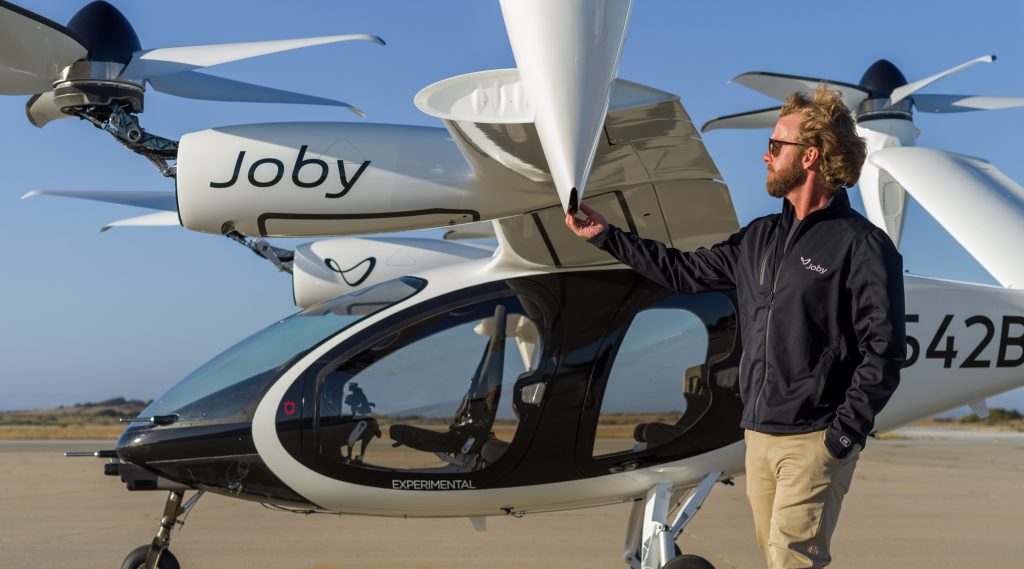
Interieur
(Mit freundlicher Genehmigung/Courtesy of Joby Aviation. (c) [Media Kit])
Another key area of development is noise reduction. Joby specifies a sound pressure level of around 45 dBA for an aircraft flying overhead at an altitude of approximately 500 m. This should allow the aircraft to operate significantly more quietly than conventional helicopters in urban environments.
For its battery cells, Joby uses automotive Li-ion pouch cells that are already produced on a large scale. This approach reduces the technological risk compared with cell chemistries developed specifically for aviation and benefits from the extensive experience gained from using these cells in electric vehicles. Joby does not publicly disclose the specific cell manufacturer.
Further battery development is largely carried out in-house: Joby develops the battery modules and packs as well as the thermal management system itself. The batteries have undergone extensive flight and laboratory testing to assess the high power requirements typical of eVTOL aircraft as well as their ability to withstand a high number of flight cycles.
In addition to FAA certification in the US, Joby is also pursuing international market launches. An important first market is Dubai, where Joby has already conducted piloted test flights and is preparing for commercial air taxi operations. In parallel, the company is working toward commercial operations in the US.
Joby Aviation is publicly traded (NYSE: JOBY, ISIN KYG651631007, WKN A3CWWU).
Sources
[1] https://www.jobyaviation.com/ (Homepage, accessed 20.09.2026)
[cs 09.12.2022, 20.09.2026]
US start-up for electric vertical take-off and landing aircraft, founded in California in 2010 by German-born Stanford professor and robotics researcher Sebastian Thrun and largely funded by Google co-founder Larry Page. Kitty Hawk was therefore one of the early pioneers of modern eVTOL development.
On September 21, 2022, Kitty Hawk announced that the company would shut down. At that time, Heaviside was the company’s primary aircraft program.
Over the course of its history, Kitty Hawk developed several different aircraft. These included the single-seat Flyer, the autonomous Cora air taxi, and, most recently, the Heaviside. The Cora program was spun off in 2019 into a company established jointly with Boeing, which became Wisk Aero. The shutdown of Kitty Hawk in 2022 therefore did not mark the end of the Cora/Wisk program.
During Kitty Hawk’s final development phase, the focus was on the Heaviside, a small single-seat wing-based eVTOL. The aircraft featured 8 tilting propellers and could be operated both manually and autonomously. For take-off and landing, the propellers tilted downward; for efficient forward flight, they tilted into a horizontal position (Propeller Configuration PC1).
A major focus of development was autonomous flight. This reflected the technological background of Sebastian Thrun, who had previously played a major role in the development of autonomous vehicles. In 2021, Kitty Hawk demonstrated, among other things, a Beyond Visual Line of Sight (BVLOS) flight with Heaviside in cooperation with the FAA and other partners.
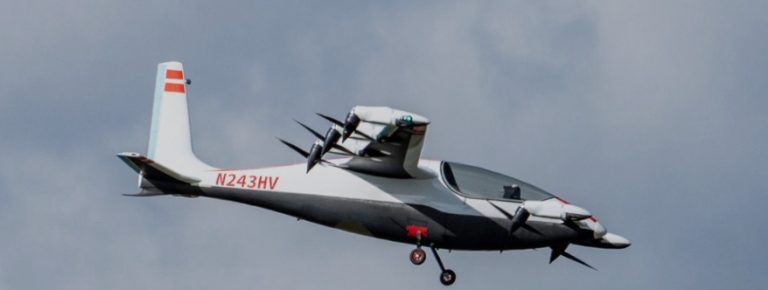
eVTOL from Kitty Hawk
(Mit freundlicher Genehmigung/Courtesy of Kitty Hawk Corporation [Homepage])
The Heaviside was designed for a range of around 160 km (100 miles). A notable technical feature was its very low noise level: Kitty Hawk specified a sound pressure level of only 38 dBA at an altitude of 1,000 ft (approx. 300 m). This was intended to make the aircraft around 100 times quieter than a conventional helicopter [1].
With Heaviside, Kitty Hawk focused on autonomous and remotely piloted flight. The concept did not require a pilot on board. Instead, a pilot on the ground was intended to monitor several aircraft and intervene only when necessary. This would allow Heaviside’s single seat to be used entirely by a passenger and, in the long term, enable economical air taxi operations [2].
The technology was already demonstrated in flight. As part of the US Air Force’s Agility Prime program, Kitty Hawk demonstrated both remotely piloted and fully autonomous flights. In November 2021, Heaviside also completed a remotely piloted Beyond Visual Line of Sight (BVLOS) flight in non-segregated airspace. In December 2021, a Heaviside was controlled from the ground by a US Air Force pilot for the first time [1].
Kitty Hawk also temporarily planned a larger version of Heaviside for 2 passengers. However, the fundamental strategy remained the development of an autonomous air taxi system rather than selling the aircraft to private customers. These plans ended when the company ceased operations in September 2022 [2].
Heaviside used Li-ion batteries. Kitty Hawk did not publish detailed information on the cell manufacturer, cell format, or cell chemistry.
Sources
[1] https://www.af.mil/News/Article-Display/Article/2906946/afwerx-agility-prime-completes-first-usaf-piloted-flight-of-an-evtol-vehicle-wi/ (accessed 20.09.2026)
[2] https://www.forbes.com/sites/jeremybogaisky/2021/06/11/larry-page-kitty-hawk-air-taxi-sebastian-thrun/ (accessed 20.09.2026)
[3] https://www.kittyhawk.aero/ (Homepage, accessed 09.12.2022)
[cs 09.12.2022, 20.09.2026]
US start-up for multicopters, founded in 2017 by Matt Chasen in Austin, Texas. With its HEXA aircraft, LIFT is targeting an unusual market: the company aims to enable private individuals to fly an eVTOL themselves without requiring a pilot license [1].
The HEXA is a single-seat multicopter with 18 independently powered propellers. The aircraft was deliberately designed so that it can be operated by people with no previous flight experience after a short introduction. Takeoff and landing are largely automated; the flight control system limits the flight envelope and assists the pilot in operating the aircraft [1].
With an empty weight of less than 254 lbs (115 kg), HEXA falls under FAA Part 103 regulations for Ultralight Vehicles in the US. As a result, private operation generally requires neither a pilot license nor conventional aircraft certification.
Unlike what many eVTOL start-ups originally planned, LIFT currently does not sell the aircraft to private customers. Instead, the company offers HEXA as a flight experience. In Austin, customers can take a short solo flight in the HEXA after an introduction, ground school, and simulator training [1].
In parallel, HEXA has also been tested for potential military applications. LIFT was one of the early participants in the US Air Force’s AFWERX Agility Prime program. Tests included the transportability of the aircraft as well as potential applications in logistics, airfield operations, and mission support [2].

LIFT multicopter HEXA
(Mit freundlicher Genehmigung/Courtesy of LIFT Aircraft Inc.. [Homepage])

LIFT homepage for HEXA reservation
(Mit freundlicher Genehmigung/Courtesy of LIFT Aircraft Inc.. [Homepage])
LIFT’s business model is based on a pay-per-flight model: private customers with no previous flight experience can fly HEXA themselves at the company’s headquarters in Austin. Before the flight, they complete approximately two hours of training, including an introduction, ground school, and training in a virtual-reality flight simulator. This is followed by a 3–5-minute solo flight. A pilot license is not required [1].
Additional locations in the US are planned. The current price for training and the introductory flight is $199. LIFT currently does not plan to sell HEXA to private customers [1].
HEXA is also being tested outside the US. In cooperation with the Japanese trading company Marubeni, LIFT conducted its first crewed demonstration flights in Japan in 2023. Further demonstration flights followed at Expo 2025 in Osaka beginning in April 2025 [3].
At the end of 2025, LIFT announced an expansion of the HEXA platform to three variants: the existing HEXA-U continues to fall under US ultralight regulations and has a 10-kWh battery. The new HEXA-S, designed to comply with the MOSAIC Light Sport Aircraft rules, is planned with a 20-kWh battery and a flight time of up to 25 minutes. The HEXA-C is intended to receive full FAA certification and, with a 30-kWh battery, is expected to provide flight times of nearly 40 minutes [4].
The manufacturer of the battery cells used is not known to the editors.
Sources
[1] https://www.liftaircraft.com/ (Homepage, accessed 20.09.2026)
[2] https://www.faa.gov/documentLibrary/media/Advisory_Circular/AC_103-7.pdf (accessed 10.12.2022)
[3] https://www.liftaircraft.com/post/lift-aircraft-showcases-hexa-at-world-expo-2025 (accessed 20.09.2026)
[4] https://www.liftaircraft.com/post/press-release-lift-aircraft-initiates-faa-type-certification-process-for-new-commercial-edition-of (accessed 20.09.2026)
[cs 10.12.2022, 25.04.2026, 20.09.2026]
German start-up for wing-based eVTOL, founded in 2015 in Munich by Daniel Wiegand, Sebastian Born, Patrick Nathen, and Matthias Meiner; its target market was commercial aviation [1].
Lilium is now insolvent and has discontinued development of the Lilium Jet. Following an initial insolvency in October 2024, an attempt to continue operations with new investors also failed in late 2024/early 2025. In February 2025, Lilium had to file for insolvency again.
The original business model envisaged a ride-sharing service at taxi prices. Lilium later shifted its focus to higher-priced regional connections for business and private customers as well as the sale of aircraft to operators [2].
To this end, Lilium signed numerous cooperation agreements and letters of intent with potential operators, including in the UK [3], Switzerland [4], and China [5]. In parallel, an industrial supply chain was established. Suppliers included Aciturri for fuselage structures [6], Saint-Gobain for the windows [7], and Customcells for the lithium-ion cells [8].
In October 2024, the ambitious development program entered a severe financing crisis. After a planned €100 million government-backed guarantee – €50 million each from the German federal government and the Free State of Bavaria – failed to materialize, Lilium’s German entities filed for insolvency.
At the end of 2024, a rescue by the investor consortium Mobile Uplift Corporation initially appeared possible. However, the expected funding was not provided, forcing Lilium to file for insolvency again in February 2025. This brought development of the Lilium Jet to an end.
Even before the insolvency, the technical concept of the Lilium Jet had been the subject of controversial debate. Critics questioned in particular whether the targeted performance figures could be achieved economically with available lithium-ion battery technology. The German aviation magazine Aerokurier, for example, fundamentally questioned the technical feasibility of the concept [9]. Criticism focused on the high energy demand during vertical takeoff and whether sufficient energy would remain at full payload to provide a commercially attractive range.
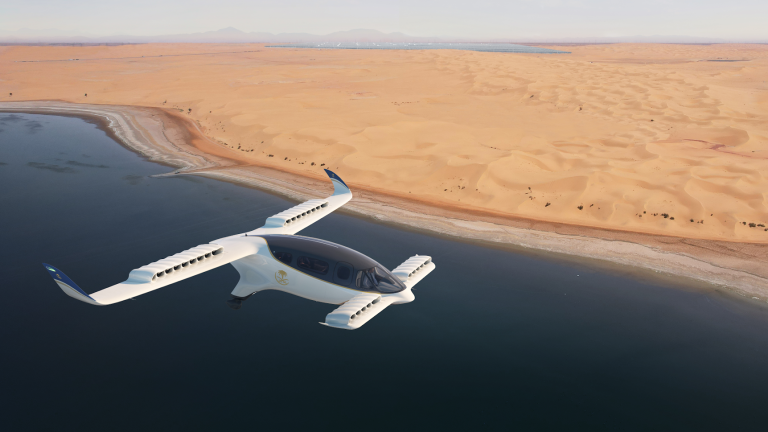
Lilium-Jet over desert landscape
(Mit freundlicher Genehmigung/Courtesy of Lilium GmbH [Media Kit])
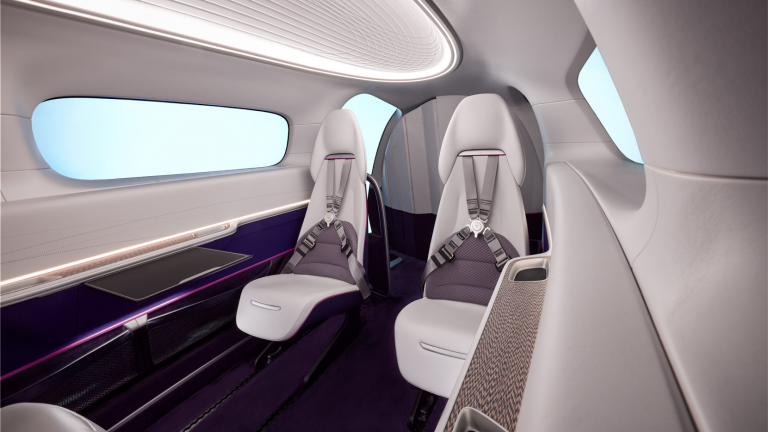
Interieur Lilium-Jet
(Mit freundlicher Genehmigung/Courtesy of Lilium GmbH [Media Kit])
With the Lilium Jet, Lilium developed a wing-based VTOL featuring numerous small ducted propellers (ducted fans), which Lilium referred to as electric jet engines. This propulsion concept gave Lilium a unique approach among the major eVTOL developers. The ducts surrounding the rotors reduce blade-tip losses, among other benefits, and enable compact integration of the propulsion units into the wings.
The aircraft was equipped with a total of 30 electric ducted fans and two wings. The smaller front wing is located near the cockpit (canard), while the larger wing is positioned at the rear of the aircraft. The propulsion units are arranged in groups along the trailing edges of the wings: 12 on the front wing and 18 on the rear wing.
For takeoff and landing, the complete propulsion units are tilted downward to generate the required vertical thrust. During the transition maneuver, they are gradually rotated toward the forward-flight position. The concept therefore corresponds to propeller configuration PC1.
The cabin was designed for a maximum of 6 passengers plus pilot; Lilium also planned a more comfortable version for 4 passengers plus pilot. The stated performance figures included a range of around 175 km and a top speed of approximately 250 km/h [1].
Battery technology played a particularly important role because the propulsion concept required very high electrical power during vertical takeoff. Lilium had selected the German company Customcells as its cell partner. The company specializes in the development and production of customized lithium-ion cells for applications with demanding power and energy-density requirements [8].
Lilium was listed on the NYSE (ISIN NL0015000F41, WKN A3CYXP).
Sources
[1] https://lilium.com/ (Homepage, accessed 11.12.2022)
[2] https://www.sueddeutsche.de/wirtschaft/lilium-flugtests-1.5666226 (accessed 11.12.2022)
[3] https://lilium.com/newsroom-detail/lilium-partners-with-evolare (accessed 20.09.2023)
[4] https://lilium.com/newsroom-detail/lilium-signs-agreement-with-Air-Dynamic (accessed 20.09.2023)
[5] https://lilium.com/newsroom-detail/lilium-signs-agreement-with-heli-eastern (accessed 20.09.2023)
[6] https://lilium.com/newsroom-detail/significant-milestone-with-the-commencement-of-fuselage-assembly (accessed 20.09.2023)
[7] https://lilium.com/newsroom-detail/lilium-and-saint-gobain-aerospace-team-up-on-windows (accessed 20.09.2023)
[8] https://lilium.com/newsroom-detail/lilium-partners-customcells (accessed 20.09.2023)
[9] https://www.aerokurier.de/elektroflug/lilium-jet-dossier/ (accessed 29.10.2024)
[cs 11.12.2022, 20.09.2023, 29.10.2024, 25.12.2024, 20.09.2026]
US start-up for wing-based eVTOL, founded in 2018 in Santa Ana, California, among others by Abe Karem. The target market was commercial aviation. Following the withdrawal of its main investor Hanwha, all activities appear to have ceased.
Abe Karem has a decades-long career in aircraft development and has been involved in numerous aviation projects. Overair’s most important strategic partner and investor was South Korea’s Hanwha Group, which invested a total of approximately $145 million in the company.
Overair developed a wing-based eVTOL called Butterfly with an unusual propulsion configuration consisting of just 4 large tilting propellers: two on the front wing and two at the rear (propeller configuration PC1). With a diameter of approximately 6 m (20 ft) each, the propellers were considerably larger than those used in most competing eVTOL concepts.
Overair referred to the concept as the Optimum-Speed Tilt Rotor (OSTR). The large rotors were designed to operate at comparatively low rotational speeds, providing high efficiency and low noise emissions. The technology was based on experience gained from earlier development programs for the US Department of Defense and NASA [1].

Sketch eVTOL from Overair
(Mit freundlicher Genehmigung/Courtesy of Overair Inc. [Homepage])
The propeller system was initially tested separately at full scale. For this purpose, Overair mounted a complete propulsion system comprising the propeller and electric motor on a mobile test stand and conducted extensive ground testing [1].
Overair subsequently built a full-scale prototype of the Butterfly. Assembly of the first aircraft was completed in late 2023. According to publicly available information, however, the Butterfly did not proceed to regular flight testing.
The Butterfly was designed for a range of approximately 160 km (100 mi) and a top speed of around 320 km/h (200 mph). The cabin was designed for 5 passengers plus pilot.
South Korea’s Hanwha Group played a key role at Overair. Hanwha invested approximately $145 million in the company and was also involved in the development and supply of the electric propulsion and battery systems [2].
However, the certification and production program originally planned for the mid-2020s was not realized. Hanwha discontinued further funding. By 2025, there were no longer any publicly visible indications that development of the Butterfly was continuing; the program is therefore considered effectively discontinued [3].
Sources
[1] Overair: Propulsion Testing for Butterfly eVTOL (accessed 20.09.2026)
[2] Hanwha Aerospace (accessed 20.09.2026)
[3] Aviation Week & Space Technology, overview of the status of the eVTOL industry, October 2025 (accessed 20.09.2026)
[cs 12.12.2022, 20.09.2026]
Pantuo Aviation [↑] [↓] [⇑] [⇓]
Chinese start-up for wing-based eVTOL based in Shanghai. Pantuo developed the PANTALA Concept H, a wing-based eVTOL concept with similarities to the Lilium Jet [1].
The Development of the PANTALA Concept H was discontinued due to financial problems [2].
The PANTALA Concept H features a smaller front wing and a larger rear wing. A total of 22 shrouded electric propellers (ducted fans) are integrated into the two wings. Unlike the Lilium Jet, it is not only the individual propulsion units that tilt; instead, the entire wings, including the propulsion units, are tilted (propeller configuration PC1).
Pantuo initially built a scaled-down demonstrator (T1), which made its first flight in June 2022. The company subsequently worked on a second technology demonstrator (T2); however, a flight-capable full-scale prototype of the PANTALA Concept H was never presented [2].

Sketch flight model from Pantuo
(Mit freundlicher Genehmigung/Courtesy of Pantuo Aviation [Homepage])
The cabin of the PANTALA Concept H is designed for 5 people (4 passengers plus pilot). A maximum range of 250 km and a speed of approximately 300 km/h were specified [1, 2].
Pantuo originally planned certification and market launch for the second half of the 2020s. These plans were not realized. According to the Asia-Pacific AAM Report 2025, the project was suspended due to financial problems [2].
The manufacturer of the battery cells used is not known to the editors.
Sources
[1] https://www.pantuo.mobi/ (Homepage, accessed 20.09.2026)
[2] Asian Sky Group: Asia-Pacific AAM Report 2025 (accessed 20.09.2026)
[cs 12.12.2022, 20.09.2026]
US start-up for wing-based eVTOL, founded in 2009 in Palo Alto, California, and initially operating under the name Opener. Since 2023, the company has been known as Pivotal [1].
With its Helix aircraft, Pivotal primarily targets private customers and is one of the few eVTOL companies that has already delivered aircraft to customers. The first customer deliveries took place in June 2024. Prices start at approximately $190,000 [1].
Helix is a single-seat wing-based eVTOL with 2 wings and 8 propellers. The smaller front wing is located ahead of the cockpit, while the larger wing is positioned behind the cockpit. Each wing has four fixed, forward-tilted propellers (propeller configuration PC4).
The technical predecessor of Helix was the BlackFly, which Pivotal used for extensive flight testing over several years. BlackFly was publicly demonstrated at the Pacific Airshow in 2022, among other events. You can watch a video of the demonstration flight here.

Demonstration flight with BlackFly (Predecessor model of Helix)
(Mit freundlicher Genehmigung/Courtesy of Pivotal, LCC [Homepage])
Helix has a range of approximately 32 km (20 miles) plus reserve. Its top speed is approximately 100 km/h (62 mph). The maximum pilot weight is approximately 100 kg [1].
Helix is designed to qualify as an Ultralight Vehicle under FAA Part 103 in the US. This means that, for recreational operation, neither a pilot license nor aircraft registration is generally required [2]. Pivotal does, however, require its customers to complete its own training program.
The manufacturer of the battery cells is not known to the editors.
Sources
[1] https://pivotal.aero/ (Homepage, accessed 20.09.2026)
[2] FAA Advisory Circular AC 103-7 (accessed 20.09.2026)
[cs 12.12.2022, 01.03.2024, 20.09.2026]
Ryse Aero Technologies [↑] [↓] [⇑] [⇓]
Ryse Aero Technologies appears to have ceased operations in 2024. The editors are not aware of any official bankruptcy filing.
US start-up for multicopters based in Ohio and founded by Mick Kowitz. Ryse developed the RECON, a single-seat multicopter designed primarily for agricultural applications and private customers.

Multicopter from Ryse Aero in the air
(Mit freundlicher Genehmigung/Courtesy of Ryse Aero Technologies, LCC [Homepage])
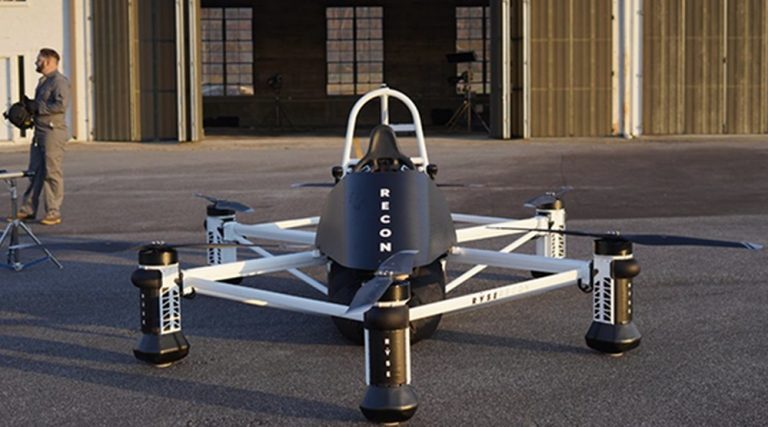
Multicopter fromRyse Aero on the ground
(Mit freundlicher Genehmigung/Courtesy of Ryse Aero Technologies, LCC [Homepage])
Of particular interest is Ryse’s strong focus on US farmers and ranchers, who often manage very large areas of land. The RECON was intended to make it easier for them to perform tasks from the air, such as monitoring crops, locating and herding cattle, and inspecting fences and other hard-to-reach areas [2].
The six replaceable lithium-ion batteries were each assigned directly to one of the six independent propulsion units and could be swapped and charged on the ground. Flight time with one set of batteries was expected to be approximately 25 minutes [2, 3]. The manufacturer of the battery cells is not known to the editors.
Series production and regular customer deliveries of the RECON apparently never materialized. According to a detailed account by a customer, Ryse Aero Technologies appears to have ceased operations in 2024. The customer had ordered a RECON and paid a $5,000 deposit, which, according to his account, was not refunded after the company ceased operations [4]. The editors are not aware of any official bankruptcy filing to date.
Sources
[1] https://ryseaerotech.com/ (Homepage, accessed 14.12.2022)
[2] https://www.farmprogress.com/technology/ryse-aero-technologies-lets-farmers-to-take-to-the-sky (accessed 20.09.2026)
[3] https://www.sec.gov/Archives/edgar/data/1980091/000173112223001359/ex99_offeringmemorandum.pdf (SEC Offering Memorandum, accessed 20.09.2026)
[4] https://jdbender.com/research-articles/361-RYSE-Recon-Desaster.html (RECON customer account, 06.02.2025, accessed 20.09.2026)
[cs 14.12.2022, 20.09.2026]
Japanese start-up for multicopters, founded in 2018 and headquartered in Toyota City, Aichi Prefecture. Its target market is commercial air transportation. Investors and strategic partners include Suzuki Motor Corporation [1].
SkyDrive is developing the SD-05, now marketed under the product name SKYDRIVE, a compact battery-electric multicopter for 3 people (1 pilot plus 2 passengers). The aircraft features 12 motor/rotor units [2].
The top speed is 100 km/h, while the current range is 15 km. Future battery upgrades are expected to gradually increase the range to 30–40 km. Maximum takeoff weight is 1,400 kg [2].
SkyDrive reached an important development milestone in April 2025 with public crewed demonstration flights of the SD-05 at Expo 2025 Osaka. Further demonstration flights followed during the World Expo [2].
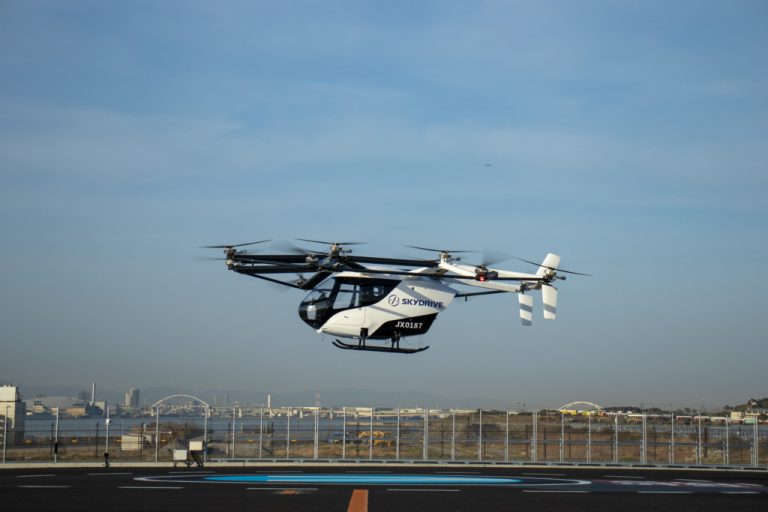
Demonstration flight SD-05 at the Expo 2025 in Osaka/Japan
(Mit freundlicher Genehmigung/Courtesy of SkyDrive Inc. [Homepage])
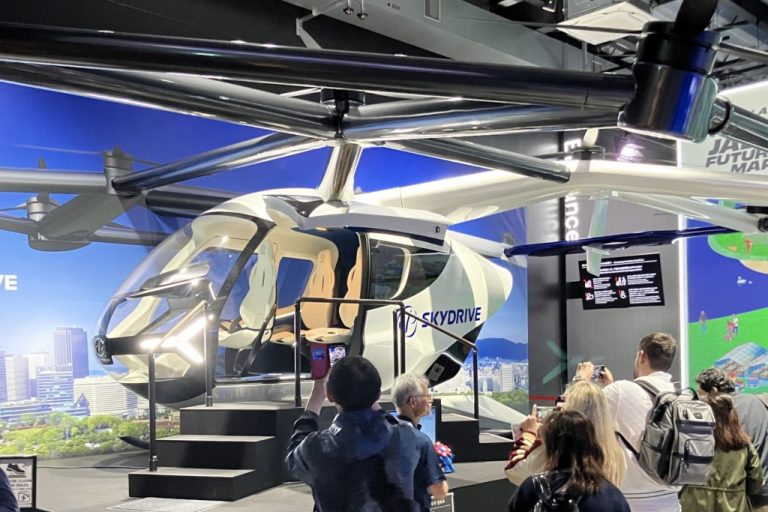
Mock-up SD-05 at the Expo 2025 in Osaka/Japan
(Mit freundlicher Genehmigung/Courtesy of SkyDrive Inc. [Homepage])
For industrialization, SkyDrive is working closely with Suzuki. In March 2024, production of the SKYDRIVE (SD-05) began at a Suzuki plant in Iwata, Shizuoka Prefecture. Production is operated by SkyDrive subsidiary Sky Works, with a production capacity of up to 100 aircraft per year [3].
Other suppliers include Thales for the Flight Control System and EP Systems for the battery system. EP Systems supplies the EPiC battery system, including battery modules, battery management system, and safety systems [2]. The manufacturer of the battery cells is not known to the editors.
The commercial launch originally planned for 2025 has been delayed. Following the successful demonstration flights at Expo 2025 Osaka, SkyDrive continues to work toward certification and now targets 2028 for full commercialization. In early 2026, SkyDrive reached an agreement with Dubai-based helicopter operator AeroGulf Services regarding the potential purchase of 20 aircraft, with initial deliveries anticipated in 2028 [4].
Sources
[1] https://en.skydrive2020.com/ (Homepage, accessed 20.09.2026)
[2] https://en.skydrive2020.com/wp-content/uploads/sites/2/2022/07/SkyDrive-Inc.-Selected-Electric-Power-Systems-Inc-to-Provide-EPiC-Battery-System-for-Production-Aircraft_18July2022.pdf (accessed 20.09.2026)
[3] https://en.skydrive2020.com/wp-content/uploads/sites/2/2024/03/%E3%80%90SkyDrive%E3%80%91SkyDrive-Begins-Production-of-Revolutionary-eVTOL-Aircraft-with-Suzuki.pdf (accessed 20.09.2026)
[4] https://en.skydrive2020.com/wp-content/uploads/sites/2/2026/01/%E3%80%90SkyDrive%E3%80%91SkyDrive-Reaches-General-Understanding-with-AeroGulf-Services-on-Purchase-of-20-eVTOL-Aircraft-with-Anticipated-Delivery-Beginning-in-2028_15Jan2026.pdf (accessed 20.09.2026)
[cs 15.12.2022, 25.04.2025, 20.09.2026]
Skyfly Technologies [↑] [↓] [⇑] [⇓]
British company for wing-based eVTOL based in Oxfordshire. Skyfly is a member of the British ADS Group, the trade association for the aerospace, defense, security, and space industries [1]. Its primary target market is private aviation.
Skyfly is developing the Axe, a small 2-seat wing-based eVTOL with two tandem wings and 4 fixed, forward-tilted propellers (propeller configuration PC4). The front wing is located ahead of the cockpit (canard), while the larger rear wing is positioned behind the cabin [2].
A distinctive feature of the Axe is that it can take off and land both vertically (VTOL) and conventionally or over a very short distance (CTOL/STOL). In forward flight, lift is generated primarily by the wings. Movable or tilting propellers are not required for the transition [2].
The Axe is already undergoing crewed flight testing. According to Skyfly, more than 50 crewed test flights have now been completed [2].
Another advantage of the wing-based design is its gliding capability: In the event of a complete electric propulsion failure, the Axe can continue flying and land like a conventional aircraft without engine power [2].

Sketch eVTOL from SkyFly
(Mit freundlicher Genehmigung/Courtesy of Skyfly Technologies Ltd. [Homepage])

Axe landing on an yacht (sketch)
(Mit freundlicher Genehmigung/Courtesy of Skyfly Technologies Ltd. [Homepage])
The Axe is equipped with an electric propulsion system and a high-voltage battery. Skyfly also offers an optional range extender that can recharge the battery during flight, significantly increasing the aircraft’s range. Alternatively, an additional battery pack can be ordered.
Skyfly specifies a range of approximately 160 km (100 miles) for the all-electric version; with the range extender, this is expected to increase to up to approximately 320 km (200 miles). The top speed is approximately 160 km/h (100 mph). Maximum takeoff weight is 750 kg, with a payload of approximately 200 kg.
For the US market, the Axe is expected to benefit from the simplified certification framework under the FAA MOSAIC rule and be offered as a Light Sport Aircraft (LSA). Unlike single-seat ultralight aircraft, operating an LSA generally requires pilot training.
The Axe is already available for pre-order. The base price is approximately £150,000 excluding taxes; optional equipment such as the range extender or an additional battery pack is offered separately. The first customer deliveries are scheduled for 2027.
The manufacturer of the battery cells is not known to the editors.
Sources
[1] https://www.adsgroup.org.uk/
[2] https://skyflytech.com/
[3] https://skyflytech.com/order/
[cs 15.12.2022, 20.09.2026]
Supernal is the US-based Advanced Air Mobility subsidiary of Hyundai Motor Group and was established in 2021. Its target market is commercial air transportation [1].
In January 2024, Supernal unveiled the S-A2, its first specific product concept for a wing-based eVTOL. The S-A2 features a V-tail and a total of 8 tilting propellers, which are used for both vertical takeoff and landing and forward flight (propeller configuration PC1) [2].
The cabin is designed for 4 passengers plus a pilot. Supernal specifies a cruise speed of approximately 190 km/h (120 mph) and an initial range of approximately 95 km (60 miles) for the S-A2. The aircraft is intended primarily for shorter urban and regional routes [2, 3].
The S-A2 features a distributed electric propulsion system. Critical systems such as propulsion, flight controls, and avionics are intended to be designed with redundancy. For development and future production, Supernal plans to draw in particular on Hyundai Motor Group’s expertise in high-volume manufacturing and automation [2].

Cabine model of Supernal presented at Farnborough Airshow 2022
(Mit freundlicher Genehmigung/Courtesy of Supernal [Media Kit])
Supernal originally planned to begin testing S-A2 prototypes in 2026 and deliver the first aircraft to operators in 2028. In preparation for commercial operations, the company entered into partnerships with aviation and helicopter operators as well as infrastructure partners [3, 4].
In 2025, however, Supernal underwent a fundamental strategic shift. Following workforce reductions and the departure of CEO Jaiwon Shin and other senior executives, work on the aircraft program was initially paused. This also called into question the originally planned 2028 market launch [5].
In May 2026, Supernal announced that it would continue eVTOL development following a strategic realignment with a smaller organization. Current priorities include technical development and validation, collaboration with the FAA, and the development of an economically viable business model. A new firm date for commercial market entry has not yet been announced [6].
Supernal had already selected EP Systems as the supplier of the battery system in 2022. The manufacturer of the battery cells is not known to the editors.
Sources
[1] https://www.supernal.aero/ (Homepage, accessed 20.09.2026)
[2] https://www.supernal.aero/newsroom/supernal-debuts-evtol-product-concept-at-ces-2024/ (accessed 20.09.2026)
[3] https://www.supernal.aero/newsroom/supernal-debuts-s-a2-evtol-product-concept-to-aviation-market-at-2024-farnborough-international-airshow/ (accessed 20.09.2026)
[4] https://www.supernal.aero/newsroom/supernal-chc-helicopter-and-heli-one-collaborate-to-develop-advanced-air-mobility-networks/ (accessed 20.09.2026)
[5] https://www.reuters.com/sustainability/boards-policy-regulation/hyundais-evtol-startup-supernal-pauses-work-following-executive-departures-2025-09-07/ (accessed 20.09.2026)
[6] https://www.supernal.aero/newsroom/supernal-appoints-new-cto-to-lead-next-phase-of-aam-evolution/ (accessed 20.09.2026)
[cs 16.12.2022, 20.09.2026]
UMILES has been renamed to Crisalion Mobility.
German start-up for electric conventional takeoff and landing aircraft (eCTOL), founded in Munich in 2021 by Ivor van Dartel and Sebastian Seemann. Vaeridion is developing the Microliner, an all-electric regional aircraft for commercial aviation [1].
The Microliner is designed to carry up to 9 passengers and is intended to be certified under CS-23 Level 3. In addition to the passenger version, a cargo version is also planned [1, 2].
The cockpit is designed for 2 pilots and supports both visual flight rules (VFR) and instrument flight rules (IFR) operations. Unlike earlier versions of the concept, the Microliner is planned to feature a pressurized cabin; its maximum operating altitude is stated as 20,000 ft (approx. 6,100 m) [1].
The aircraft is expected to offer a range of around 400 km under IFR conditions. With a reduced payload and under VFR conditions, a range of up to 550 km is expected to be possible [1, 3].
The Microliner is primarily intended to improve regional connections between smaller cities and regions that have suitable airfields but are poorly connected to major airports or high-speed rail networks. Its electric propulsion system is intended to enable economical operations even on comparatively short regional routes [1].
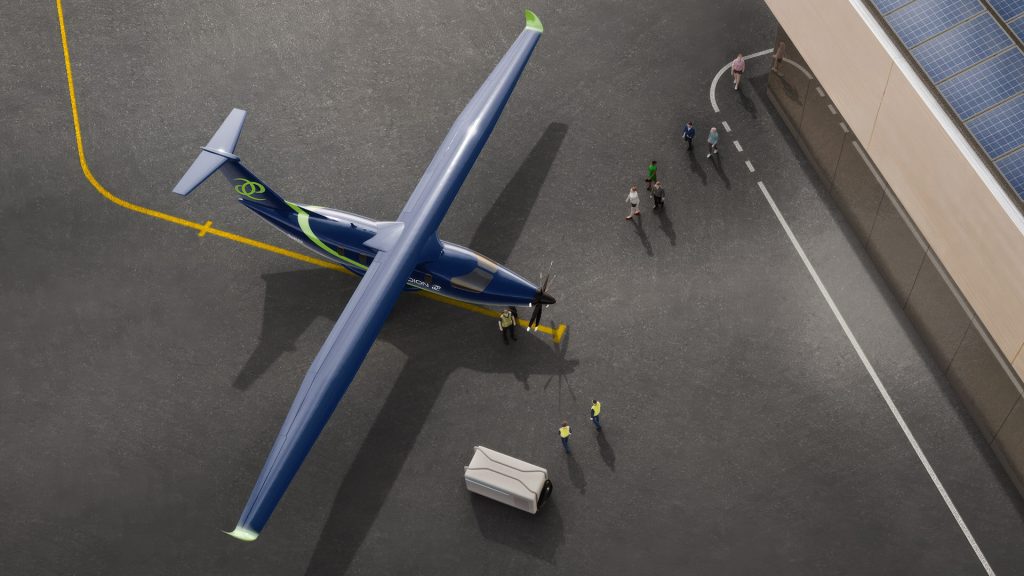
Electric airplane from Vaeridon (Animation)
(Mit freundlicher Genehmigung/Courtesy of Vaeridon GmbH [Homepage])
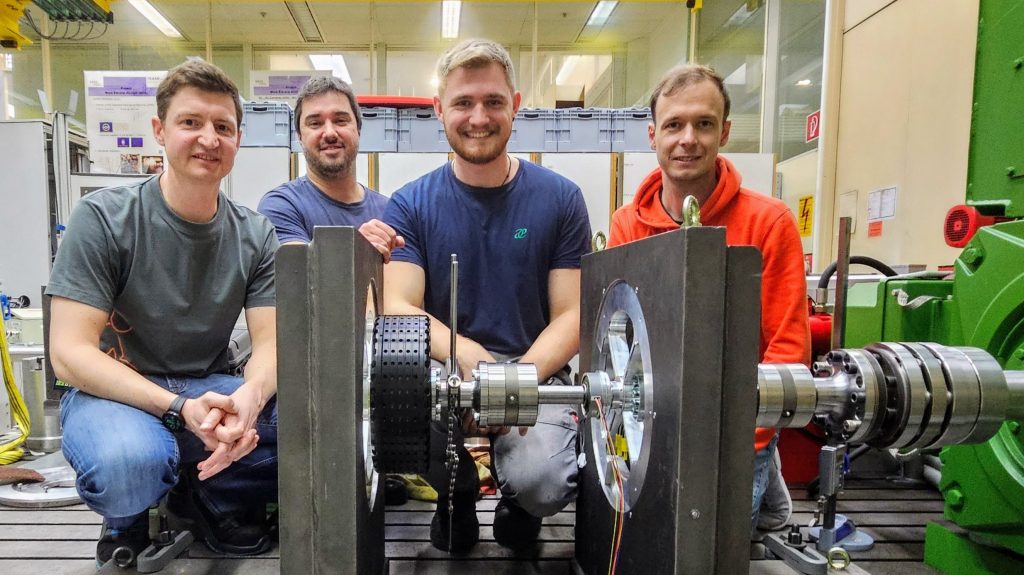
Function test “Disconnect electric motor after failure”
(Mit freundlicher Genehmigung/Courtesy of Vaeridon GmbH [Press Release])
Vertical Aerospace [↑] [↓] [⇑] [⇓]
British start-up for wing-based eVTOL, founded in Bristol in 2016 by Stephen Fitzpatrick. The target market is commercial aviation.
Vertical Aerospace is developing the VX4, an eVTOL designed for 4 passengers plus a pilot. The aircraft is currently undergoing flight testing while the company is working in parallel toward certification. Commercial entry into service is now targeted for the end of the decade.
Vertical Aerospace’s industrial partners and customers include American Airlines and Honeywell. Honeywell supplies technologies for the flight control system, among other components. Like other manufacturers of commercial eVTOL aircraft, Vertical is pursuing a safety concept based on redundant systems designed to tolerate the failure of individual components [1].
On August 9, 2023, an accident occurred during an unmanned test flight in which the company’s VX4 prototype was significantly damaged. Vertical subsequently continued its development and flight-test program with a further-developed generation of the VX4.
The company subsequently began crewed flight testing with the new prototype. Following hover and low-speed flights, testing gradually progressed to flights with increasing wing-borne lift. This phase focused in particular on the aircraft’s behavior during the transition maneuver, which is a critical phase of flight for wing-based eVTOL aircraft.
Vertical Aerospace [↑] [↓] [⇑] [⇓]
British start-up for wing-based eVTOL, founded in Bristol in 2016 by Stephen Fitzpatrick. The target market is commercial aviation.
Vertical Aerospace is developing the VX4, an eVTOL designed for 4 passengers plus a pilot. The aircraft is currently undergoing flight testing, while the company is working in parallel toward certification. Commercial entry into service is now targeted for the end of the decade.
Vertical Aerospace’s industrial partners and customers include American Airlines and Honeywell. Honeywell supplies technologies for the flight control system, among other components. Like other manufacturers of commercial eVTOL aircraft, Vertical is pursuing a safety concept based on redundant systems designed to tolerate the failure of individual components [1].
On August 9, 2023, an accident occurred during an unmanned test flight in which the VX4 prototype was significantly damaged. Vertical subsequently continued its development and flight-test program with a further-developed generation of the VX4.
The company subsequently began crewed flight testing with the new prototype. Following hover and low-speed flights, testing gradually progressed to flights with increasing wing-borne lift. This phase focused in particular on the aircraft’s behavior during the transition maneuver, which is a critical phase of flight for wing-based eVTOL aircraft.
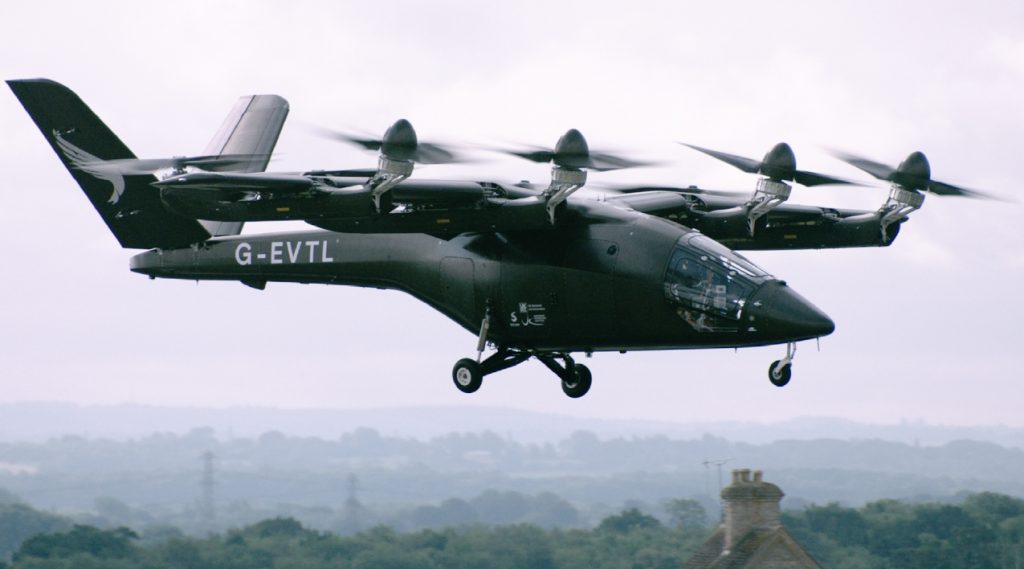
VX4 from Vertical Aerospace at test flight
(Mit freundlicher Genehmigung/Courtesy of Vertical Aerospace Group Ltd. [Press Release])

VX4 from Vertical Aerospace on air field
(Mit freundlicher Genehmigung/Courtesy of Vertical Aerospace Group Ltd. [Press Release])
The VX4 has a capacity of 5 people (1 pilot, 4 passengers). Vertical Aerospace specifies a planned cruise speed of around 240 km/h (150 mph) and a range of up to 160 km (100 miles) [1].
The lithium-ion cells for the battery system are supplied by Molicel. The Taiwanese company specializes in high-performance cylindrical lithium-ion cells with high power density. Vertical Aerospace and Molicel are collaborating on the development of the battery system for the VX4 [3].
In parallel with the current VX4 flight-test program, Vertical Aerospace is developing the next generation of its aircraft. This further development was unveiled under the name Valo and is intended to build on the findings from the VX4 program. Commercial entry into service is targeted for the end of the decade.
Sources
[1] https://vertical-aerospace.com/ (accessed September 16, 2026)
[2] https://aviationweek.com/aerospace/advanced-air-mobility/accident-damages-vertical-aerospaces-prototype-vx4 (accessed August 25, 2023)
[3] https://www.molicel.com/corporate/vertical-aerospace-and-molicel-partner-to-power-the-vx4/ (accessed September 16, 2026)
[cs 16.12.2022, 25.08.2023, 16.09.2026]
German pioneer in multicopters, founded in Bruchsal, Baden-Württemberg, as early as 2011. The first crewed flight with an early prototype took place on October 28, 2011 [1,2].
Following financial difficulties and insolvency proceedings, Volocopter was acquired by the Diamond Aircraft Group in March 2025, which in turn is part of the Chinese Wanfeng Aircraft Division of Wanfeng Auto Holding Group. Following the acquisition, Volocopter was integrated into the Wanfeng Aircraft Division as a sister company alongside Diamond Aircraft.
Volocopter’s headquarters, however, remain in Bruchsal [7].
Under its new owner, Volocopter is pursuing two different product lines. Development and certification of the VoloCity are continuing for commercial aviation. In addition, with the VoloXPro unveiled in 2026, Volocopter is targeting private and business aviation as well as pilot training for the first time.
The VoloCity is a two-seat multicopter for 1 pilot and 1 passenger. It features 18 vertical rotors, reaches speeds of up to 110 km/h, and is designed for a range of around 35 km. The aircraft was developed specifically for short urban routes [1].
VoloCity uses a redundant safety concept. Rotors, electric motors, batteries, and key avionics components are redundant, allowing the aircraft to tolerate the failure of individual components. Volocopter has now completed more than 2,000 test flights with various generations of its aircraft [1].
The EASA type certification of the VoloCity is currently expected in 2027. Volocopter already holds an EASA Design Organisation Approval (DOA) as well as the required Production Organisation Approval (POA) for production of the VoloCity in Bruchsal [1,8].
The VoloXPro is also a two-seat multicopter with 18 rotors, but with a maximum takeoff mass of 600 kg, it falls into a different certification category. The aircraft has a cruise speed of 70 km/h and, depending on the battery configuration, a range of up to 40 km. Certification and market entry are targeted for late 2026 [9].

First manned multicopter flight in 2011
(Mit freundlicher Genehmigung/Courtesy of Volocopter GmbH [Media Hub])

Volocity from Volocopter
(Mit freundlicher Genehmigung/Courtesy of Volocopter GmbH [Media Hub])
The first commercial flights with the VoloCity were originally planned for 2024 in Paris in connection with the Olympic Games. However, because type certification had not yet been obtained, the planned commercial passenger service did not take place. In August 2024, Volocopter conducted only demonstration and validation flights in the Paris area [3].
Another potential application is emergency medical aviation. The VoloCity is not intended to replace conventional rescue helicopters but could, for example, be used to transport an emergency physician quickly to the scene of an incident. In May 2026, pilots from ADAC Luftrettung flew the VoloCity themselves under supervision for the first time, testing, among other things, the interaction between the aircraft and the ground station [4].
In addition to the VoloCity and VoloXPro, Volocopter continues to list the VoloRegion in its product portfolio as an aircraft solution for longer regional routes. Earlier work on the VoloDrone cargo drone had meanwhile been put on hold.
The VoloCity uses a battery-swapping concept. Its 9 battery packs can be replaced after a flight, reducing the aircraft’s turnaround time on the ground [1].
The battery system and parts of the avionics and flight-control system were developed jointly with Diehl Aviation. An optical bus system is used, among other technologies, for communication between different control computers, offering advantages in terms of electromagnetic compatibility [6].
The manufacturer of the lithium-ion cells used in the aircraft is not known to the editors.
Sources
[1] https://www.volocopter.com/ (Homepage, accessed September 16, 2026)
[2] https://www.youtube.com/watch?v=L75ESD9PBOw&t=126s (accessed December 17, 2022)
[3] https://www.volocopter.com/en/newsroom-archive (accessed September 16, 2026)
[4] https://www.volocopter.com/en/newsroom/evtol-testing-adac-luftrettung-pilots-fly-volocity (accessed September 16, 2026)
[5] Manager Magazin (accessed December 17, 2022)
[6] Diehl Aviation (accessed September 21, 2023)
[7] https://www.volocopter.com/en/newsroom/vc-reorganization-success (accessed September 16, 2026)
[8] https://www.volocopter.com/en/newsroom/vc-poa-extension (accessed September 16, 2026)
[9] https://www.volocopter.com/en/newsroom/volocopter-launches-new-product-voloxpro (accessed September 16, 2026)
[cs 17.12.2022, 21.09.2023, 23.09.2024, 01.02.2025, 11.11.2025, 16.09.2026]
In August 2026, Archer Aviation announced the acquisition of Wisk Aero from Boeing. In addition to Wisk, the transaction includes Boeing subsidiaries Insitu and SkyGrid and is expected to close by the end of 2026. As part of the transaction, Boeing is expected to become a shareholder and strategic partner of Archer [1].
Wisk Aero is a US company developing wing-based eVTOL aircraft and is headquartered in Mountain View, California. Its development history dates back to 2010. Wisk was formed in 2019 as a joint venture between Boeing and Kitty Hawk. Since 2023, Wisk has been a wholly owned subsidiary of Boeing; upon completion of the transaction announced in 2026, the company is expected to become part of Archer Aviation [1][2]. The target market is commercial aviation.
Wisk is pursuing a distinctive approach within the eVTOL industry: the company plans to launch commercial passenger service without pilots on board from the outset. This means that all seats in the aircraft are available to passengers [2].
The current Generation 6 (Gen 6) aircraft is intended as the candidate for FAA type certification. The first flight of the Gen 6 prototype took place on December 16, 2025, in Hollister, California. Gen 6 is now undergoing flight testing and certification [3].
Wisk is also participating in the US eVTOL Integration Pilot Program (eIPP), which is intended, among other things, to provide practical experience with integrating eVTOL aircraft into the US airspace system. Wisk is currently targeting the launch of commercial passenger service by 2030 [4].
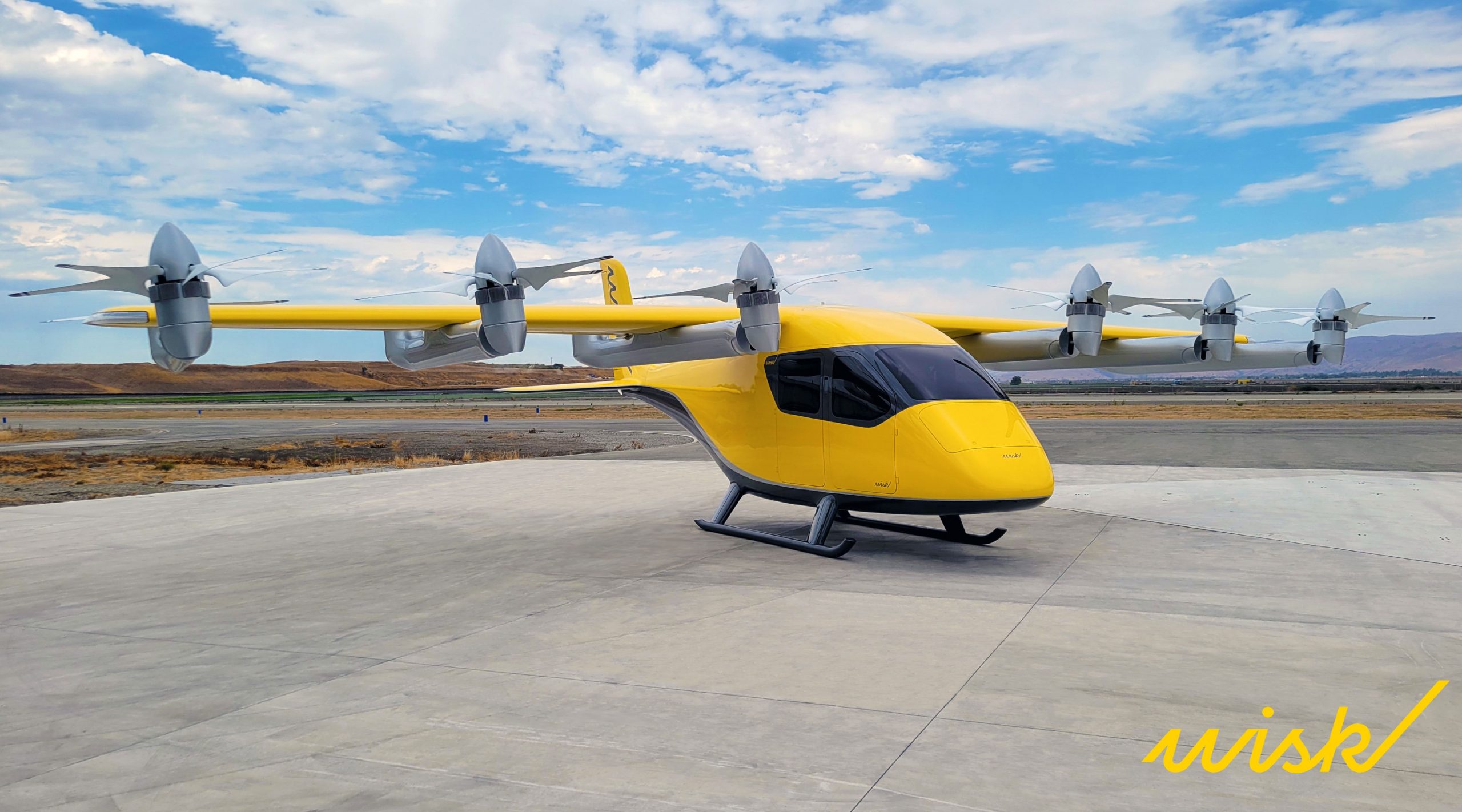
GEN6 eVTOL from Wisk Aero
(Mit freundlicher Genehmigung/Courtesy of Wisk Aero LLC. [Media Kit])

Interieur GEN6 eVTOL from Wisk Aero
(Mit freundlicher Genehmigung/Courtesy of Wisk Aero LLC. [Media Kit])
Generation 6 is a four-seat wing-based eVTOL. The aircraft features a total of 12 propellers: 6 tilting propellers are used for both vertical and horizontal flight, while another 6 vertical propellers are used exclusively for takeoff, landing, and hover (Propeller Configuration PC3) [2].
With this propeller configuration, Gen 6 is similar to the aircraft developed by Archer Aviation and Vertical Aerospace. The aircraft is designed for a range of around 144 km (90 miles) and a cruise speed of approximately 200 km/h (110 knots) [2].
A key distinguishing feature is autonomous flight operation. The flight-control system uses automated flight functions, sensors, and a Detect-and-Avoid system, among other technologies. For safety-critical decision-making logic, Wisk relies on deterministic, rule-based software rather than AI or machine-learning systems. Humans monitor flight operations from the ground [2].
The safety concept is also based on redundant systems. Critical functions are designed so that the failure of a single component should not result in the loss of the aircraft (no single point of failure) [2].
Wisk has accumulated extensive flight experience with several generations of eVTOL aircraft. According to the company, more than 1,700 test flights have been completed since development began [1][3].
The manufacturer of the battery cells used in the aircraft is not known to the editors.
Sources
[1] https://wisk.aero/newsroom/archeracquireswisk (accessed September 16, 2026)
[2] https://wisk.aero/newsroom/generation6 (accessed September 16, 2026)
[3] https://wisk.aero/newsroom/wisk-completes-first-flight-of-generation-6-autonomous-evtol (accessed September 16, 2026)
[4] Wisk – eVTOL Integration Pilot Program (eIPP) (accessed September 16, 2026)
[cs 17.12.2022, 16.09.2026]
US start-up for multicopters, founded by Stephen Tibbits in 2017. Tibbits had already begun conceptual work on eVTOL aircraft in 2003.
ZEVA Aero has since been renamed Alpine Vertical. The following information describes ZEVA Aero’s former activities and the development status as of 2022 [1].
ZEVA Aero developed a multicopter prototype called Z2, whose unusual design resembles an upright UFO.
You can see the Z2 in flight in this video.
Technically, the Z2 is a single-seat multicopter with a total of 8 vertical propellers, with two counter-rotating propellers arranged in each nacelle. The planned range was 80 km (50 miles), with a top speed of just under 260 km/h (160 mph).
The Z2 also featured a safety concept based on redundant components (electric motors, motor controllers, HV battery, etc.). This was intended to allow the aircraft to tolerate the failure of a single component, such as a propeller (no single point of failure).

ZEVA Multicopter
(Mit freundlicher Genehmigung/Courtesy of ZEVA. Inc. [Homepage])

ZEVA SkyDock™-Konzept
(Mit freundlicher Genehmigung/Courtesy of ZEVA, Inc. [Homepage])
One particularly futuristic idea was ZEVA Aero’s so-called SkyDockTM concept. The concept envisioned the ZEVA multicopter docking directly to the side of high-rise buildings, allowing passengers to move directly from the aircraft into the building. ZEVA described this as point-to-point travel, designed to avoid the time lost when using conventional airports [2].
ZEVA Aero did not publish any concrete plans for implementing the SkyDockTM concept. Nor did the company announce specific timelines for certification or SOP (Start of Production) of the Z2.
The supplier of the Z2’s battery cells was also not disclosed.
Sources
[1] https://www.zevaaero.com/ (Homepage, accessed 20.12.2022)
[2] https://www.zevaaero.com/skydock/ (accessed 20.12.2022)
[cs 20.12.2022, 21.09,2026]