
BEV start-ups
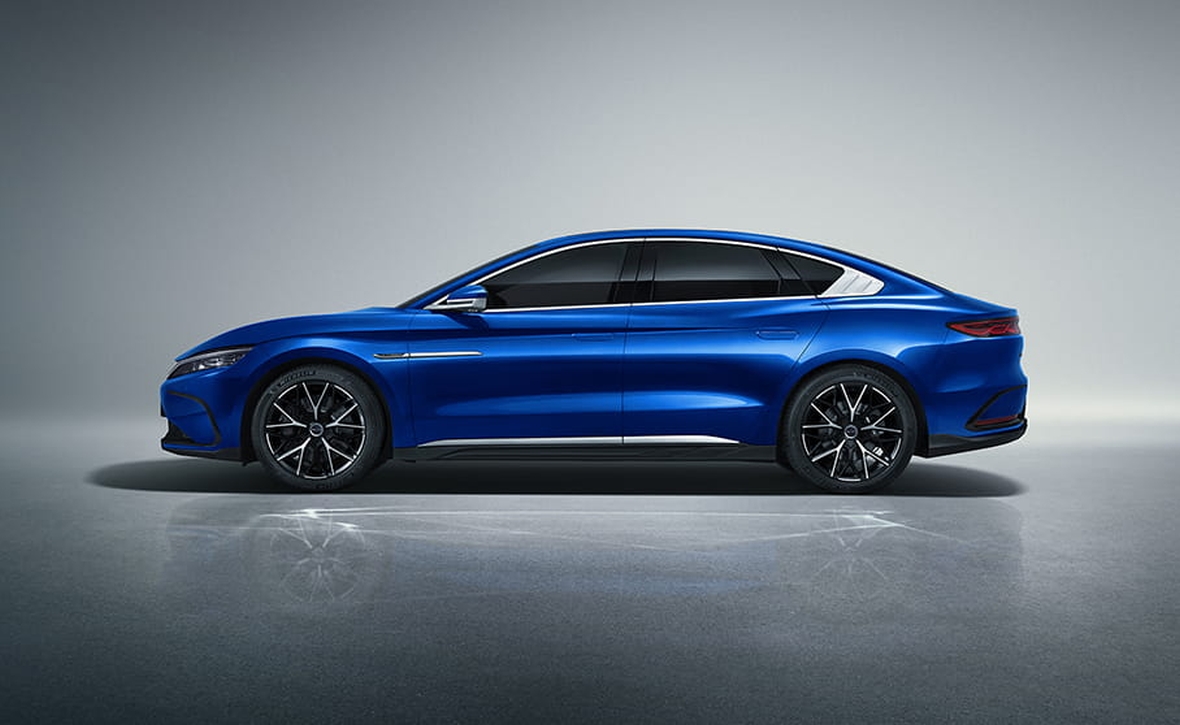
BYD Model Han
(Mit freundlicher Genehmigung/Courtesy of BYD Europe B.V. [Homepage])
Management Summary
Elon Musk’s success with Tesla has triggered a profound transformation in the automotive industry, resulting in the emergence of numerous BEV start-ups, new BEV brands from established manufacturers, and—especially in Asia—new BEV joint ventures. In this article, we provide a structured overview of the world’s most significant start-ups for battery electric vehicles.
Despite increasing competition, Tesla has been able to maintain its dominant market position for over seven years:
- From 2018 to 2024, Tesla was the world’s largest manufacturer of battery electric vehicles in terms of sales.
- It was not until 2025 that Tesla lost this position to its Chinese competitor BYD.
The shift in leadership from a US to a Chinese automaker is also an indicator of Chinese dominance in the BEV segment:
- In 2024, China accounted for around 66% of global BEV sales, which corresponds to approximately 7M vehicles, while Europe lagged significantly behind with just under 2M and the US with around 1.2M BEVs.
- Industry analysts expect BEV sales to rise further to around 8 million vehicles in 2025, an increase of over 14%.
BYD is in a league of its own in terms of sales figures and technology strategy:
- With a total of 4.6M vehicles delivered, the company will be one of the world’s 10 largest car manufacturers by 2025. Nearly 2.3M models had a BEV drive, putting BYD well ahead of Tesla.
- BYD is the only car manufacturer in the world with a fully integrated battery value chain: the company develops and produces cells and batteries in-house and also supplies other OEMs and suppliers.
Behind BYD, a group start-ups has established itself in China, which we call the “Rising Four”. All members of this group were able to deliver a significant six-figure number of vehicles in 2025:
- With just under 600,000 units, the group is led by Leapmotor. Stellantis has a 20% stake in Leapmotor and supports the Chinese start-up with its distribution channels for exports to Europe.
- Xpeng follows with just under 530,000 vehicles sold. The company has been a strategic partner of VW since 2024. The Wolfsburg-based carmaker wants to use Xpeng technologies for its China models.
- Li Auto is best known for its range extender models, and its rapid rise has triggered a global range extender wave. However, the company suffered a nearly 20% decline in sales in 2025, with 406,000 units sold.
- NIO brings up the rear of this group with 326,000 vehicles. The company is best known for its battery replacement concept, but is in danger of falling behind in the face of increasing competition.
The success of BYD and Co. should not obscure the fact that the BEV market in China is characterized by extremely intense competition. Many Chinese BEV start-ups are now insolvent or are working on financial restructuring. Among these “Left-Behind-Start-ups” are also companies that had a thoroughly successful start but lost their market share again in the face of intensifying competition.
There are also a number of BEV start-ups in the USA, but – apart from Tesla – these have so far been far less successful than their Chinese competitors:
- Rivan’s R1T model serves the light truck segment, which is so important in the US, but sales are stagnating at around 50,000 vehicles per year. However, thanks to its cooperation with VW, the US start-up has a financially strong partner at its side.
- At Lucid, sales figures are still significantly lower at around 15,000 units in 2025. However, with the Saudi Arabian sovereign wealth fund, the company has a very powerful investor.
- Tesla has been a major driving force behind the transformation of the automotive industry, but in 2025 it lost its leading position to BYD for the first time. The reasons for Tesla’s current stagnation are complex. You can find a detailed account of the company’s rise and current development in our Tesla story.
BEV start-ups have also been founded in Europe. Most of these new companies have little chance of long-term success.
One of the few exceptions is the Croatian startup Rimac Automobili, which is very well positioned thanks to its hybrid business strategy and partnership with Porsche:
- As an engineering company, it supplies renowned OEMs with BEV technologies.
- With the Nivera, it also occupies the very exclusive niche of super sports cars as a vehicle manufacturer.
BEV start-ups from China – market leader BYD
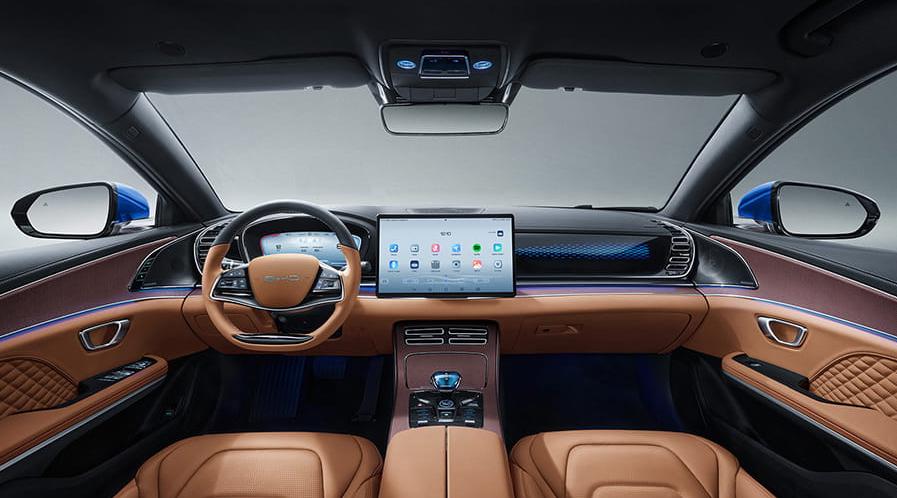
BYD model Han – Interieur
(Mit freundlicher Genehmigung/Courtesy of Hedin Electric Mobility GmbH [Homepage])
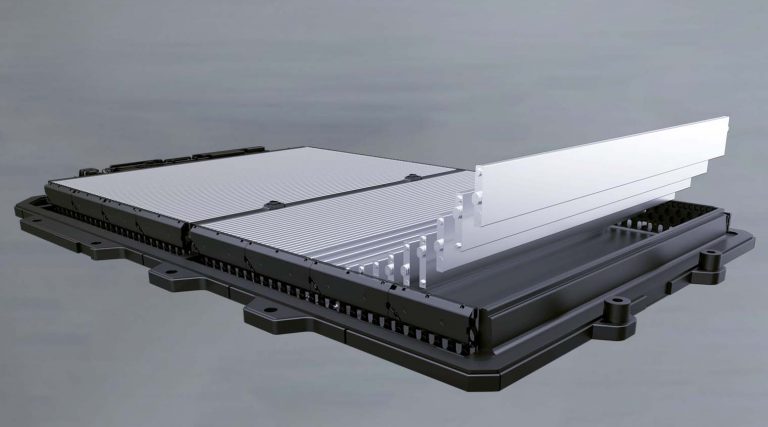
HV battery from BYD with blade cells
(Mit freundlicher Genehmigung/Courtesy of BYD Company Ltd. [Homepage])
The current BEV market leader, BYD, was founded in Shenzhen in 1995 by Wang Chuanfu as a manufacturer of Li-Io cells. In the early 2000s, BYD entered the automotive production market with the founding of BYD Auto and focused on alternative drive technologies at an early stage. With its complete withdrawal from the production of pure combustion engines in 2022, BYD has consistently positioned itself as a supplier of electrified vehicles.
Since 2025, BYD has been the world’s largest manufacturer of battery electric vehicles in terms of units delivered, with over 2.2 million vehicles sold in the BEV segment alone.
The rise to become the world’s leading manufacturer of battery electric vehicles took place within a few years. BYD benefited from strong demand in its home market of China, a rapidly growing model portfolio, and a high level of vertical integration. In fiscal year 2024, BYD generated revenue of approximately RMB 777B (≈ € 99.3B) and net profit of approximately RMB 40.3B (≈ € 5.2B).
A key factor in the company’s success is its exceptionally high level of vertical integration. BYD covers significant parts of the value chain itself, particularly in the area of battery and cell production. The company develops and manufactures its own lithium iron phosphate (LFP) cells and complete battery systems, including the Blade Battery, which is characterized by increased safety and durability. A drive battery built from Blade cells is designed for 1.2 million kilometers or 3,000 charging cycles.
Through its own companies, BYD not only produces batteries for its own vehicles, but also supplies other companies in the automotive sector. With a market share of around 17%, BYD is the second-largest manufacturer of cells and batteries. This integrated structure gives the company cost advantages, reduces dependence on suppliers, and accelerates technological innovation cycles.
BYD also pursues a largely integrated approach in the field of vehicle electronics. Numerous electronic components such as battery management systems, power electronics, charging units, and control units are developed and manufactured within the group.
A similarly high level of integration was common in the traditional automotive industry for a long time before many component and electronics manufacturing operations were outsourced in the 1990s: Areas such as on-board electrics, instrument panels, air conditioning systems, and cable harnesses were previously manufactured in-house at GM and Ford, for example, before later being transferred to independent suppliers such as Delphi (spun off from GM in 1999) and Visteon (emerged from Ford in 2000).
Parallel to its growth in its home market, BYD has been driving forward its international market expansion. The manufacturer’s vehicles are now available in more than 70 countries, with an increasing focus on Europe. Exports of battery electric vehicles and plug-in hybrids rose to over one million units in 2025, significantly increasing their importance for the group as a whole. In Europe, BYD is recording strong growth in registration numbers, particularly in markets such as Germany, Norway, the Netherlands, and the UK. The expansion of local sales structures and planned production capacities on the continent are expected to further strengthen the company’s market position.
Overall, BYD exemplifies the structural change in the global automotive industry. Starting with battery production, the company has developed into one of the most technologically and industrially integrated providers of electric mobility and, as the world’s largest BEV manufacturer since 2025, has been significantly shaping the dynamics of the market.
BEV startups from China – the Rising Four

Leapmotor C0I – Exterieur
(Mit freundlicher Genehmigung/Courtesy of Zhejiang Leapmotor Technology Co.,Ltd [News Room])
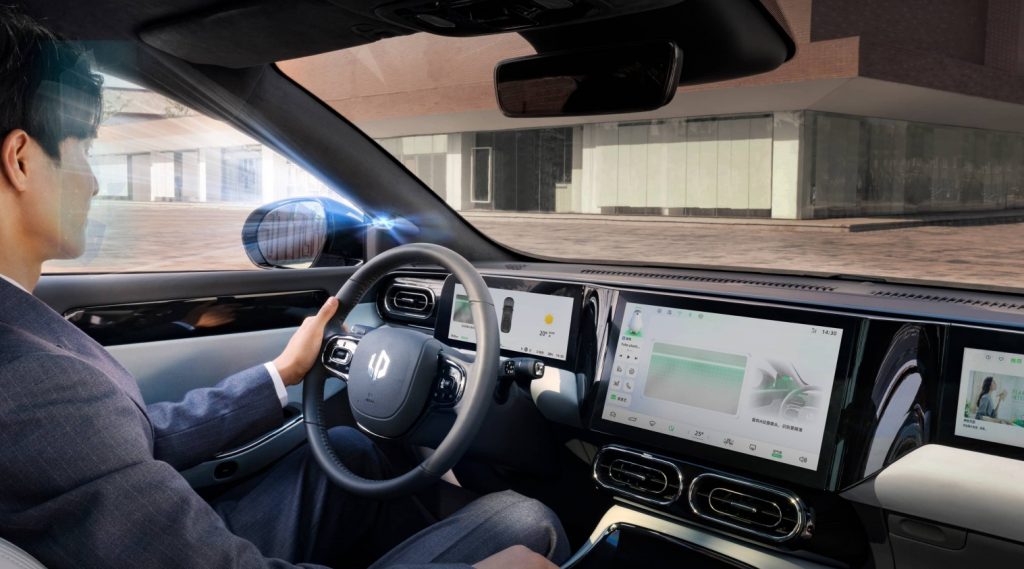
Leapmotor C0I – Interieur
(Mit freundlicher Genehmigung/Courtesy of Zhejiang Leapmotor Technology Co.,Ltd [Homepage])
Among BYD’s four closest competitors, Leapmotor made a big leap forward in 2025 by doubling its sales figures from just under 300,000 to 600,000 units. The company was founded in 2015 by Fu Liquan and Zhu Jiangming under the name Zhejiang Leapmotor Technology Co., Ltd.
Like most BEV start-ups, Leapmotor is not yet profitable, but is well on its way to becoming so. In 2024, revenue rose to just under RMB 32.2B (≈ €4.4B), with a net loss of RMB 2.8B (≈ €0.37B). In the first half of 2025, Leapmotor achieved revenue of just under RMB 24.3 billion (≈ €3.3 billion) with a half-year net profit of around RMB 30 billion (≈ €4 million).
Stellantis‘ entry in October 2023 marked an important milestone for the company. Stellantis acquired just under 20% of Leapmotor’s shares for around €1.5 billion and founded the joint venture Leapmotor International B.V. with the start-up. The cooperation will initially serve as sales support for Leapmotor, also incorporating Stellantis’ global network.
Although the use of Leapmotor technologies in Stellantis models is mentioned in press statements, it is not the main focus of this cooperation, unlike, for example, the collaboration between VW and Xpeng.
At the end of 2025, it was announced that FAW would also acquire a stake of around 5 percent in Leapmotor. The Chinese state-owned carmaker plans to use Leapmotor technologies in its own models.
Exports to Europe began in 2024, and Europe-wide distribution was expanded to hundreds of sales and service points by 2025. Estimates suggest that Leapmotor exported between 50,000 and 80,000 vehicles worldwide in 2025.
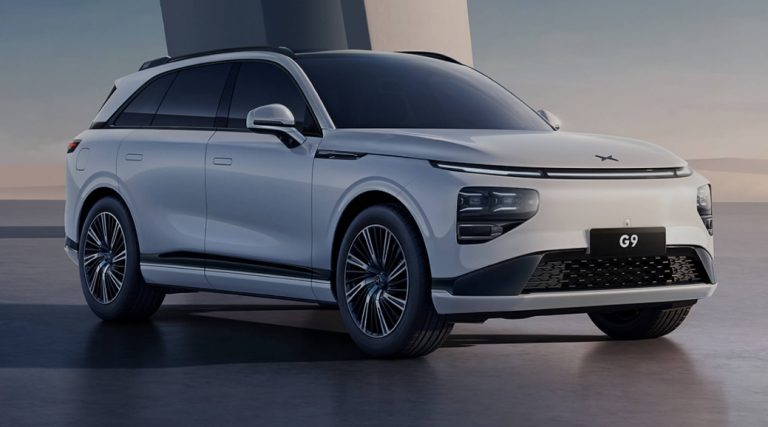
XPeng P9 – Exterieur
(Mit freundlicher Genehmigung/Courtesy of XPeng Inc. [Homepage])

XPeng G9 – Interieur
(Mit freundlicher Genehmigung/Courtesy of XPeng Inc. [Homepage])
Xpeng, the second among the “Rising Four,” was able to shine in 2025 with even stronger growth than Leapmotor. Sales figures jumped from 190,000 to almost 430,000 units, representing an increase of just under 126%. Thanks to this growth, the company was able to significantly reduce its net loss from 2023 to 2025; Xpeng is expected to turn a profit for the first time in 2026.
In fiscal year 2024, Xpeng generated revenue of RMB 40.9B (~€ 5.3B) with a net loss of approximately RMB 5.8B (~€ 0.75B).
The founder’s CV bears strong similarities to that of Elon Musk: He Xiaopeng became a self-made millionaire with the sale of his highly successful internet start-up UCWeb to Alibaba. He was one of the first customers in China to take delivery of a Tesla Model S. This vehicle impressed him so much that he decided to enter the automotive industry himself in 2014.
VW is an important strategic partner for Xpeng. Back in 2023, VW acquired a stake of just under 5 percent in the company and initiated a broad cooperation that goes far beyond a purely financial investment:
- For VW, the main benefit lies in accelerating development processes. Xpeng has independently developed a central vehicle electronics architecture, powerful software stacks, and extensive experience with over-the-air updates, driver assistance systems, and digital user interaction. Volkswagen can integrate these capabilities into new China-specific models at short notice without having to develop them entirely from scratch.
- For Xpeng, the cooperation with Volkswagen primarily offers financial stability and economies of scale. The investment strengthens the company’s capital base and increases its credibility with investors, suppliers, and government agencies. In addition, Xpeng benefits from VW’s global experience in large-scale production, quality management, procurement, and international sales.
Xpeng also expanded its export activities in 2025. A total of around 45,000 vehicles were delivered to overseas markets, almost double the previous year’s figure. By the end of 2025, Xpeng was active in around 60 countries and regions worldwide. Xpeng organizes its exports independently, i.e., without its partner VW. This approach contrasts with competitors such as Leapmotor, which handles some of its exports to Europe through a joint venture with Stellantis.

Li L9 – Exterieur
(Mit freundlicher Genehmigung/Courtesy of Li Auto Inc. [Homepage])

Li L9 – Interieur
(Mit freundlicher Genehmigung/Courtesy of Li Auto Inc. [Homepage])
Li Auto is the only startup among the “rising four” that suffered a decline in sales of around 19% in 2025. While around 500,500 vehicles were delivered in 2024, this figure fell to around 406,000 units in 2025.
The company was founded in Beijing in 2015 by Li Xiang. Unlike its competitors, the company used range extender models from the outset. The model range consists of large, comfort-oriented SUVs such as the L9, L8, L7, and later the L6, which were specifically aimed at families. These vehicles offer spacious interiors with up to three rows of seats. With this positioning, Li Auto appealed to a customer group with high purchasing power and quickly established itself as one of the leading brands in this segment.
The company also developed very robustly financially. By 2023, Li Auto had already achieved a net profit of around € 1.5B, reaching the break-even point much earlier than its competitors. In 2024, Li Auto further increased its revenue to around RMB 144.5B (~ € 18.8B) and again achieved a high net profit of around RMB 12B (~ € 1.5B), confirming the company’s sustainable profitability.
With its focus on range extender drives and strong growth continuing until 2024, Li Auto triggered a reassessment of this technology. As a result, numerous Chinese manufacturers, as well as international OEMs, began to develop their own range extender or serial hybrid concepts. Li Auto is thus considered a key driver of a range extender wave that spread internationally from China.
Li Auto has also been present on the market with its first pure battery-electric models since 2025. However, its entry into the BEV segment is taking place in a highly competitive environment in which numerous manufacturers are active with broad model ranges, aggressive pricing, and a high pace of innovation. Accordingly, the ramp-up of BEV models has been much more subdued so far than the earlier success of range-extender SUVs.
Internationally, Li Auto continues to focus exclusively on its home market in China. No concrete export plans or expansion into Europe or other regions have been announced to date. The company is thus deliberately pursuing a China-focused strategy, setting itself apart from competitors who are focusing on international markets at an early stage.
The key factor for Li Auto’s future development will be whether the company succeeds in transferring its successful positioning in the range extender segment to pure battery electric vehicles and thereby maintaining its position in an increasingly saturated and competitive market.
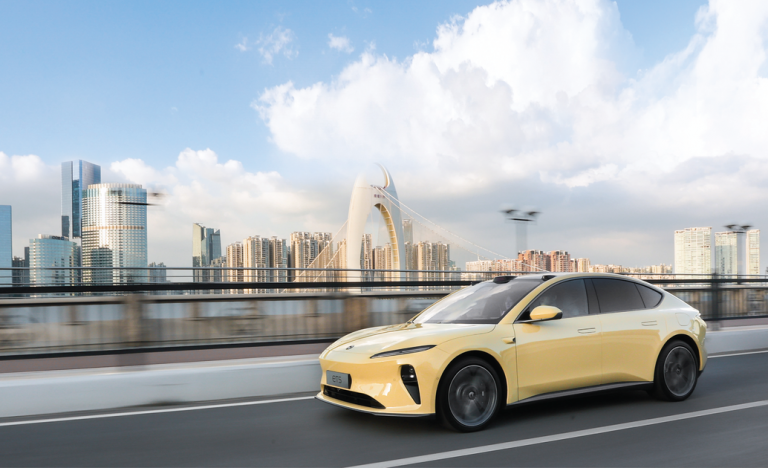
NIO ET7
(Mit freundlicher Genehmigung/Courtesy NIO Deutschlang GmbH [Press Release])

Batteriewechselstation von NIO
(Mit freundlicher Genehmigung/Courtesy of NIO Deutschlang GmbH [Press Release])
NIO was founded in Shanghai in 2014; thanks to its export business, which began in 2021, the company is one of China’s best-known start-ups. In 2024, NIO delivered around 222,000 vehicles worldwide, with a revenue of approximately RMB 65.7B (~€ 8.5B).
Despite this significantly higher revenue compared to Leapmotor and Xpeng, NIO continued to operate at a significant loss: in 2024, the net loss was RMB 22.4B (~€ 2.9B). The company has not managed to achieve a profitable financial year up to and including 2025, mainly due to high fixed costs, intensive research and development expenditure, and the cost-intensive development of its own charging infrastructure.
For 2025 as a whole, NIO reported around 326,000 vehicles delivered worldwide, representing an increase of just under 50% compared to 2024. However, this growth lagged significantly behind Leapmotor and Xpeng. In addition, the growth is spread across several brands and model series, which increases complexity and makes it difficult to achieve economies of scale.
A key distinguishing feature is the network of battery swap stations. At the end of 2025, NIO operated more than 3,000 so-called power swap stations worldwide. Technologically, the system offers clear convenience advantages, but it is also capital-intensive. Outside China, utilization has been low so far, meaning that the benefits of the system only partially offset the high investment costs.
Exports are developing more slowly than originally planned. Market entry began in 2021, but by the end of 2024 only a few thousand NIO vehicles had been registered across Europe, including around 1,600 units in 2024. In key markets such as Germany, new registrations in 2024 and 2025 were in some cases only in the double digits per month.
Sales in Europe remained low in 2025, despite the launch of new models and the introduction of the more affordable Firefly brand in selected countries such as Norway and the Netherlands. Overall, only a few thousand vehicles had been delivered in Europe by the end of 2025, making exports a clearly marginal business.
Overall, NIO appears to be a technologically ambitious manufacturer with innovative approaches, but its growth is comparatively slow. Persistent losses, a cost-intensive business model, weak export figures, and the lack of a strong strategic partner increasingly differentiate NIO from competitors such as Xpeng and Leapmotor. Whether the combination of premium positioning, battery replacement, and international expansion is sustainable in the long term remains to be seen in light of intense competition.
BEV startups from China – the ones left behind
The Chinese BEV market has grown rapidly in recent years, evolving from a niche market to one of the largest automotive segments worldwide. Annual new registrations rose from around 1.2M BEVs in 2020 to around 7M BEVs in 2024, which is almost a sixfold increase; and growth will continue into the fall of 2025, with over 6.5 million units already registered.
This dynamic market growth has attracted numerous new BEV start-ups, which launched with very different business models. However, the market is now clearly in a phase of consolidation, characterized by intense price competition, rising cost pressure, and an increasing concentration on a few financially strong providers. Against this backdrop, the number of “left-behind” start-ups is increasing.
AI–WAYS, Beyonca, and Faraday Future are among the companies still active:
- AI-WAYS launched in 2017 as a Chinese BEV start-up with the aim of serving both the mass market in China and Europe with its SUV models. Exports to Europe began as early as 2020, but only in small quantities. In view of overcapacity and fierce price wars in the domestic market, AI-WAYS withdrew completely from China in 2024. The company now wants to position itself as a pure export brand for Europe, which has little chance of success given the growing export success of competitors such as Leapmotor and Xpeng.
- Faraday Future, a US-Chinese project, is targeting the luxury segment with its premium SUV, but has so far only achieved very low sales figures (less than 20 vehicles in more than a decade). The company is heavily in debt and is attempting to counteract this with restructuring measures. Meanwhile, the BEV premium segment is also being served by many players, which further increases the challenges for Faraday Future.
- Beyonca was only founded in 2022 and is also positioning itself as a premium manufacturer. Unlike Faraday Future, however, no vehicle has been produced yet, and the start of series production has had to be postponed several times. According to the company, it has share capital in the mid-three-digit million US dollar range and is strategically supported by established industry partners such as Dongfeng Motor and Renault.
The companies Hozon Auto and Human Horizons are already in insolvency proceedings:
- Hozon Auto, known for its Neta brand, was focused on the high-volume mass market and was still able to sell over 100,000 vehicles in 2022. However, due to increasing price competition, the company ran into financial difficulties. The Hozon Auto case illustrates that past market successes are no guarantee of sustainable survival in a market characterized by high volatility and price pressure.
- Human Horizons positioned itself in the high-priced premium segment with its HiPhi brand, but achieved only limited sales volumes and ultimately failed due to a combination of high development costs and weak demand.
Overall, current developments in the Chinese BEV segment are reminiscent of those in the US automotive industry in the first half of the 20th century. Of the hundreds of vehicle manufacturers, only a few major players ultimately survived. The same consolidation is currently taking place in China in the BEV segment, albeit in a much shorter period of time, almost as if in fast motion.
BEV start-ups from the USA
Several BEV start-ups have also been founded in the US in recent years, but these are nowhere near as economically successful as their Chinese competitors.
One exception is Tesla, which has sold around 1.8 million vehicles worldwide in 2023 and 2024. What is remarkable is its strong market position in all three major regions of the world – North America, Europe, and Asia/China – a constellation that is unique in the BEV segment to date. However, sales slumped by around 9% in 2025, which corresponds to around 1.63 million vehicles. There are many reasons for Tesla’s stagnation and current decline; you can find an in-depth analysis and assessment in the Tesla-Story.
In its home market of the US, Tesla has few real competitors so far:
- Only two US BEV start-ups sell cars in significant numbers, namely Rivian Automotive and Lucid Motors. However, both companies’ annual sales figures are still only in the five-digit range, well below those of Tesla.
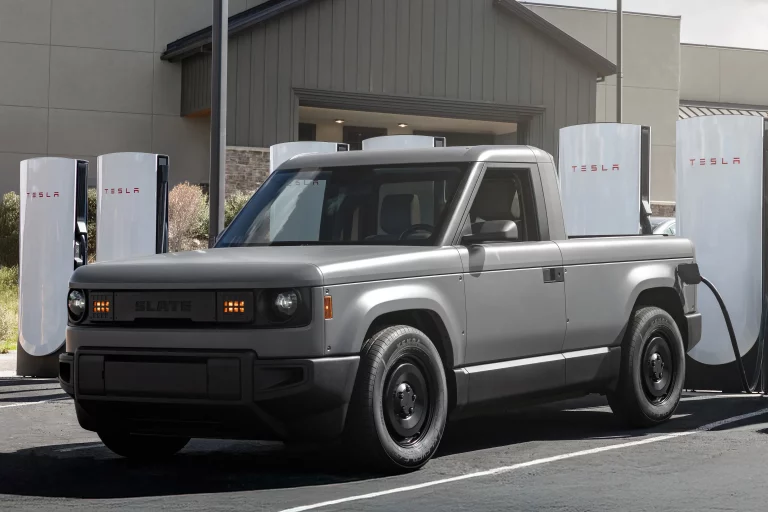
- Slate Auto is pursuing a particularly interesting approach. The start-up is developing a minimalist, modular electric pickup truck for the high-volume pickup truck market, but production will not start until 2026. The company is financed by Amazon founder Jeff Bezos, among others.
A number of US BEV start-ups have so far been unable to establish themselves permanently on the market. Many of these companies have been forced to fundamentally adjust their business model or have already filed for bankruptcy. Among the best-known examples are Mullen Technologies, DeLorean, Fisker, and Lordstown Motors.
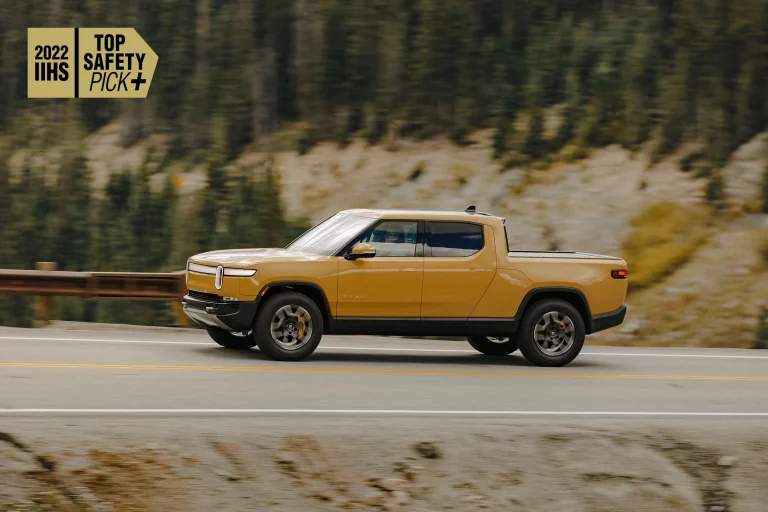
Rivian R1T
(Mit freundlicher Genehmigung/Courtesy of Rivian Automotive, Inc. [Homepage])

Rivian R1S
(Mit freundlicher Genehmigung/Courtesy of Rivian Automotive, Inc. [Homepage])
Rivian Automotive was founded in 2009, and Amazon‘s investment brought the company to the attention of a wider audience. Its product range includes the R1T light truck, the R1S SUV, and a van developed specifically for Amazon. All three models are based on the R1 platform, which allows for different drive configurations. In the maximum configuration, each wheel is powered by its own electric motor located close to the wheel.
In 2024, Rivian delivered around 51,600 vehicles, while in 2025, sales fell by 18% to around 42,250 units. Annual revenue in 2024 amounted to around $5 billion, while the net loss was around $4.7 billion, which was still an improvement on the previous year. On a positive note, Rivian reported a positive gross profit for the first time in the fourth quarter of 2024.
Rivian’s product range is initially focused solely on the US market:
- With the R1T model, Rivian is serving the light truck segment, which is particularly important in the US and traditionally has a high market share and above-average margins.
- Tesla would also have had the opportunity to occupy this high-volume market segment early on with the Cybertruck. However, due to its highly polarizing design and multiple production delays, the model has so far fallen well short of expectations, creating a comparatively open market window for Rivian in the electric light truck segment.
The cooperation with VW is of particular strategic importance for Rivian. In 2024, the two companies established a joint venture to jointly develop software and electronics architectures for electric vehicles. VW has promised investments of up to $5.8 billion, starting with an initial $1 billion in 2024. Rivian will contribute its experience with centralized vehicle architectures, while Volkswagen will contribute its industrial and global market expertise.
The aim of the collaboration is explicitly not for VW to take over Rivian’s entire vehicle platforms, but rather to jointly develop a new software and electronics base for future electric vehicles that can be used across the VW Group.
At the same time, Rivian is working on a more compact and cost-effective vehicle generation with the new R2 platform, which is to be produced in the US from 2026. The R2 platform is designed for higher volumes, simplified manufacturing, and broader international applicability.
Rivian is planning to enter the European market in the medium term, but this is not a priority at present. Due to their size, models based on the R1 platform are only suitable for Europe to a limited extent, so a possible European launch is more likely to take place with R2-based models.
The US brand Scout Motors also plays a role in the VW cooperation. VW plans to revive the former combustion engine brand as a BEV brand. The Scout models will use the software and electronics architecture developed in the VW-Rivian joint venture.
Despite these strategic steps, Rivian continues to face challenges. Sales are developing more slowly than originally planned, which does not make the path to sustainable profitability any easier.

Lucid Air – Exterieur
(Mit freundlicher Genehmigung/Courtesy of Lucid Group, Inc. [Media Room])

Lucid Air – Interieur
(Mit freundlicher Genehmigung/Courtesy of Lucid Group, Inc. [Media Room])
Lucid Motors was founded in 2007 as a supplier of car components such as batteries and electric motors. With the arrival of Peter Rawlinson, there was a change in strategy towards becoming a fully-fledged vehicle manufacturer. Having played a key role in the development of the Tesla Model S, Rawlinson now seized the opportunity at Lucid to implement technical concepts that had been denied him at Tesla. These include a very large HV battery and an ultra-compact drive unit.
The first model series, the Lucid Air luxury sedan, went into series production and went on sale in Arizona in 2021; a second model, the Lucid Gravity SUV, has been in production on the same platform since the end of 2024.
While the company set ambitious targets for high production figures, actual unit sales have so far been significantly lower. According to company information, Lucid will produce a total of around 18,400 vehicles in 2025 and deliver approximately 15,850 units.
For 2024, Lucid reported annual revenues of just over $800 million; at the same time, the company posted a net loss of over US$3 billion, according to available estimates. While revenues increased in 2025 due to higher deliveries and increased production, profitability remained negative. Quarterly reports document that, despite increases in sales, there was still a loss before taxes in the third quarter of 2025, albeit slightly less than in the previous year.
Lucid is primarily financed by Saudi Arabian investors. Since April 2019, the Public Investment Fund (PIF), Saudi Arabia’s sovereign wealth fund, has been the company’s largest shareholder with a majority stake of over 58%. As part of this partnership, Saudi Arabia has also signed long-term vehicle purchase agreements for up to 100,000 vehicles. In addition, an increase in a credit-like financing line from the original $750 million to around $2 billion was agreed upon in 2025.
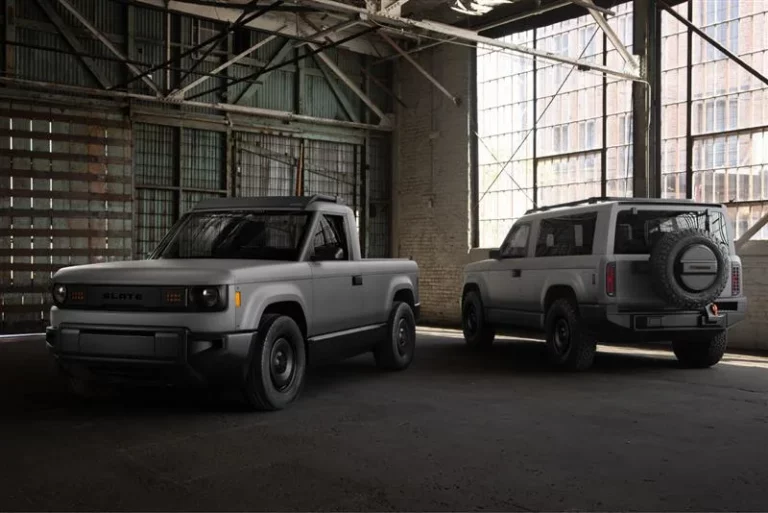
Slate vehicles configured as pickups and SUVs
(Mit freundlicher Genehmigung/Courtesy of Slate [Press Release])
Fast charging at Tesla Supercharger
(Mit freundlicher Genehmigung/Courtesy of Slate [Press Release])
Slate Auto was founded in Troy, Michigan, in 2022 with the aim of developing a new type of electric vehicle. The core of the business idea is a deliberately simple, modular electric pickup truck that offers a high degree of customization. Instead of expensive standard equipment, Slate focuses on a basic vehicle that buyers can customize to their own needs with optional modules and accessories, which should result in a significantly lower entry price than many established BEV models.
The powertrain is deliberately kept simple. The vehicle has only one rear motor with around 200 hp, a standard battery of around 53 kWh for an estimated range of around 150 miles (approx. 240 km), and an optional 84.3 kWh battery for a range of up to around 240 miles. The car can be charged at home via an AC plug with up to 11 kW or at a DC Tesla Supercharger with up to 120 kW.
Originally, a starting price of less than $20,000 after federal subsidies was communicated, but after the Trump/Vance administration stopped BEV subsidies, a price of $25,000 to $30,000 is expected.
The vehicles are to be produced in Indiana, with series production scheduled to start in 2026.
Numerous other US BEV start-ups were less successful. The companies either had to adapt their business model or file for bankruptcy:
- Mullen Technologies Technologies pursued an inconsistent strategy of in-house development (“make”) and purchasing existing vehicle and platform concepts (“buy”) over a long period of time, which led to a diffuse and difficult-to-define product portfolio. As a result of a lack of success, Mullen adjusted its business strategy and ultimately shifted its focus to battery-electric commercial vehicles for urban delivery traffic.
- Lordstown Motors attempted to set itself apart from the competition technologically with a pickup truck featuring a novel wheel hub drive. The company never got to grips with the associated problems, which ultimately led to bankruptcy.
- Fisker initially tried its hand at a plug-in model, but failed due to production problems, among other things. After the company was subsequently reestablished, a BEV SUV was developed, with production outsourced. Due to quality problems and recalls, this start-up also failed.
- Delorean is a car manufacturer with cult status, as its combustion engine model with gull-wing doors played a leading role in the Hollywood trilogy “Back to the Future.” From a business perspective, the company was a flop, with demand quickly collapsing after quality problems. A new edition is now planned as a BEV model. It remains to be seen whether Delorean’s second attempt will be more successful.
BEV start-ups from Europa
In Europe, the start-up culture is not nearly as pronounced as in the US or China, but there are still a few new BEV start-ups.
- One of the few truly promising start-ups is the Croatian company Rimac.
- The Italian start-up Aehra develops BEV vehicles in the premium segment. Competition from Chinese BEV brands such as Zeekr (Geely Group) and Denza (BYD) and established manufacturers such as BMW and Mercedes-Benz is intensifying, so new players will find it difficult to break into the market.
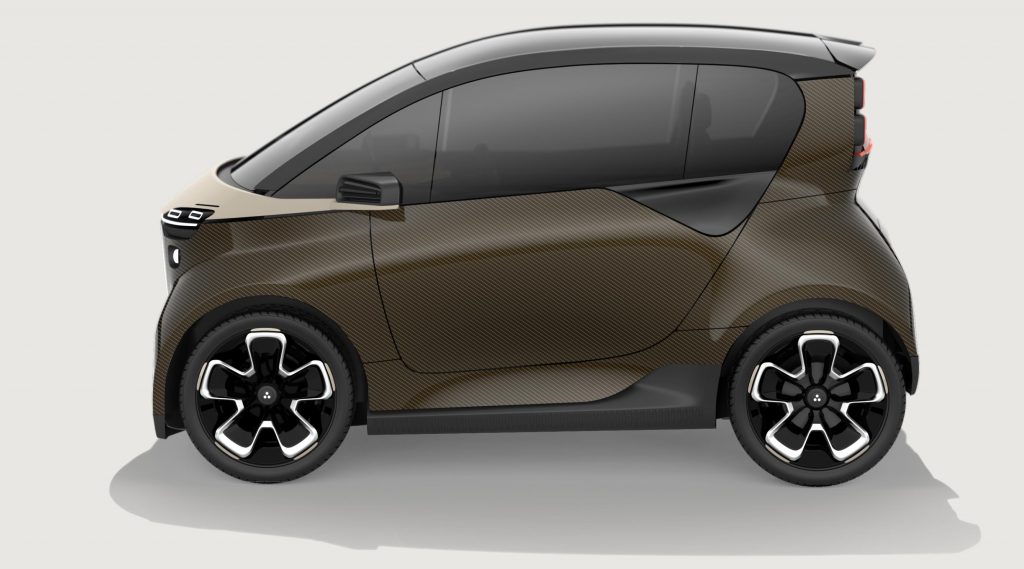
- Spanish company Liux is developing a battery-electric city car; this market segment is also occupied by OEMs such as VW, Renault, and Stellantis in cooperation with Leapmotor. Accordingly, the conditions for new market entrants are also becoming more challenging here.
- Scottish start-up Munro is working on a robust off-road vehicle with battery-electric drive. The company is thus addressing a niche market and can be classified more as a manufacturer than a classic series producer.
- The website of Olymp Cars, a start-up from Austria, is no longer accessible; all activities here have already been discontinued.

Supercar Rimac Nivera
(Mit freundlicher Genehmigung/Courtesy of Rimac Automobili d.o.o. [Press Kit])

Sketch of SUV model by Aehra
(Mit freundlicher Genehmigung/Courtesy of AEHRA Inc. [Press Release])
Rimac Automobili was founded by Mate Rimac in 2009 with the aim of converting his BMW 3 Series for racing use to an electric drive. Today, Rimac is a Croatian technology and automotive company based near Zagreb. The business model is deliberately hybrid, combining small-series production of exclusive vehicles with the development and supply of key technologies such as battery systems, power electronics, and drives for other automotive manufacturers.
Strategic investors include Porsche, Hyundai, and Kia. The company is now considered one of the leading centers for high-performance electric drives and software in the international automotive sector.
Aehra is an Italian-American manufacturer of battery-powered luxury vehicles founded in Milan in 2020. It sees itself as Italy’s first “pure EV” brand and aims to combine Italian design with modern EV technology. Aehra plans to mass-produce a luxury SUV and sedan, targeting ranges of around 800 km and prices in the premium segment. Partnerships with technology and research partners are intended to optimize battery and drive technology.
Liux prototype Gecko (Sketch)
(Mit freundlicher Genehmigung/Courtesy of NATURAL MOVEMENT, S.L. [Press Gallery])

Munro vehicles
(Mit freundlicher Genehmigung/Courtesy of ALL TERRAIN ALL ELECTRIC LTD [Homepage])
Liux was founded in Spain in 2021. In our opinion, the choice of name is not very fortunate, as it is similar to a very popular operating system, which makes searching for it on the internet considerably more difficult. Investors include the leasing provider OK Mobility and the Spanish Ministry of Industry, and further rounds of financing are required to implement series production. The first prototype presented was an SUV, but the company is now focusing on a two-seater city car called Gecko, which resembles the first and second generations of the Smart.
Munro Vehicles is a Scottish start-up for electric off-road vehicles that was founded in 2021. Munro initially produces in small quantities and can be classified more as a niche or manufacturer, but plans to build up capacity of several thousand vehicles per year in the medium term. The business model focuses on commercial applications in mining, construction, defense, emergency services, and forestry, where zero-emission off-road vehicles are in demand and the electrification of previously diesel-powered commercial vehicles is advancing.
_____________
[cs 21.01.2026]