Charging Electric Vehicles
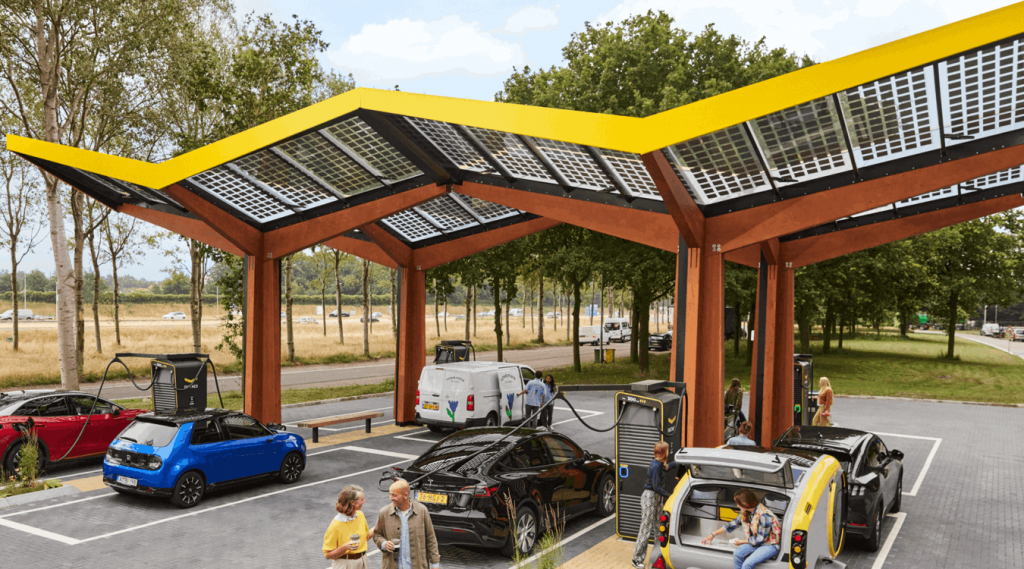
Fastned Charging Station
(Mit freundlicher Genehmigung/Courtesy of Fastnet B.V.)
Management Summary
In recent years, charging electric vehicles has evolved from a simple power supply into a complex ecosystem. Today, there are essentially three different charging methods available:
- Conductive charging with alternating current (AC) or direct current (DC) holds the largest market share. While AC charging is primarily used at home or at work, the significantly faster DC charging is predominantly used along long-distance transportation routes and at public fast-charging stations.
- Automated battery swapping offers an alternative. In this process, the discharged traction battery is replaced with a fully charged one within a few minutes. The pioneer of this concept is the Chinese automaker NIO, which already operates several thousand battery swap stations.
- In addition, inductive charging systems are being developed that transfer energy wirelessly. Alongside stationary solutions—charging while parked—dynamic systems with induction strips integrated into the road surface are also being tested, which are designed to enable charging while driving.
As the charging infrastructure has expanded, new stakeholders have emerged in the charging ecosystem, each taking on different roles:
- EVSE manufacturers (Electric Vehicle Supply Equipment Manufacturers) develop and produce wall boxes, AC charging stations, and DC fast-charging systems.
- The Charge Point Operator (CPO) installs and operates the charging points, handles maintenance, grid connection, and technical operations.
- E-mobility service providers (EMSPs) provide users with charging cards or smartphone apps, handle authentication, and bill for charging sessions.
- These players are complemented by roaming platforms that enable charging at stations operated by different providers.
A key development trend is fast charging. While electric vehicles were charged relatively slowly using AC in the early days, Tesla established high-performance DC fast-charging systems early on with its Supercharger network.
All major automakers and charging infrastructure operators are now investing in high-power charging systems with charging capacities of several hundred kilowatts, as fast-charging capability has become an important differentiator. Chinese automakers, such as BYD, are developing battery systems and vehicle platforms that support extremely high charging capacities, which are expected to enable charging times of less than 15 minutes.
For the energy transition, bidirectional charging is becoming increasingly important. In this context, the vehicle battery is evolving into a key building block of a zero-emission energy system:
- Concepts such as Vehicle-to-Home (V2H), Vehicle-to-Building (V2B), and Vehicle-to-Grid (V2G) enable better integration of renewable energy into the power grid while helping to improve grid stability.
- Particularly during periods of low renewable generation (“dark doldrums”), when wind and solar power are scarce, millions of connected electric vehicles could play a key role as decentralized energy storage systems in the future.
The future development of the charging ecosystem will be shaped by several trends. These include higher battery voltages of more than 800 V, more powerful cell chemistries with higher charging rates, automated charging processes, and greater connectivity between vehicles, charging infrastructure, and the power grid.
Charging Methods
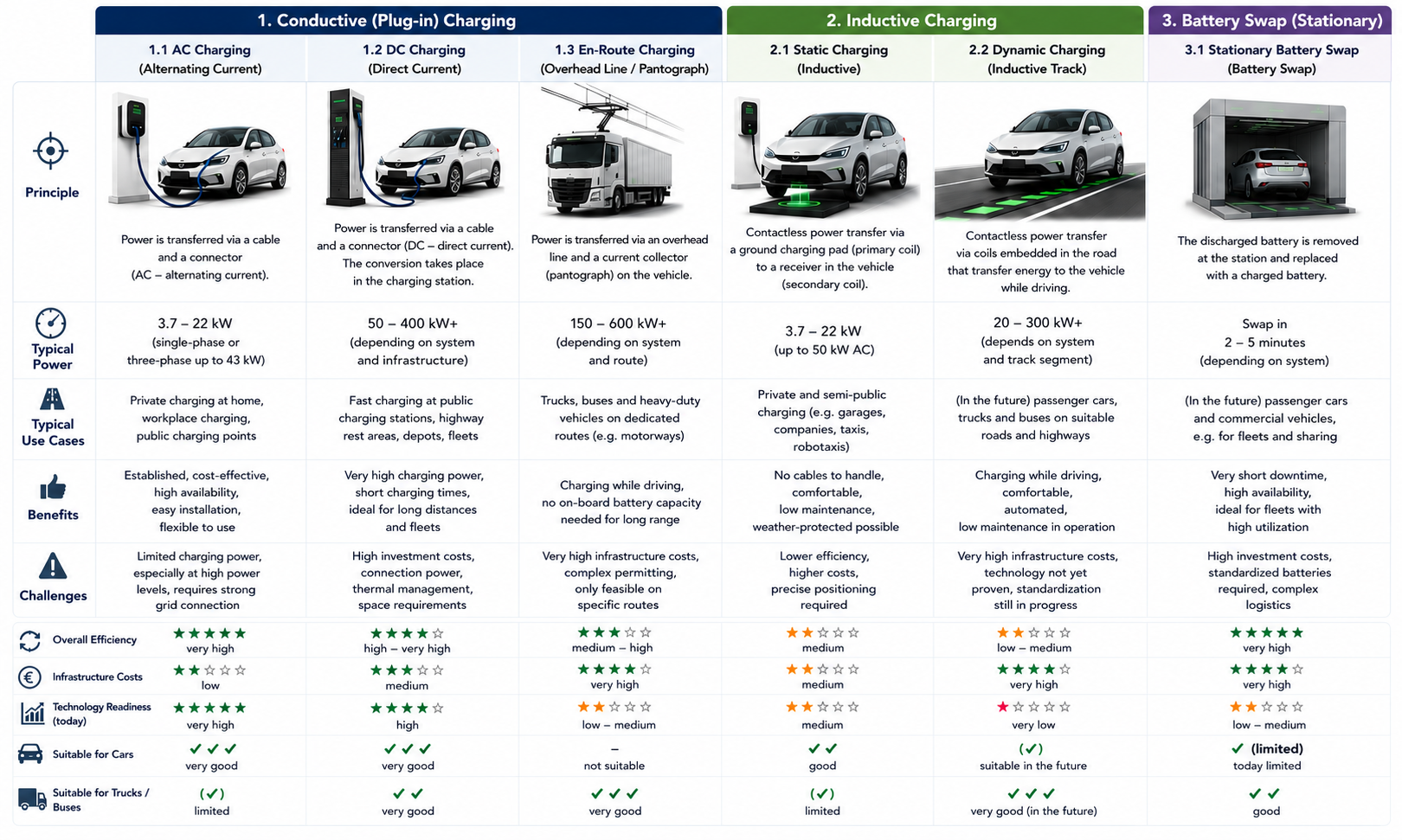
Charging Methods for Electric Vehicles
(Quelle/Source: ev-portal.net)
Electrical energy can be transferred to a vehicle in different ways. In principle, a distinction is made between conductive charging, wireless (inductive) charging, and traction battery swapping. The figure Charging Methods provides an overview of these charging methods and compares their operating principles, typical power levels, applications, as well as their respective advantages and disadvantages.
- In practice, conductive charging while the vehicle is parked is by far the dominant charging method.
- In addition, automated battery swapping has become established in China for certain vehicle models and fleet applications.
- Wireless (inductive) charging systems are currently deployed only in limited numbers, primarily in pilot projects, selected bus routes, taxi fleets, and specially equipped vehicles.
- Overhead catenary charging, a technology well known from rail and trolleybus systems, has been evaluated in a number of pilot projects. However, widespread deployment is not expected due to the high infrastructure costs.
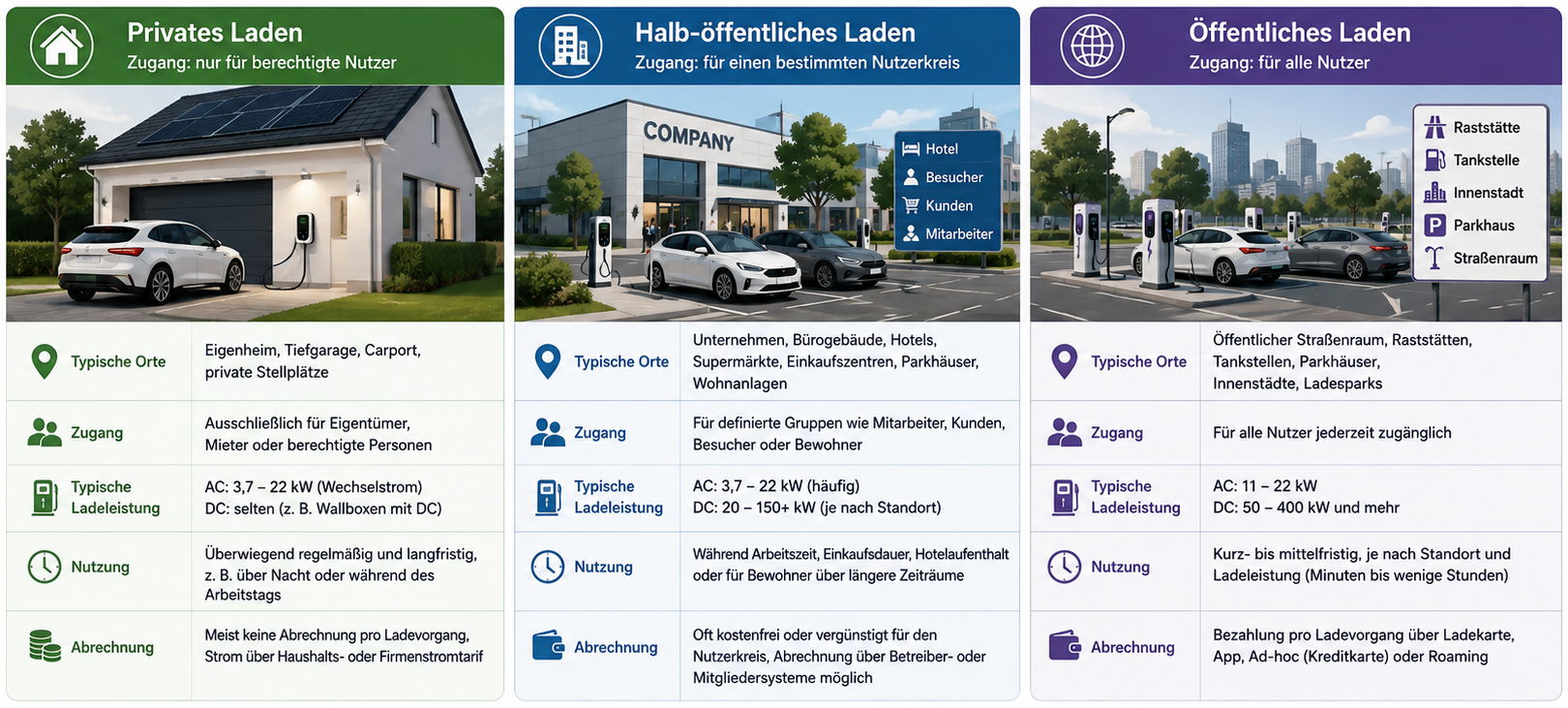
Accsss Types for EV charging
(Quelle/Source: ev-portal.net)
- Private charging points are located, for example, at single-family homes or in residential parking garages and are accessible only to a limited group of users.
- Semi-public charging points are installed on private property—such as at businesses, hotels, supermarkets, or parking garages—but may also be available to customers or visitors, depending on the operator.
- Public charging points, by contrast, are generally accessible to all users and are typically located on public streets, at highway service areas, or in public parking garages.
Technically, conductive charging is performed using either alternating current (AC) or direct current (DC). In the early years of electric mobility, AC charging was the dominant technology because charging points could be installed with relatively low technical complexity and investment costs. It was particularly well suited for charging at home, at the workplace, or in public parking lots, where vehicles typically remain parked for several hours.
As battery capacities have increased and demand for shorter charging times has grown, the focus has shifted significantly toward DC fast charging. Modern fast-charging hubs along highways and at other high-traffic locations provide charging power of several hundred kilowatts, significantly reducing charging times.
Today, the two charging methods complement each other: AC charging remains the most cost-effective solution for longer parking periods, while DC charging is used wherever large amounts of energy need to be transferred in a short time.
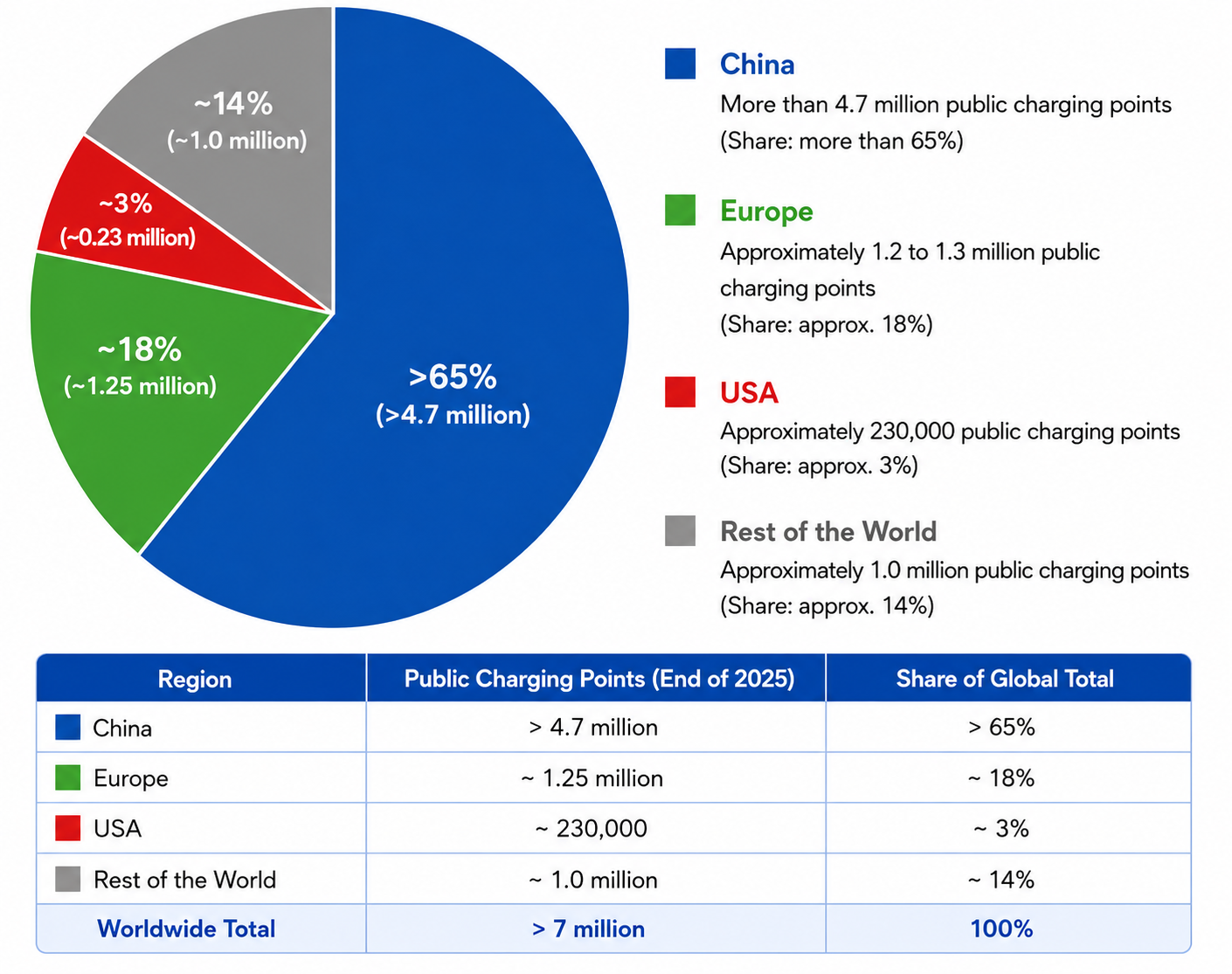
Distribution of Charging Points Worldwide
(Quelle/Source: ev-portal.net)
- China was by far the largest market, with more than 4.7 million public charging points, accounting for over 65% of the global total.
- For Europe, the IEA reported approximately 1.2 to 1.3 million public charging points at the end of 2025.
- In the United States, approximately 230,000 public charging points were in operation at the end of 2025, according to the International Energy Agency (IEA).
Technologies for Conductive Charging
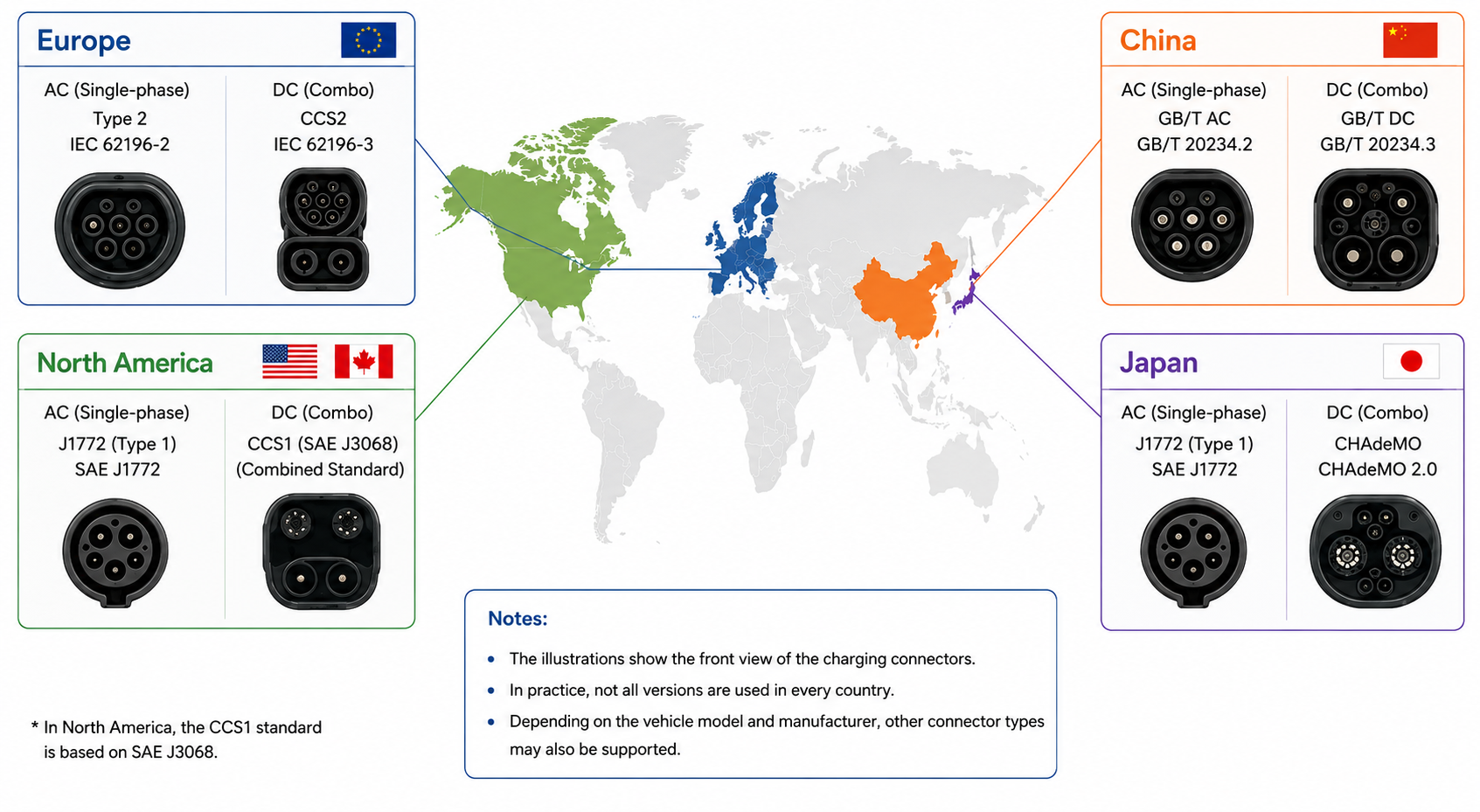
Charging Sockets Worldwide
(Quelle/Source: ev-portal.net)
Unlike liquid fuels, which are dispensed worldwide using largely standardized fueling systems, different charging connector systems have evolved for electric vehicles in different regions of the world. As a result, vehicle manufacturers must adapt their models to the requirements of their target markets (see the figure Charging Sockets Worldwide).
In some cases, adapters allow the use of other connector systems.
The most widely used charging connector systems today are:
- In Europe, the Type 2 connector (IEC 62196) is the standard for AC charging. For DC fast charging, the Combined Charging System (CCS2) is used almost exclusively. CCS2 extends the Type 2 connector with two additional DC power contacts, allowing both AC and DC charging through the same vehicle inlet.
- In North America, the Type 1 connector (SAE J1772) long dominated AC charging, while CCS1 was the standard for DC fast charging. More recently, however, the North American Charging Standard (NACS), originally developed by Tesla and standardized as SAE J3400 in 2023, has gained widespread adoption. Numerous vehicle manufacturers and fast-charging network operators have announced plans to transition to this standard.
- China, by contrast, uses its own connector systems for AC and DC charging, defined in the GB/T 20234 series of standards. These differ from CCS both mechanically and electrically and are therefore not compatible. For ultra-high-power charging, China and Japan jointly developed the successor standard ChaoJi, which is being introduced gradually.
- Japan relied for many years on the CHAdeMO standard for DC fast charging, which was widely used in early electric vehicles from Japanese manufacturers. Outside Japan, however, CHAdeMO is steadily losing importance, while CCS and NACS are now driving international market development.
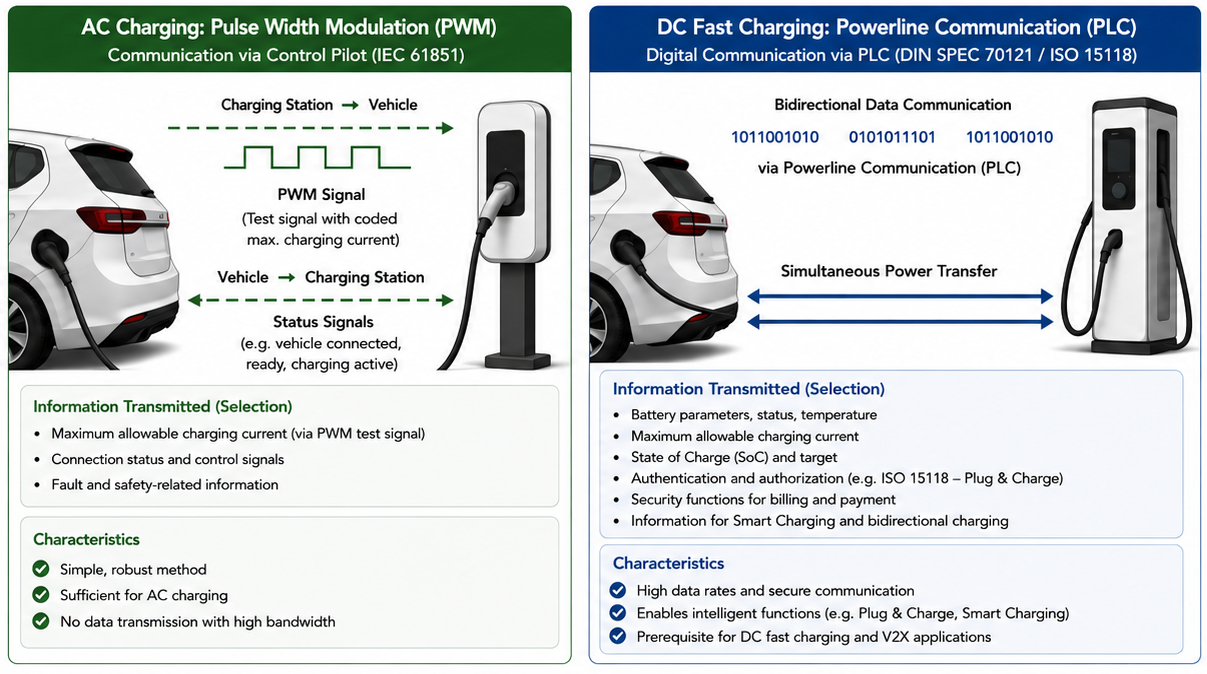
Communication Methods: AC vs. DC Charging
(Quelle/Source: ev-portal.net)
During the charging process, the vehicle and the charging station exchange information about the available charging power, the battery’s state of charge, and safety-related parameters (see the figure Communication Methods).
Two different communication methods are used for this purpose.
- During AC charging, the basic communication takes place via the Control Pilot (CP) in accordance with IEC 61851. The charging station generates a Pulse Width Modulation (PWM) signal whose duty cycle informs the vehicle of the maximum permissible charging current. At the same time, operating states such as “vehicle connected,” “ready to charge,” and “charging in progress” are signaled. PWM communication is robust, cost-effective, and fully sufficient for AC charging.
- For DC fast charging, however, this simple signaling is no longer sufficient. Instead, additional digital communication is performed via Power Line Communication (PLC). High-frequency data signals are transmitted over the same conductors that carry the charging current. PLC enables the vehicle and the charging station to exchange extensive information, including battery voltage, battery temperature, maximum permissible charging power, state of charge (SoC), authentication data, and the desired charging profile.
- IEC 61851 – Requirements for conductive charging systems, including charging modes and Control Pilot communication.
- IEC 62196 – Plugs, vehicle connectors, and vehicle inlets for electric vehicles.
- ISO 15118 – Digital communication between the vehicle and the charging station, including Plug & Charge, smart charging, and bidirectional charging.
- DIN SPEC 70121 – Communication protocol for CCS DC charging.
- SAE J1772 and SAE J3400 (NACS) – Charging connector standards for the North American market.
- GB/T 20234 – Charging connector systems and interfaces for the Chinese market.
- CHAdeMO – Japanese standard for DC fast charging.
- OCPP (Open Charge Point Protocol) – Open industry standard for communication between charging stations and backend systems. OCPP is used for applications such as remote monitoring, billing, load management, and software updates.
Stakeholders in the charging ecosystem
Charging electric vehicles is widely regarded as one of the most important growth markets of the energy transition. Nevertheless, it remains challenging for many companies to generate sustainable profits from operating or providing charging infrastructure. The market is still in an investment phase, characterized by high capital expenditures, intense competition, and the relatively low utilization of many charging stations.
In particular, the deployment of public DC fast-charging sites requires substantial investments in land, grid connections, transformers, charging hardware, as well as operation and maintenance. At the same time, many locations require several years to reach utilization levels sufficient to recover these investments. In addition, increasing requirements for reliability, software, roaming, payment systems, and customer support create significant ongoing operating costs.
In many respects, the business model resembles that of traditional gas stations. The sale of fuel—or, in the case of EV charging, electrical energy—typically generates relatively low margins. As a result, many gas stations earn a substantial share of their profits from convenience stores, food services, and other value-added offerings.
A similar trend is emerging in the EV charging ecosystem: DC fast-charging hubs are increasingly being combined with restaurants, cafés, supermarkets, and other services to generate additional revenue while making productive use of customers’ dwell time.
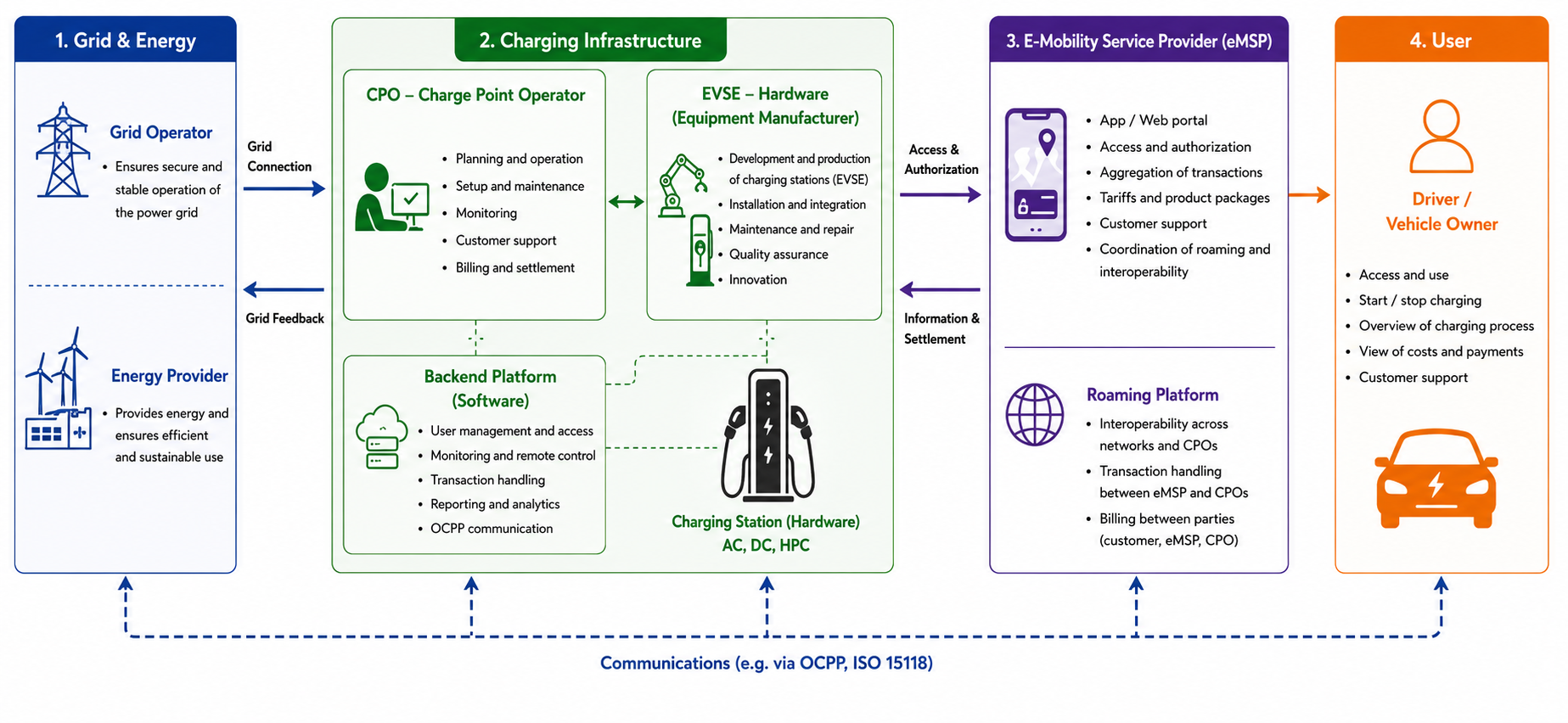
Stakeholders in the EV Charging Ecosystem
(Quelle/Source: ev-portal.net)
Against this background, specialized companies with different business models have emerged within the EV charging ecosystem (see the figure Stakeholders in the EV Charging Ecosystem):
- EVSE Manufacturers (Electric Vehicle Supply Equipment): EVSE manufacturers develop and produce wallboxes, AC charging stations, DC fast-charging systems, as well as the associated power electronics and control systems.
- Charge Point Operators (CPOs): CPOs plan, build, operate, and maintain charging infrastructure. They are also responsible for monitoring the technical operation of charging stations and ensuring their availability.
- E-Mobility Service Providers (EMSPs): EMSPs provide users with access to public charging stations through mobile apps or charging cards. They also handle authentication, billing, and often offer additional services such as charging route planning and navigation.
- Roaming Platforms: Roaming platforms connect Charge Point Operators and E-Mobility Service Providers. This enables drivers to use charging stations from multiple operators with a single contract or charging card.
- Tesla is a vehicle manufacturer, CPO, and EMSP (Tesla app, authentication, and billing).
- EnBW operates a large charging network (CPO) while also offering the EnBW mobility+ app and charging tariffs (EMSP).
- ChargePoint develops and markets charging hardware (EVSE), enables customers to operate charging stations, and also provides its own user platform (EMSP).
- Shell operates as a CPO (Shell Recharge Solutions and charging hubs) while also providing EMSP services.
- Elli (VW) is primarily an EMSP but also participates in the CPO business through its joint ownership of IONITY together with other OEMs.
- IONITY originally operated almost exclusively as a CPO but now also offers its own charging plans and mobile app, thereby taking on some EMSP functions.
The EV charging hardware market (EVSE manufacturers) is dominated by a number of major global suppliers that develop and manufacture both AC charging solutions and DC fast-charging systems.
The market for AC wallboxes, in particular, is highly fragmented and characterized by rapid change. Numerous established electrical engineering companies, specialized charging hardware manufacturers, and new market entrants compete in an increasingly price-sensitive segment. Overcapacity, fluctuating demand, and intense cost and pricing pressure have led to bankruptcies, restructurings, market exits, and acquisitions in recent years.
Competition is also intense in the DC charging market. Due to their greater technical complexity, DC fast-charging systems generally offer better margin potential but also require substantial investments in development, certification, and manufacturing. The leading suppliers include:- In Europe, ABB E-mobility (Switzerland), Alpitronic (Italy), Siemens (Germany), and Schneider Electric (France) are among the technological leaders.
- In North America, ChargePoint, Tesla (Supercharger technology), and ABB E-mobility play particularly important roles.
- In Asia, Chinese manufacturers such as StarCharge, Huawei Digital Power, TELD, and Sinexcel dominate the market, benefiting from the world’s largest domestic EV charging market.
- In Europe, EnBW and Allego are among the leading operators.
- In North America, ChargePoint, Tesla Supercharger, Electrify America, and EVgo dominate the market.
- The Chinese market is shaped by companies such as TELD, StarCharge, State Grid, and Xingxing Charging.
E-Mobility Service Providers (EMSPs) provide end users with access to public charging stations through mobile apps or charging cards and handle user authentication as well as billing for charging sessions. Due to intense competition and low switching costs, many EMSPs operate under significant margin pressure and seek to differentiate themselves through digital value-added services and fleet management solutions:
- In Europe, Shell Recharge, Elli (VW), Plugsurfing, Chargemap, and EnBW mobility+ are among the best-known providers.
- In North America, ChargePoint, Blink Charging, and EV Connect are among the leading providers.
- In China, comparable services are primarily integrated directly into the digital vehicle platforms of major CPOs and vehicle manufacturers such as NIO, XPeng, Li Auto, and BYD.
Conductive Fast Charging
One of the key differences between vehicles with internal combustion engines and electric vehicles is the time required to replenish energy. While a fuel tank can be filled within a few minutes, charging a traction battery takes considerably longer. DC fast-charging systems are designed to progressively reduce the time gap between charging and refueling.
During DC charging, the alternating current from the electrical grid is converted into direct current within the charging station and supplied directly to the high-voltage battery. This eliminates the power limitation imposed by the vehicle’s onboard charger:
- Modern DC charging stations now provide charging power of more than 400 kW (HPC – High Power Charger) and are primarily deployed along highways and at other high-traffic locations.
- For heavy-duty commercial vehicles, the next generation of fast-charging technology, the Megawatt Charging System (MCS), is already being deployed. MCS enables charging power of more than one megawatt and is intended to support the rapid charging of large commercial vehicle batteries in the future.
The so-called C-rate is used to describe a battery’s fast-charging capability. It expresses the ratio of charging power to battery capacity. A charging rate of 1C means that, under ideal conditions, a battery can be fully charged within one hour. At 2C, the charging time is reduced to about 30 minutes, 3C corresponds to approximately 20 minutes, and 4C to around 15 minutes.
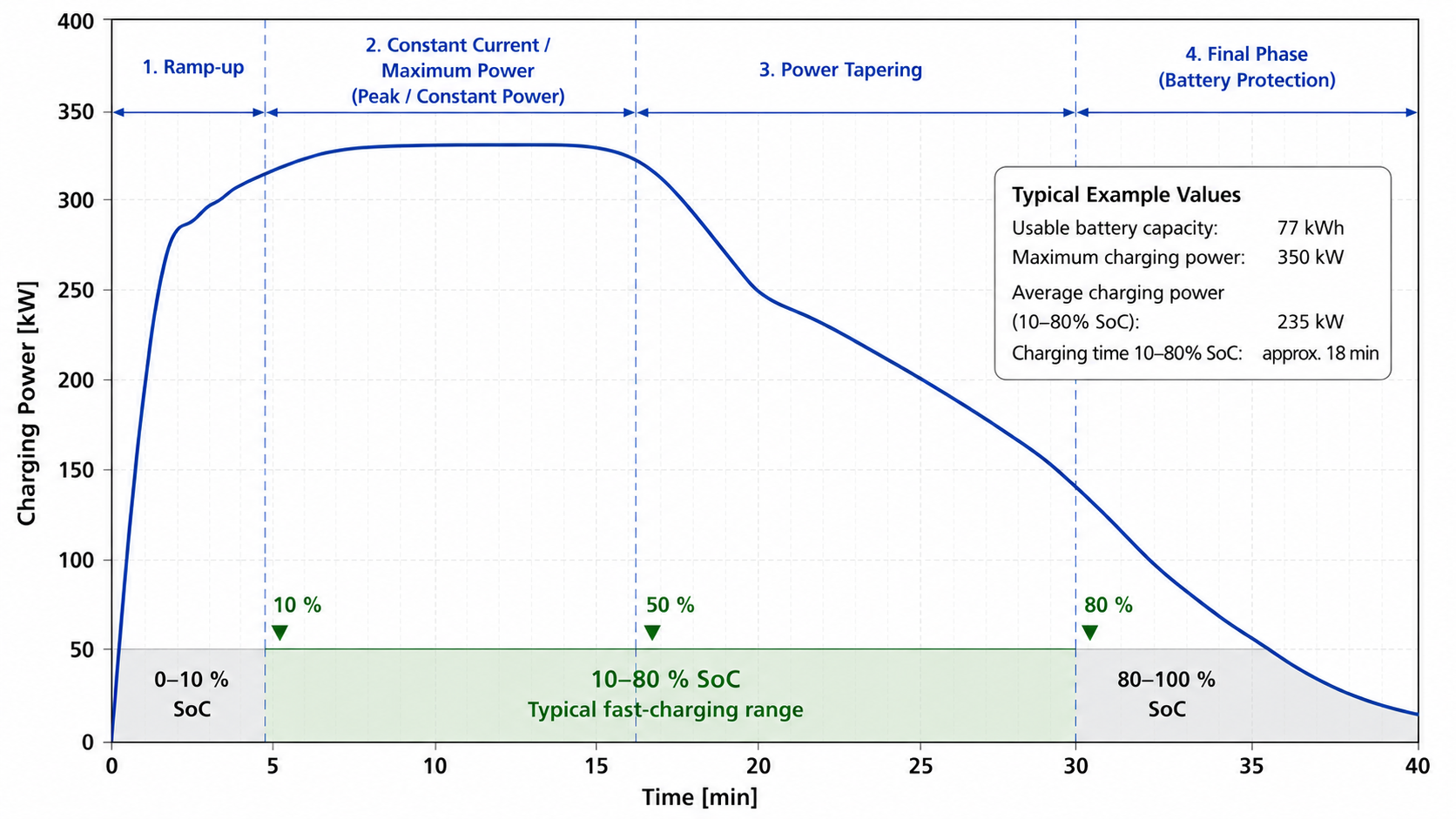
Manufacturers today typically specify fast-charging times for the 10% to 80% state of charge (SoC) range, as the battery can accept high charging power throughout most of this charging window.
An important factor in achieving high charging power is the vehicle’s battery voltage. Most electric vehicles currently on the market are still based on a 400-volt architecture, while newer models such as the Hyundai IONIQ 5, Kia EV6, Porsche Taycan, Audi e-tron GT, and Lucid Air already use an 800-volt architecture.
At the same charging power, an 800-volt system carries only about half the current of a 400-volt system. This reduces cable losses and heat generation while enabling higher charging power to be delivered more efficiently:
- The Hyundai IONIQ 5 and the Kia EV6, thanks to their 800-volt architecture, can increase the battery’s state of charge from 10% to 80% in about 18 minutes. The Porsche Taycan achieves comparable charging times.
- Vehicles with a 400-volt architecture, such as the Tesla Model 3, the BMW i4, and the Mercedes-Benz EQE, typically require 25 to 35 minutes for the same charging range, depending on the vehicle variant and battery capacity.
Charging During Curve (Example)
(Quelle/Source: ev-portal.net)
However, the actual charging power achieved does not depend solely on the charging station or the battery voltage. Equally important are the battery technology, the cell chemistry, the cell temperature, the state of charge (SoC), and the vehicle’s thermal management system.
For this reason, the maximum charging power is typically reached only over a limited portion of the charging process. As the state of charge increases, the battery management system gradually reduces the charging power to protect the battery from excessive stress and maximize its service life. This characteristic charging profile is referred to as the charging curve (see figure Fast Charging Curve):
- At the beginning of the charging process, the charging power quickly increases to its maximum level.
- As the state of charge increases, the maximum charging power remains nearly constant for a certain period. Depending on the vehicle and battery technology, this range typically extends from approximately 10% to 50% state of charge.
- The battery management system then gradually reduces the charging power. This is necessary because the cell voltage increases during charging, and the battery must be protected against excessive heating and premature aging.
- At a state of charge of around 80%, the charging power drops significantly in most electric vehicles. As a result, the final percentage points to a full charge take comparatively more time. For this reason, many vehicle manufacturers and charging providers recommend charging primarily between 10% and 80% during long-distance trips.
- Several shorter fast charging sessions are often more time-efficient than charging the battery to 100% in a single session.
Because manufacturers determine charging times under different test conditions, several independent testing organizations have become established to evaluate the fast charging performance of electric vehicles using standardized criteria:
- With the P3 Charging Index, published since 2019, P3 has established a globally recognized benchmark for evaluating fast charging performance. The index measures the actual driving range added within 20 minutes of charging. Results are published separately for Europe, North America, and Asia.
- Another independent institution is the ADAC in Germany. Thanks to its standardized testing methodology, ADAC’s results are regarded as an important reference, particularly in Europe.
- The standardized real-world tests conducted by Norwegian EV expert Bjørn Nyland are also highly respected. For many years, his charging, range, and 1,000 km tests have followed a reproducible methodology and now cover several hundred electric vehicles from Europe, North America, and Asia.
- In 2025, the company demonstrated for the first time a vehicle capable of charging at up to 1 MW.
- Its latest solution delivers charging power of up to 1.5 MW through a single high-power charging connector with a liquid-cooled cable. This enables the battery to be charged from 10% to 70% in five minutes or from 10% to 97% in nine minutes.
Bidirectional Charging
Use Cases for Bidirectional Charging
(Quelle/Source: ev-portal.net)
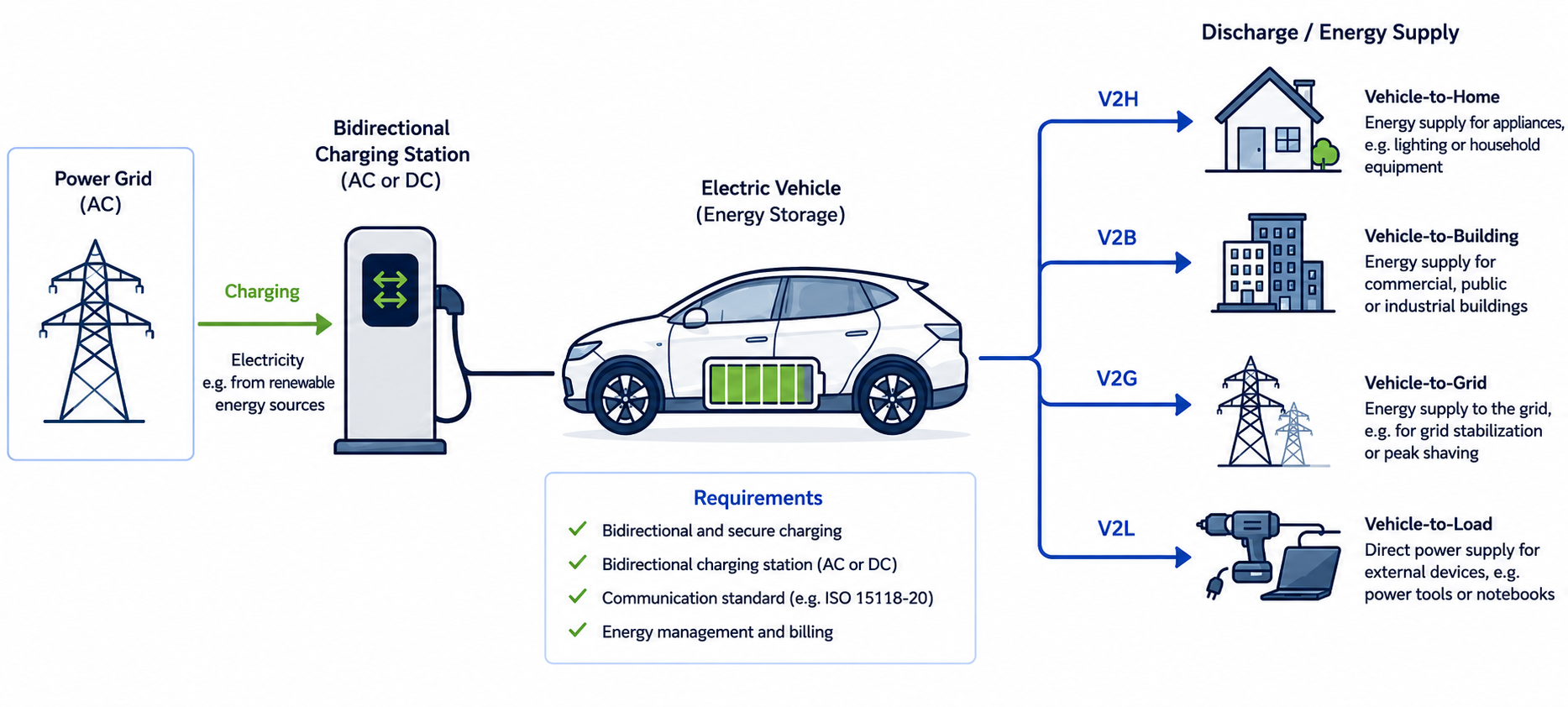
- Vehicle-to-Home (V2H) enables an electric vehicle to supply power to a residential building, for example by storing surplus solar energy generated during the day and providing it in the evening.
- Vehicle-to-Building (V2B) applies the same principle to commercial buildings or industrial facilities.
- Vehicle-to-Grid (V2G) feeds surplus energy back into the public power grid to balance peak demand and improve the integration of renewable energy into the electricity system.
- Vehicle-to-Load (V2L) enables the direct supply of power to external electrical devices such as power tools or camping equipment.
Technical Approaches to Bidirectional Charging
(Quelle/Source: ev-portal.net)
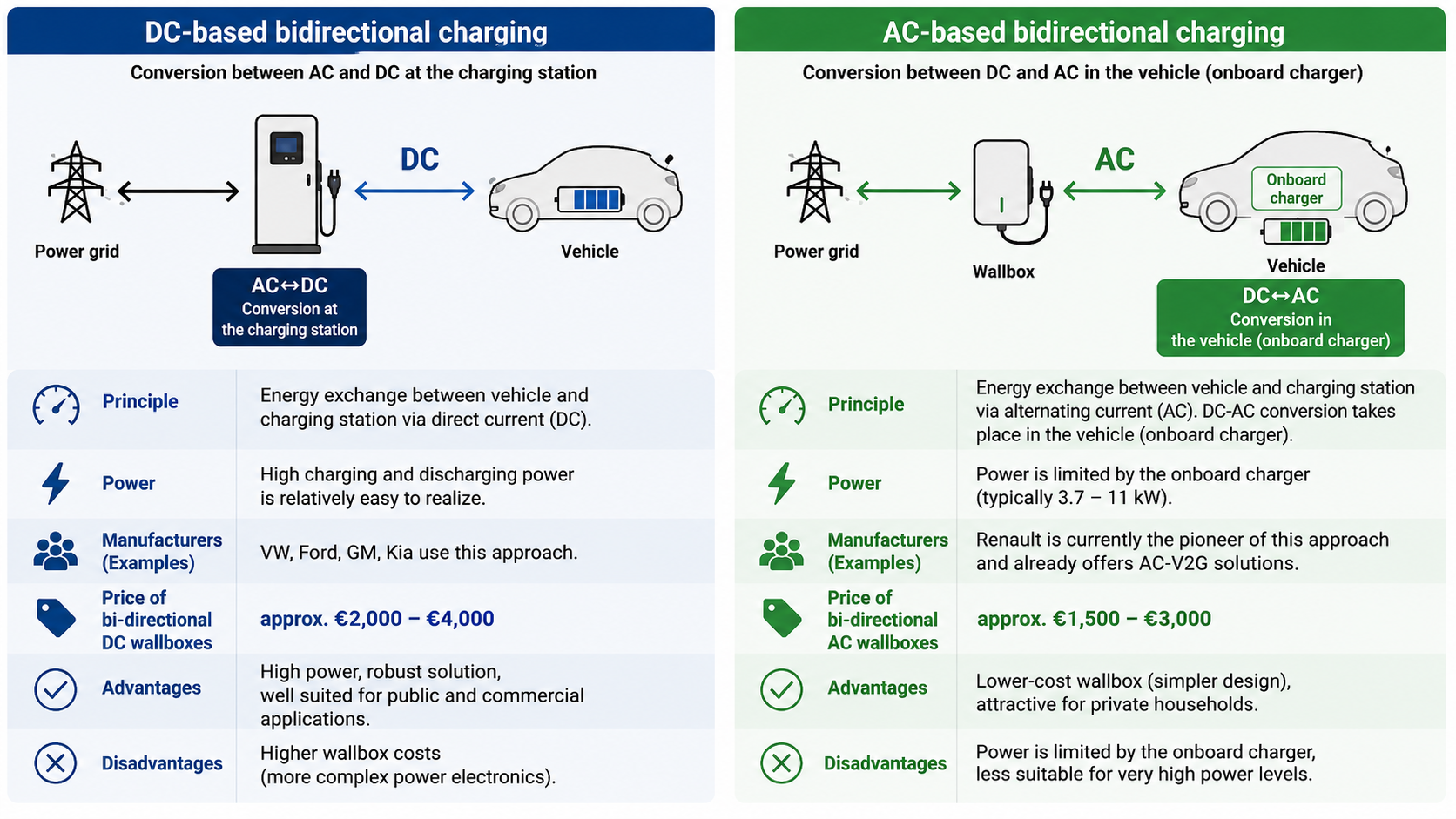
Two technical approaches are currently available for bidirectional charging (see figure Technical Approaches to Bidirectional Charging):
- DC-based bidirectional charging performs the conversion between alternating current (AC) and direct current (DC) within the charging station. This makes it relatively easy to achieve high charging and discharging power levels. VW, Ford, GM, and Kia have adopted this approach. Bidirectional DC wallboxes currently cost between approximately €2,000 and €4,000.
- AC-based bidirectional charging uses the vehicle’s onboard charger to perform the AC/DC conversion, allowing the wallbox to be designed at lower cost. Bidirectional AC wallboxes currently cost between €1,500 and €3,000. Renault is a pioneer of this approach and already offers production-ready AC-V2G solutions.
Which approach will prevail in the long term remains uncertain. Most likely, both technologies will coexist and complement each other: DC-based solutions primarily for public charging infrastructure, commercial fleets, and high-power applications, while AC-based solutions are expected to be used mainly in single-family and multi-family homes as well as for integrating electric vehicles into residential energy management systems.
At present, Vehicle-to-Load (V2L) is by far the most widely adopted bidirectional charging application. It enables the vehicle to supply electrical power directly to external devices through an integrated power outlet or an adapter. V2L is well suited for applications such as camping, mobile worksites, or emergency backup power, but it does not replace a full Vehicle-to-Home (V2H) or Vehicle-to-Grid (V2G) system.
- The vehicle is charged when electricity prices are low and discharged back to the grid when electricity prices are high.
- Studies suggest that providing electricity to the grid can generate several hundred euros in annual income.
Business Models and Stakeholders for Bidirectional Charging
(Quelle/Source: ev-portal.net)
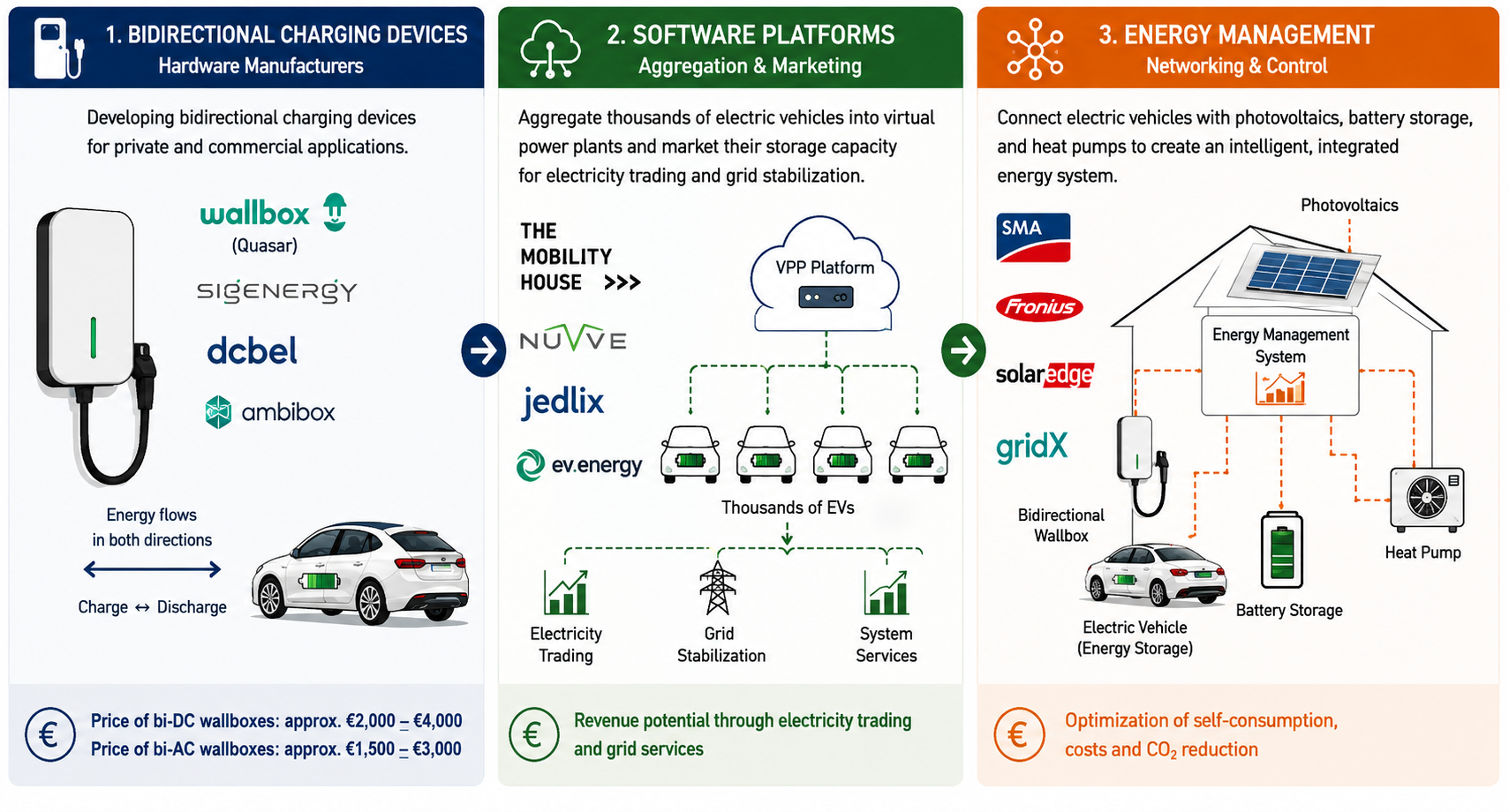
- Manufacturers such as Wallbox (Quasar), Sigenergy, dcbel, and Ambibox develop bidirectional charging systems for residential and commercial applications.
- Companies such as The Mobility House, Nuvve, Jedlix, and ev.energy provide software platforms that aggregate thousands of electric vehicles into virtual power plants and monetize their storage capacity through electricity trading and grid balancing services.
- In the field of energy management, providers such as SMA, Fronius, SolarEdge, and gridX are working to connect electric vehicles, photovoltaic systems, battery storage, and heat pumps into an intelligent, integrated energy system.
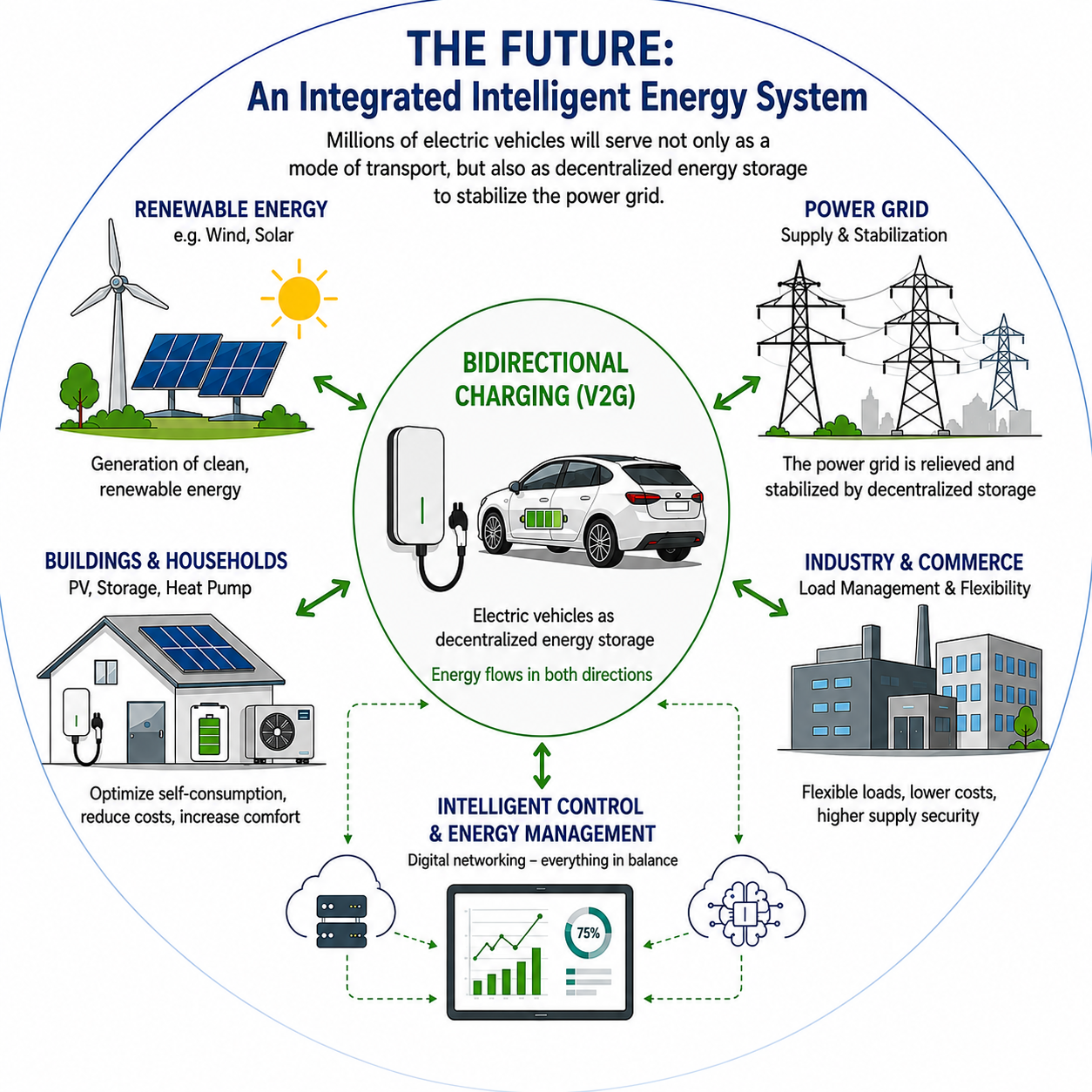
The Electric Vehicle as a Key Component of the Energy Transition
(Quelle/Source: ev-portal.net)
In the long term, bidirectional charging has the potential to become a key building block of an intelligent energy system (see figure The Electric Vehicle as a Key Component of the Energy Transition).
Millions of electric vehicles could then serve not only as a means of transportation but also as decentralized energy storage systems that help stabilize the power grid. In this way, bidirectional charging brings together electric mobility, renewable energy, and smart grids into a fully integrated energy system.